
Title

Fringe Banking: CheckCashing Outlets, Pawnshops, and the Poor,Used
Sold by Ergodebooks, an authorized reseller.
Returns accepted within 30 days | support@ergodebooks.com
Shipping Information
- Free Standard Shipping — United States only
- Processing Time: 3–5 business days
- Estimated Delivery: 6–10 business days after dispatch
- Double-boxed, fully insured & discreetly packaged
- Tracking number sent via email once dispatched
Returns & Refund
Returns accepted within 30 days of delivery.
Damaged or Defective Item
Free return shipping + replacement or full refund
Wrong Item Received
Free return shipping + replacement or full refund
Change of Mind
Return shipping at customer's expense · 25% restocking fee applies
Payment Option

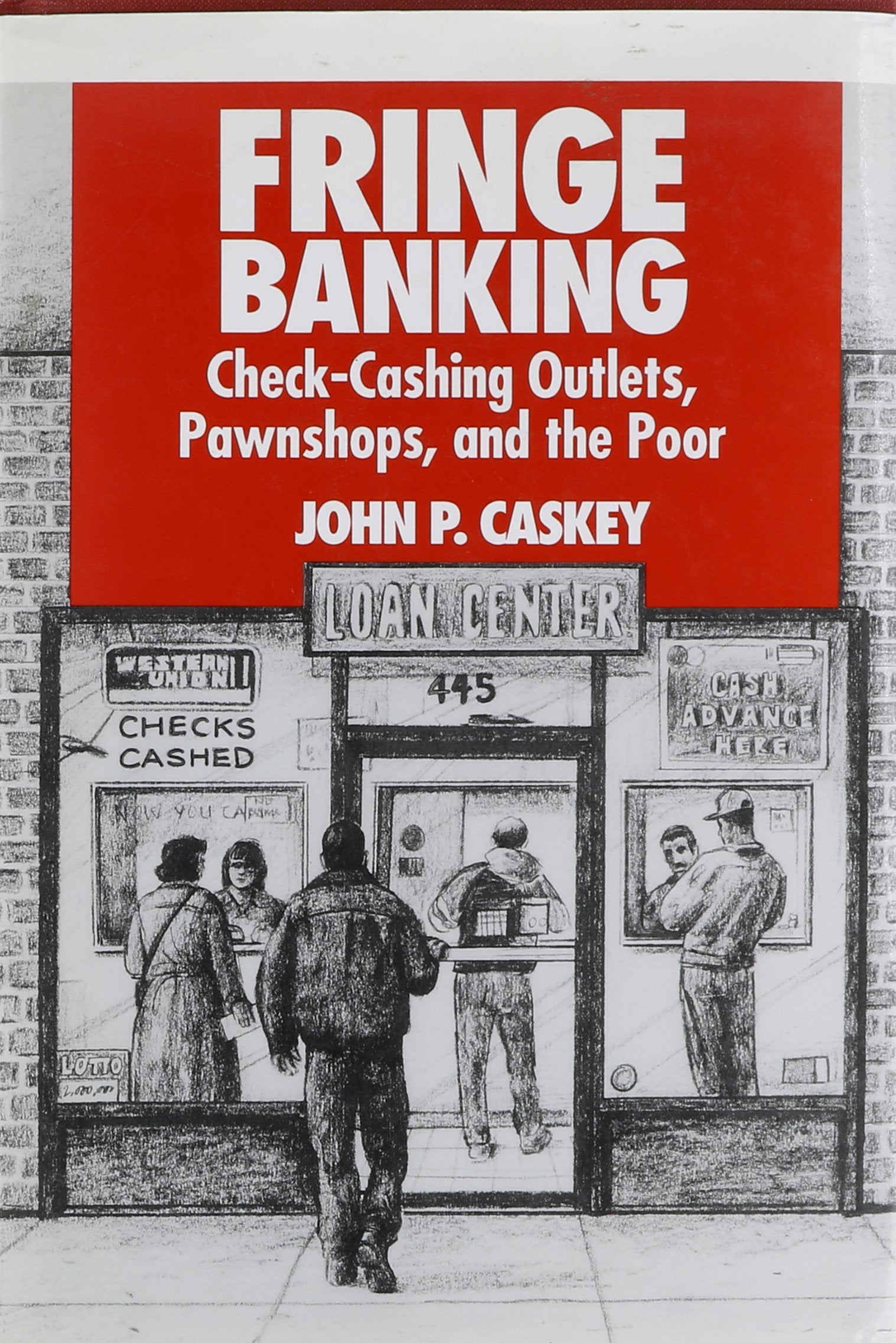
"Cogently argued, fills an important gap in the literature, and is accessible to undergraduates." Choice "Dismantles the mythology surrounding pawnshops and checkcashing outlets, and demonstrates that they are no longer on the fringe of our financial system but integral to it."San Francisco Bay Guardian In today's world of electronic cash transfers, automated teller machines, and credit cards, the image of the musty, junkladen pawnshop seems a relic of the past. But it is not. The 1980s witnessed a tremendous boom in pawnbroking. There are now more pawnshops thanever before in U.S. history, and they are found not only in large cities but in towns and suburbs throughout the nation. As John Caskey demonstrates in Fringe Banking, the increased public patronage of both pawnshops and commercial checkcashing outlets signals the growing number of American households now living on a cashonly basis, with no connection to any mainstream credit facilities or banking services. Fringe Banking is the first comprehensive study of pawnshops and checkcashing outlets, profiling their operations, customers, and recent growth from familyowned shops to such successful outlet chains as Cash American and ACE America's Cash Express. It explains why, despite interest rates and fees substantially higher than those of banks, their use has so dramatically increased. According to Caskey, declining family earnings, changing family structures, a growing immigrant population, and lack of household budgeting skills has greatly reduced the demand for bank deposit services among millions of Americans. In addition, banks responded to 1980s regulatory changes by increasing fees on deposit accounts with small balances and closing branches in many poor urban areas. These factors combined to leave many low and moderateincome families without access to checking privileges, credit services, and bank loans. Pawnshops and checkcashing outlets provide such families with essential financial services thay cannot obtain elsewhere. Caskey notes that fringe banks, particularly checkcashing outlets, are also utilized by families who could participate in the formal banking system, but are willing to pay more for convenience and quick access to cash. Caskey argues that, contrary to their historical reputation as predators milking the poor and desperate, pawnshops and checkcashing outlets play a key financial role for disadvantaged groups. Citing the inconsistent and often unenforced state laws currently governing the industry, Fringe Banking challenges policy makers to design regulations that will allow fringe banks to remain profitable without exploiting the customers who depend on them.
⚠️ WARNING (California Proposition 65):
This product may contain chemicals known to the State of California to cause cancer, birth defects, or other reproductive harm.
For more information, please visit www.P65Warnings.ca.gov.