
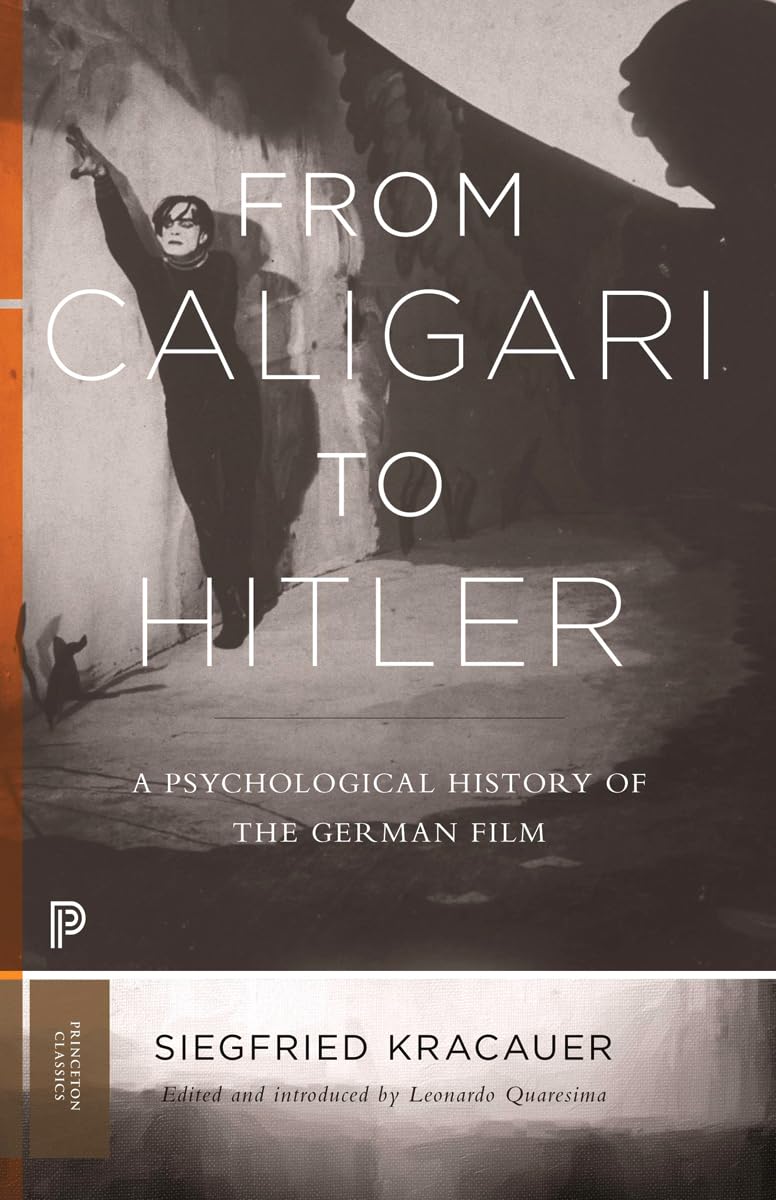
Title
From Caligari To Hitler: A Psychological History Of The German Film (Princeton Classics),New
Sold by Ergodebooks, an authorized reseller.
Returns accepted within 30 days | support@ergodebooks.com
Shipping Information
- Free Standard Shipping — United States only
- Processing Time: 3–5 business days
- Estimated Delivery: 6–10 business days after dispatch
- Double-boxed, fully insured & discreetly packaged
- Tracking number sent via email once dispatched
Returns & Refund
Returns accepted within 30 days of delivery.
Damaged or Defective Item
Free return shipping + replacement or full refund
Wrong Item Received
Free return shipping + replacement or full refund
Change of Mind
Return shipping at customer's expense · 25% restocking fee applies
Payment Option

An Essential Work Of The Cinematic History Of The Weimar Republic By A Leading Figure Of Film Criticismfirst Published In 1947, From Caligari To Hitler Remains An Undisputed Landmark Study Of The Rich Cinematic History Of The Weimar Republic. Prominent Film Critic Siegfried Kracauer Examines German Society From 1921 To 1933, In Light Of Such Movies As The Cabinet Of Dr. Caligari, M, Metropolis, And The Blue Angel. He Explores The Connections Among Film Aesthetics, The Prevailing Psychological State Of Germans In The Weimar Era, And The Evolving Social And Political Reality Of The Time. Kracauer Makes A Startling (And Still Controversial) Claim: Films As Popular Art Provide Insight Into The Unconscious Motivations And Fantasies Of A Nation.With A Critical Introduction By Leonardo Quaresima Which Provides Context For Kracauers Scholarship And His Contributions To Film Studies, This Princeton Classics Edition Makes An Influential Work Available To New Generations Of Cinema Enthusiasts.
⚠️ WARNING (California Proposition 65):
This product may contain chemicals known to the State of California to cause cancer, birth defects, or other reproductive harm.
For more information, please visit www.P65Warnings.ca.gov.
- Q: How many pages does this book have? A: This book has four hundred thirty-two pages. It offers an in-depth exploration of German cinema during the Weimar Republic.
- Q: What is the binding type of this book? A: This book is available in paperback binding. This makes it lightweight and easy to handle for readers.
- Q: What are the dimensions of this book? A: The book measures five point five one inches in length, one inch in width, and eight point five inches in height. These dimensions make it a convenient size for reading.
- Q: Who is the author of this book? A: The author of this book is Siegfried Kracauer. He is a prominent film critic known for his influential work in film studies.
- Q: What genre does this book belong to? A: This book belongs to the Performing Arts genre. It specifically focuses on film history and criticism.
- Q: Is this book suitable for beginners in film studies? A: Yes, this book is suitable for beginners. It provides foundational insights into the psychological history of German film.
- Q: Can I read this book if I am not familiar with German cinema? A: Yes, you can read this book without prior knowledge of German cinema. It offers context and historical background for new readers.
- Q: How should I store this book? A: Store this book in a cool, dry place. Keeping it upright on a shelf will help maintain its shape.
- Q: Is this book safe for children to read? A: This book is more suited for adults and older teens. It contains complex themes related to film criticism and history.
- Q: What if the book arrives damaged? A: If the book arrives damaged, you should contact the seller for a return or exchange. Most retailers have policies in place for such issues.
- Q: What is the publication year of this book? A: This book was first published in nineteen forty-seven. It has been reissued as part of the Princeton Classics series.
- Q: Does this book include a critical introduction? A: Yes, it includes a critical introduction by Leonardo Quaresima. This introduction provides valuable context and insights into Kracauer’s work.
- Q: Is there a digital version of this book available? A: Yes, a digital version may be available depending on the publisher. Check online retailers for eBook options.
- Q: Are there any illustrations in this book? A: No, this book does not contain illustrations. It focuses on text to convey its insights and analysis.
- Q: Can this book be used as a reference for academic work? A: Yes, this book can be used as a reference for academic work. It is a respected source in film studies.