
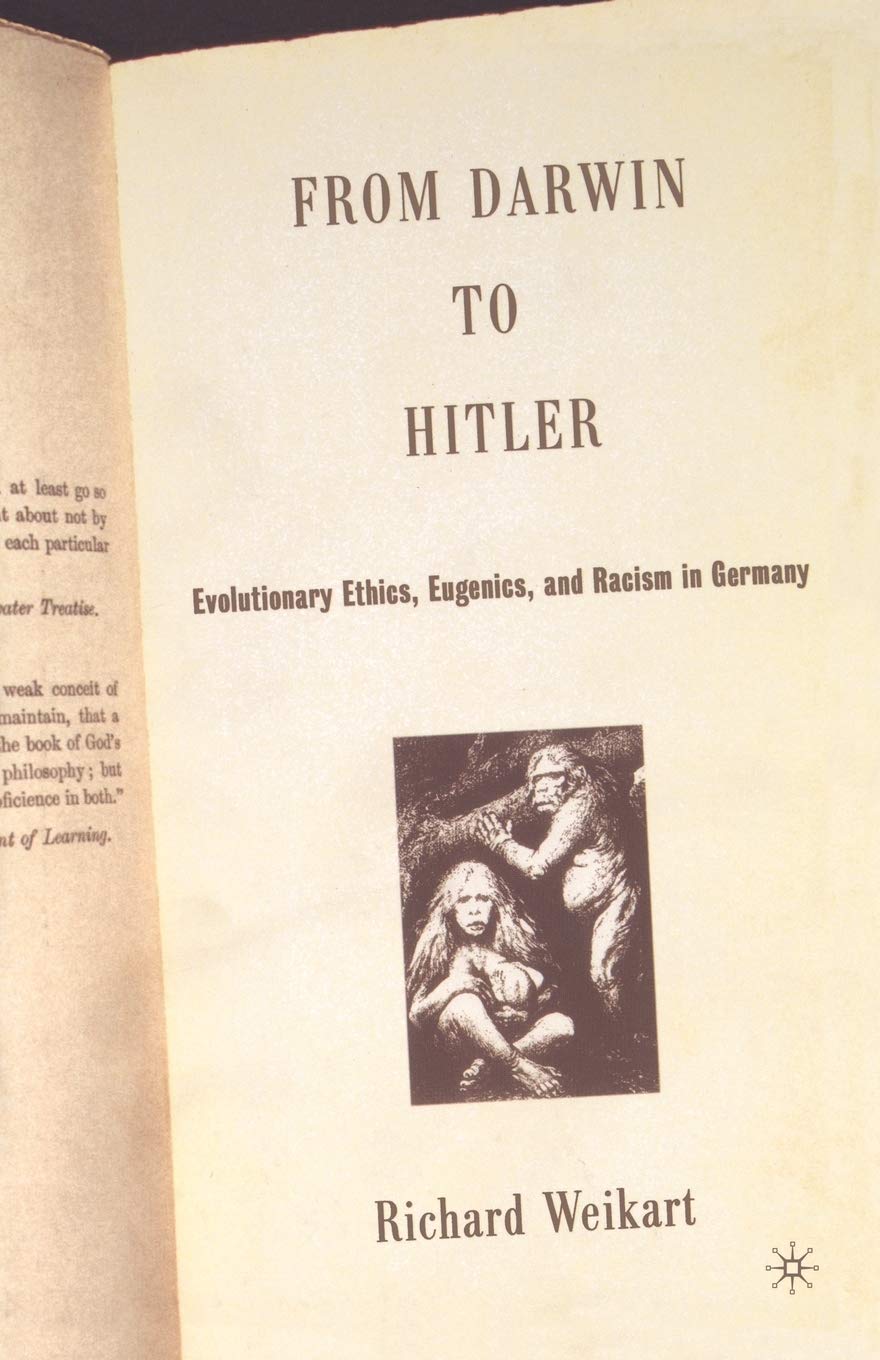
Title
From Darwin To Hitler: Evolutionary Ethics, Eugenics And Racism In Germany
Sold by Ergodebooks, an authorized reseller.
Returns accepted within 30 days | support@ergodebooks.com
Shipping Information
- Free Standard Shipping — United States only
- Processing Time: 3–5 business days
- Estimated Delivery: 6–10 business days after dispatch
- Double-boxed, fully insured & discreetly packaged
- Tracking number sent via email once dispatched
Returns & Refund
Returns accepted within 30 days of delivery.
Damaged or Defective Item
Free return shipping + replacement or full refund
Wrong Item Received
Free return shipping + replacement or full refund
Change of Mind
Return shipping at customer's expense · 25% restocking fee applies
Payment Option

In This Work, Richard Weikart Explains The Revolutionary Impact Darwinism Had On Ethics And Morality. He Demonstrates That Many Leading Darwinian Biologists And Social Thinkers In Germany Believed That Darwinism Overturned Traditional Judeochristian And Enlightenment Ethics, Especially The View That Human Life Is Sacred. Many Of These Thinkers Supported Moral Relativism, Yet Simultaneously Exalted Evolutionary 'Fitness' (Especially Intelligence And Health) To The Highest Arbiter Of Morality. Darwinism Played A Key Role In The Rise Not Only Of Eugenics, But Also Euthanasia, Infanticide, Abortion And Racial Extermination. This Was Especially Important In Germany, Since Hitler Built His View Of Ethics On Darwinian Principles, Not On Nihilism.
⚠️ WARNING (California Proposition 65):
This product may contain chemicals known to the State of California to cause cancer, birth defects, or other reproductive harm.
For more information, please visit www.P65Warnings.ca.gov.
- Q: What is the page count of this book? A: This book has three hundred twenty-three pages. It offers an in-depth discussion on the impact of Darwinism on ethics and morality.
- Q: What binding type does this book have? A: This book is paperback bound. This makes it lightweight and suitable for easy reading and portability.
- Q: Who is the author of this book? A: The author of this book is Richard Weikart. He is known for his scholarly work on the intersections of science and ethics.
- Q: What is the main theme of this book? A: The main theme revolves around the relationship between Darwinism and moral philosophy. It explores how Darwinian principles influenced ethical views in Germany.
- Q: Is this book suitable for academic purposes? A: Yes, this book is suitable for academic purposes. It provides extensive research and insights, making it valuable for students and scholars alike.
- Q: How does the author approach the topic? A: The author approaches the topic through historical analysis and philosophical argumentation. He examines the influence of Darwinism on various ethical frameworks.
- Q: Can this book be used in high school curriculum? A: Yes, it can be used in high school curriculum. However, teacher discretion is advised due to the complex themes of ethics and morality.
- Q: Is this book appropriate for younger readers? A: No, this book is not recommended for younger readers. It contains advanced themes that may not be suitable for a younger audience.
- Q: How should I care for this paperback book? A: To care for this paperback book, store it in a cool, dry place. Avoid exposing it to excessive moisture or sunlight to maintain its condition.
- Q: What is the best way to store this book? A: The best way to store this book is upright on a shelf. This prevents warping and damage to the cover and pages.
- Q: Are there any specific cleaning instructions? A: Yes, avoid using water or cleaners on the book. If needed, wipe the cover gently with a dry cloth to remove dust.
- Q: What if the book arrives damaged? A: If the book arrives damaged, you should contact the seller for a return or replacement. Most sellers have policies for such situations.
- Q: Is there a warranty for this book? A: No, books typically do not come with warranties. However, check the seller’s return policy for options if issues arise.
- Q: What if I lose my copy? A: If you lose your copy, you may need to purchase a new one. Consider checking libraries or digital platforms for availability.
- Q: How does this book compare to others in its genre? A: This book stands out for its focus on the intersection of Darwinism and ethics. It provides a unique perspective compared to other historical analyses.
- Q: Is this book suitable for readers interested in philosophy? A: Yes, this book is suitable for readers interested in philosophy. It delves into ethical implications that are significant in philosophical discussions.