
Title
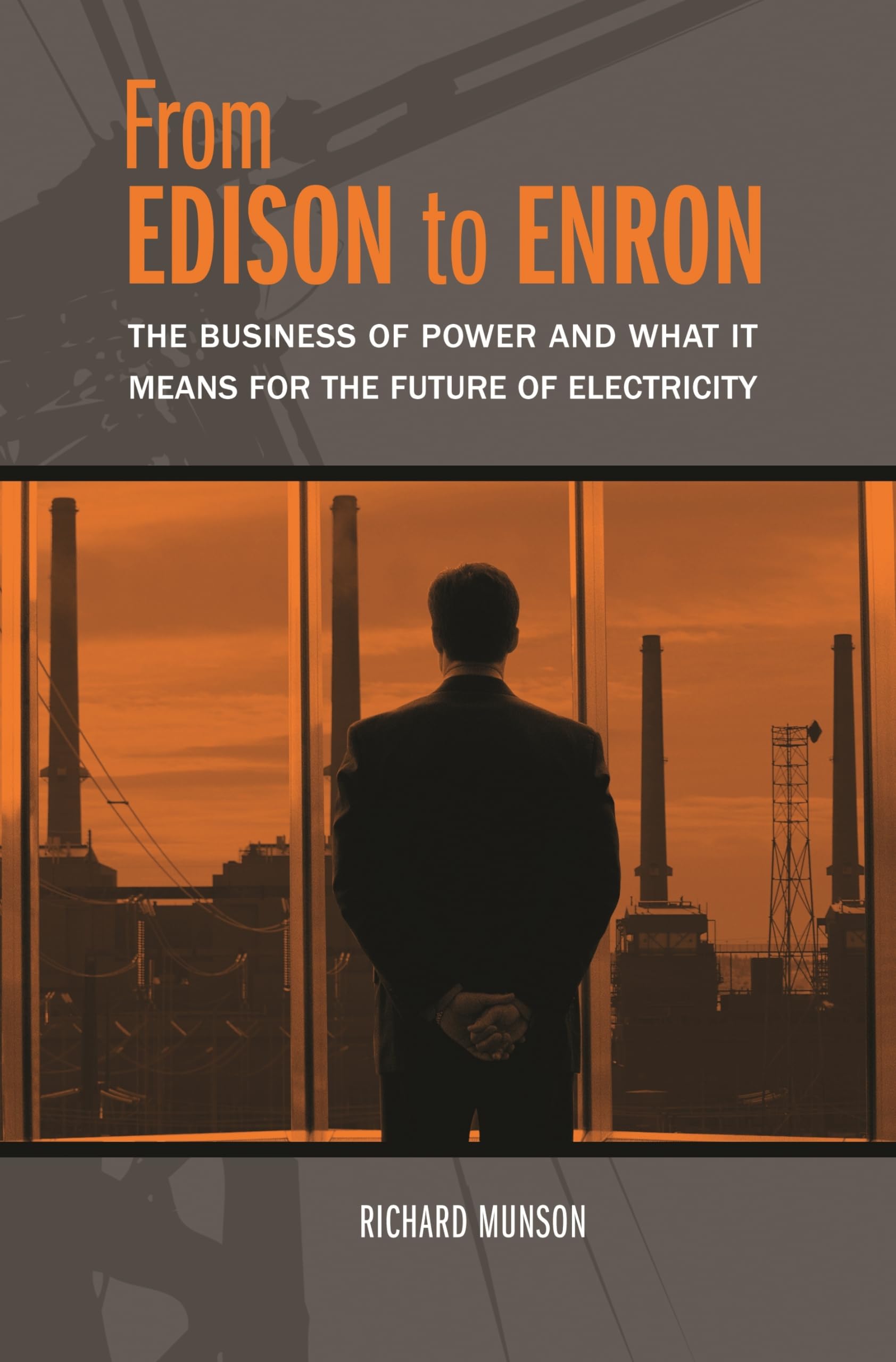
From Edison to Enron: The Business of Power and What It Means for the Future of Electricity,Used
Sold by Ergodebooks, an authorized reseller.
Returns accepted within 30 days | support@ergodebooks.com
Shipping Information
- Free Standard Shipping — United States only
- Processing Time: 3–5 business days
- Estimated Delivery: 6–10 business days after dispatch
- Double-boxed, fully insured & discreetly packaged
- Tracking number sent via email once dispatched
Returns & Refund
Returns accepted within 30 days of delivery.
Damaged or Defective Item
Free return shipping + replacement or full refund
Wrong Item Received
Free return shipping + replacement or full refund
Change of Mind
Return shipping at customer's expense · 25% restocking fee applies
Payment Option

The blackout of 2003 illuminated just how dependent America is on electricity. It was not just that some 50 million people in eight states and Ontario were cut off from their televisions, microwaves, ATMs, and email. Without the electrical juice to keep their sockets alive, factory managers were forced to close production lines, city managers shut down water deliveries, grocery store clerks watched their frozen inventory slowly melt away. Economists estimated that the blackout cost Americans $5 billion even as energy analysts were predicting that a similar blackout could happen again. The catastrophe forced us to marvel at the unusual ability of submicroscopic particles to move like waves inside a wire and cause bulbs to glow. It highlighted the complex requirements for managing the massive generators, transformers, transmission lines, and switch boxes needed to tap and deliver flowing electrons. It encouraged us to recognize the profound impact of electricity on all aspects of commerce and culture.Such events as the blackout, the Enron debacle, and the California brownouts also reveal the cracks in a 100yearold industry structure that have been building ever since Thomas Edison, George Westinghouse, and their contemporaries first managed to harness electricity and make it available to the masses, and tycoons, such as Sam Insull and George Norris, began to concentrate financial control and political influence. From Edison to Enron traces the controversial history of this $210 billion industrythe nation's largestshowcasing the key individuals, technological innovations, corporate machinations, and political battles that have been waged over its domination. Munson maintains that today's technological and regulatory infrastructure, as a function of its history, is a relic that has long outlived its usefulness; he points out that twothirds of the fuel burned to generate electricity is lost, that Americans pay roughly $100 billion too much each year for heat and power, and that environmentally unfriendly generators are the nation's largest polluters. Meanwhile, innovations in technology and business models are being blocked by entrenched monopolies. Ultimately, Munson argues that current policies and practices, including those favored by the Bush Administration, are preventing entrepreneurs from producing more efficient, healthy, and sustainable power supplies. Moreover, he presents an agenda for business and policy reforms that will stimulate economic development in the United States and around the world.
⚠️ WARNING (California Proposition 65):
This product may contain chemicals known to the State of California to cause cancer, birth defects, or other reproductive harm.
For more information, please visit www.P65Warnings.ca.gov.