
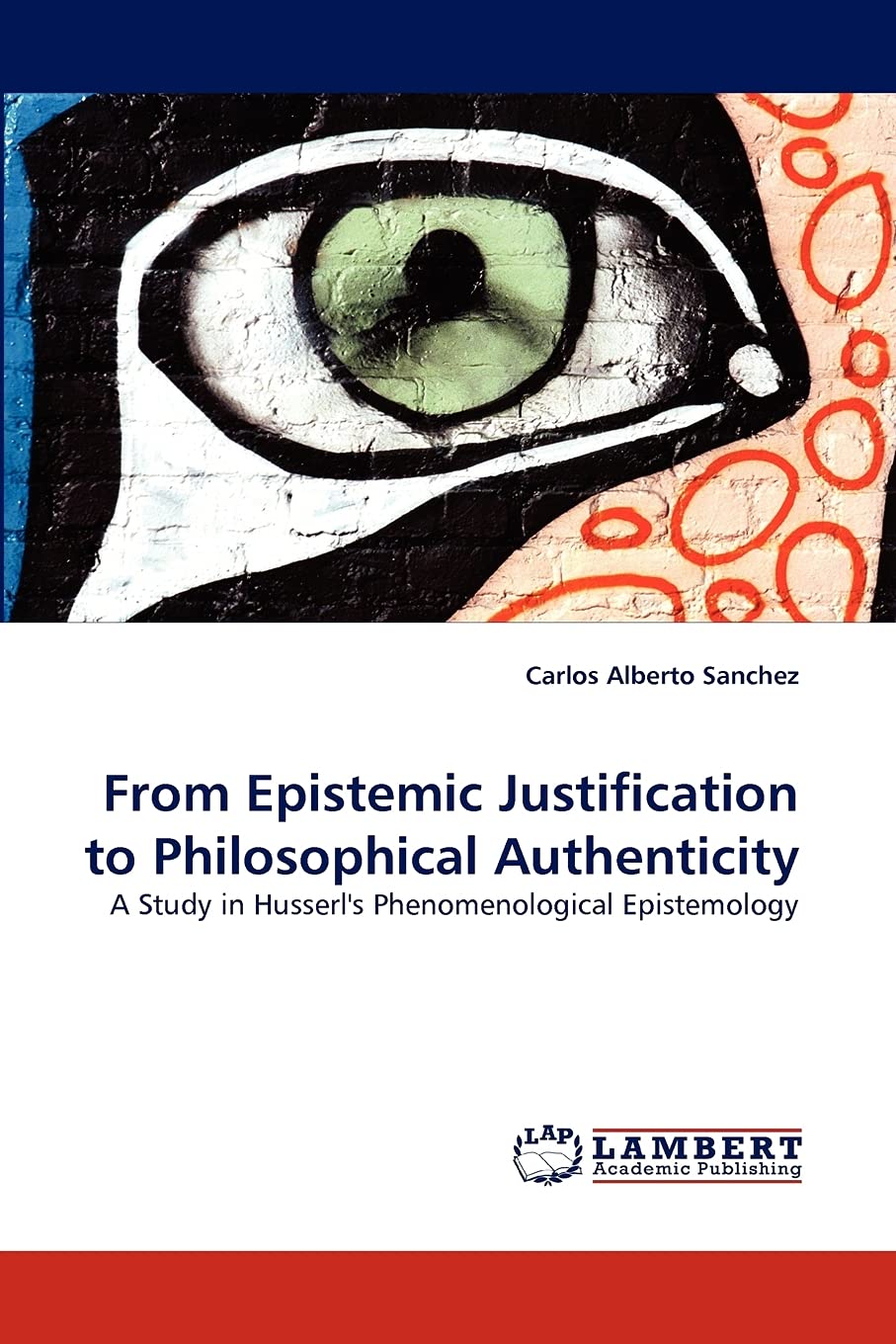
Title
From Epistemic Justification to Philosophical Authenticity: A Study in Husserl's Phenomenological Epistemology,Used
Sold by Ergodebooks, an authorized reseller.
Returns accepted within 30 days | support@ergodebooks.com
Shipping Information
- Free Standard Shipping — United States only
- Processing Time: 3–5 business days
- Estimated Delivery: 6–10 business days after dispatch
- Double-boxed, fully insured & discreetly packaged
- Tracking number sent via email once dispatched
Returns & Refund
Returns accepted within 30 days of delivery.
Damaged or Defective Item
Free return shipping + replacement or full refund
Wrong Item Received
Free return shipping + replacement or full refund
Change of Mind
Return shipping at customer's expense · 25% restocking fee applies
Payment Option

This work engages Edmund Husserl's phenomenological philosophy from the years 1901 to 1913. It argues that central to what Husserl calls 'the phenomenology of reason' is a theory of epistemic justification which proposes that one holds a belief as true when it is 'rational' to hold that belief as true, and this occurs when the belief is justified by an intuitive presentation of the object to which it refers. I focus on three major works of Husserl's early period: Logical Investigations (1900/1), The Idea of Phenomenology (1907), and Ideas Pertaining to a Pure Phenomenology and Phenomenological Philosophy, Book 1 (1913). The claim is that the epistemological ideas leading to the phenomenology of reason follow an uninterrupted and intentional path culminating in the view that it is justification of one's beliefs which allows the thinking subject to overcome her skeptical worries and, ultimately, that it is the phenomenological method itself that serves as the means to achieve philosophical, and human, authenticity.
⚠️ WARNING (California Proposition 65):
This product may contain chemicals known to the State of California to cause cancer, birth defects, or other reproductive harm.
For more information, please visit www.P65Warnings.ca.gov.