
Title
From Farm To Firm: Ruralurban Transition In Developing Countries (Directions In Development) (Directions In Development: Countr,New
Sold by Ergodebooks, an authorized reseller.
Returns accepted within 30 days | support@ergodebooks.com
Shipping Information
- Free Standard Shipping — United States only
- Processing Time: 3–5 business days
- Estimated Delivery: 6–10 business days after dispatch
- Double-boxed, fully insured & discreetly packaged
- Tracking number sent via email once dispatched
Returns & Refund
Returns accepted within 30 days of delivery.
Damaged or Defective Item
Free return shipping + replacement or full refund
Wrong Item Received
Free return shipping + replacement or full refund
Change of Mind
Return shipping at customer's expense · 25% restocking fee applies
Payment Option

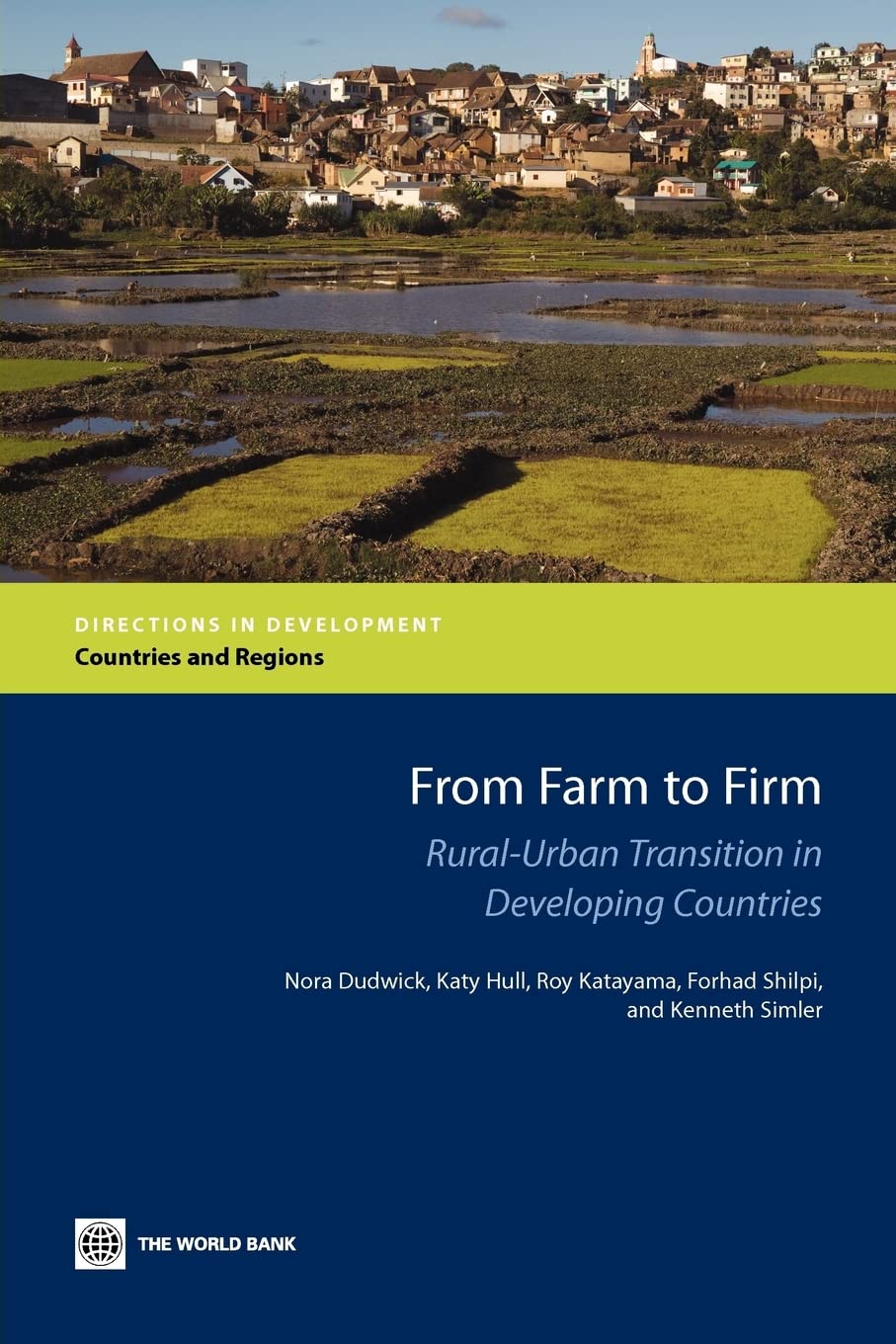
The process of ruralurban transformation presents both opportunities and challenges for development. If managed effectively, it can result in growth that benefits everyone; if managed poorly, it can lead to stark welfare disparities and entire regions cut off from the advantages of agglomeration economies. The importance of ruralurban transition has been confirmed by two consecutive World Development Reports: WDR 2008 Agriculture for Development; and WDR 2009 Reshaping Economic Geography. Focusing on SubSaharan Africa and South Asia, this book picks up where the WDRs left off, investigating the influence of country conditions and policies on the pace, pattern, and consequences of ruralurban transition and suggesting strategies to ensure that its benefits results in shared improvements in wellbeing. The book uncovers vast inequalities, whether between two regions of one country, between rural and urban areas, or within cities themselves. The authors find little evidence to suggest that these inequalities will automatically diminish as countries develop: empirical and qualitative analysis suggests that spatial divides are mainly a function of country conditions, policies and institutions. By implication, policymakers must take active steps to ensure that ruralurban transition results in shared growth. Spatially unbiased provision of health and education services is crucial to ensuring that the benefits of transition are shared by all. But connective infrastructure and targeted interventions also emerge as important considerations, even in countries with severely constrained fiscal and administrative capacity. The authors suggest steps for navigating the tricky political economy of land reforms. And they alert readers to potential spillover effects that mean that policies designed for one space can have unintended consequences on another. Policymakers and development experts, as well as anyone concerned with the impact of ruralurban transition on growth and equity, will find this book a thoughtprovoking and informative read.
⚠️ WARNING (California Proposition 65):
This product may contain chemicals known to the State of California to cause cancer, birth defects, or other reproductive harm.
For more information, please visit www.P65Warnings.ca.gov.