
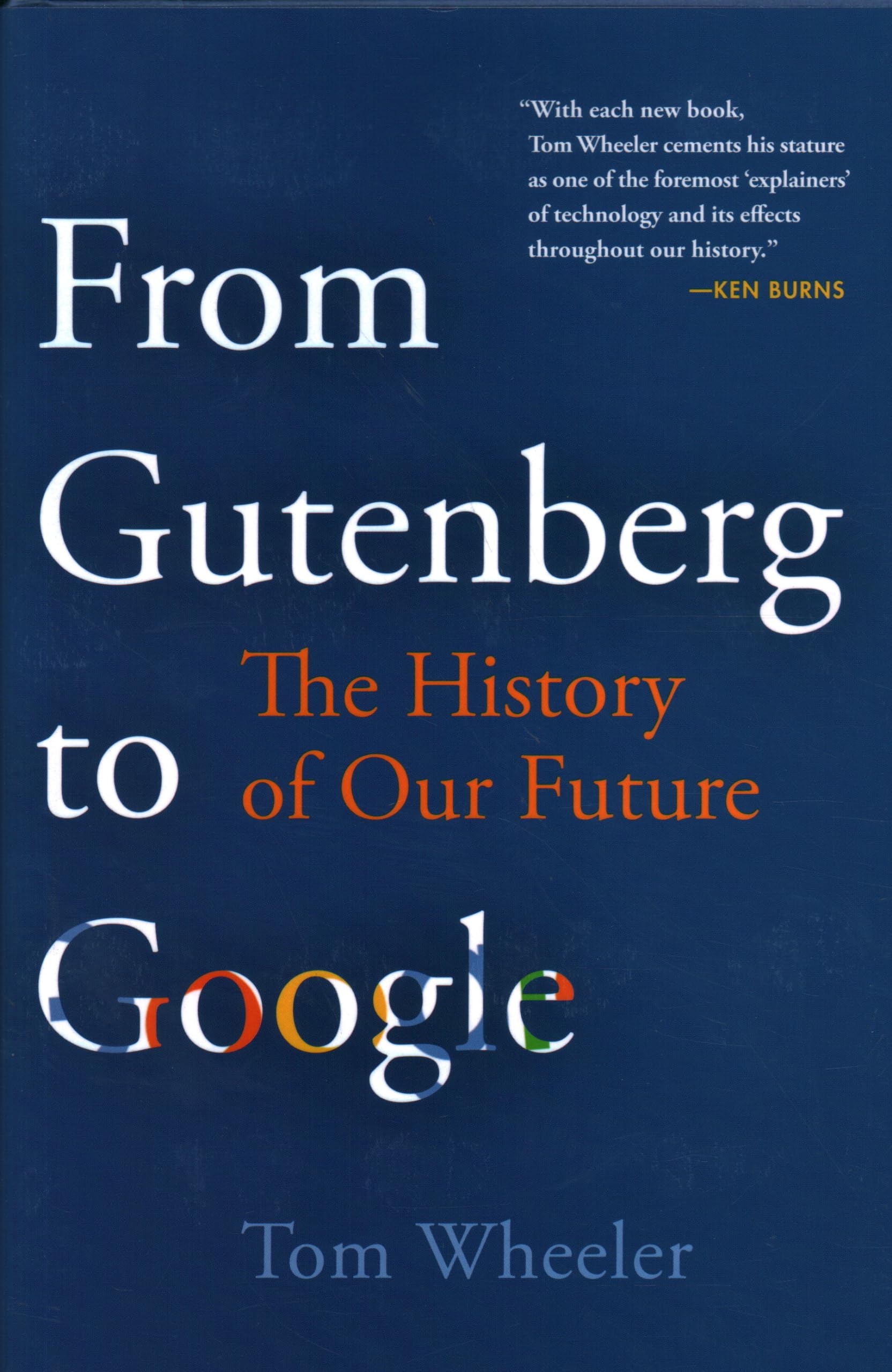
Title
From Gutenberg to Google: The History of Our Future,New
Sold by Ergodebooks, an authorized reseller.
Returns accepted within 30 days | support@ergodebooks.com
Shipping Information
- Free Standard Shipping — United States only
- Processing Time: 3–5 business days
- Estimated Delivery: 6–10 business days after dispatch
- Double-boxed, fully insured & discreetly packaged
- Tracking number sent via email once dispatched
Returns & Refund
Returns accepted within 30 days of delivery.
Damaged or Defective Item
Free return shipping + replacement or full refund
Wrong Item Received
Free return shipping + replacement or full refund
Change of Mind
Return shipping at customer's expense · 25% restocking fee applies
Payment Option

Network revolutions of the past have shaped the present and set the stage for the revolution we are experiencing todayIn an era of seemingly instant change, it's easy to think that today's revolutionsin communications, business, and many areas of daily lifeare unprecedented. Today's changes may be new and may be happening faster than ever before. But our ancestors at times were just as bewildered by rapid upheavals in what we now call networksthe physical links that bind any society together.In this fascinating book, former FCC chairman Tom Wheeler brings to life the two great network revolutions of the past and uses them to help put in perspective the confusion, uncertainty, and even excitement most people face today. The first big network revolution was the invention of movabletype printing in the fifteenth century. This book, its millions of predecessors, and even such broad trends as the Reformation, the Renaissance, and the multiple scientific revolutions of the past 500 years would not have been possible without that one invention. The second revolution came with the invention of the telegraph early in the nineteenth century. Never before had people been able to communicate over long distances faster than a horse could travel. Along with the development of the world's first highspeed networkthe railroadthe telegraph upended centuries of stability and literally redrew the map of the world.Wheeler puts these past revolutions into the perspective of today, when rapidfire changes in networking are upending the nature of work, personal privacy, education, the media, and nearly every other aspect of modern life. But he doesn't leave it there. Outlining 'What's Next,' he describes how artificial intelligence, virtual reality, blockchain, and the need for cybersecurity are laying the foundation for a third network revolution.
⚠️ WARNING (California Proposition 65):
This product may contain chemicals known to the State of California to cause cancer, birth defects, or other reproductive harm.
For more information, please visit www.P65Warnings.ca.gov.
- Q: What is the main theme of 'From Gutenberg to Google'? A: The book explores the history of network revolutions and how they have shaped modern society, focusing on the impact of the printing press and telegraph as well as the ongoing changes brought by digital technology.
- Q: Who is the author of the book? A: The author of 'From Gutenberg to Google: The History of Our Future' is Tom Wheeler, who is a former chairman of the Federal Communications Commission (FCC).
- Q: What are the key historical events discussed in the book? A: The book discusses two major historical events: the invention of movable-type printing in the fifteenth century and the invention of the telegraph in the early nineteenth century.
- Q: How does the author connect past revolutions to today's technology? A: Tom Wheeler connects past revolutions to today’s technology by highlighting how historical changes in communication and networking laid the groundwork for current advancements in artificial intelligence, virtual reality, and blockchain.
- Q: What is the book's perspective on modern networking changes? A: The book presents modern networking changes as a continuation of past revolutions, emphasizing the confusion and excitement they bring to aspects of work, privacy, and education.
- Q: How many pages does the book have? A: The book has a total of 302 pages.
- Q: What type of binding does the book have? A: The book is available in hardcover binding.
- Q: When was 'From Gutenberg to Google' published? A: The book was published on February 26, 2019.
- Q: Is the book suitable for readers interested in technology and history? A: Yes, the book is particularly suitable for readers interested in the intersection of technology and history, as it examines how past innovations influence present and future developments.
- Q: What can readers expect to learn from this book? A: Readers can expect to learn about the historical context of network revolutions, their implications for modern society, and insights into future technological trends.