
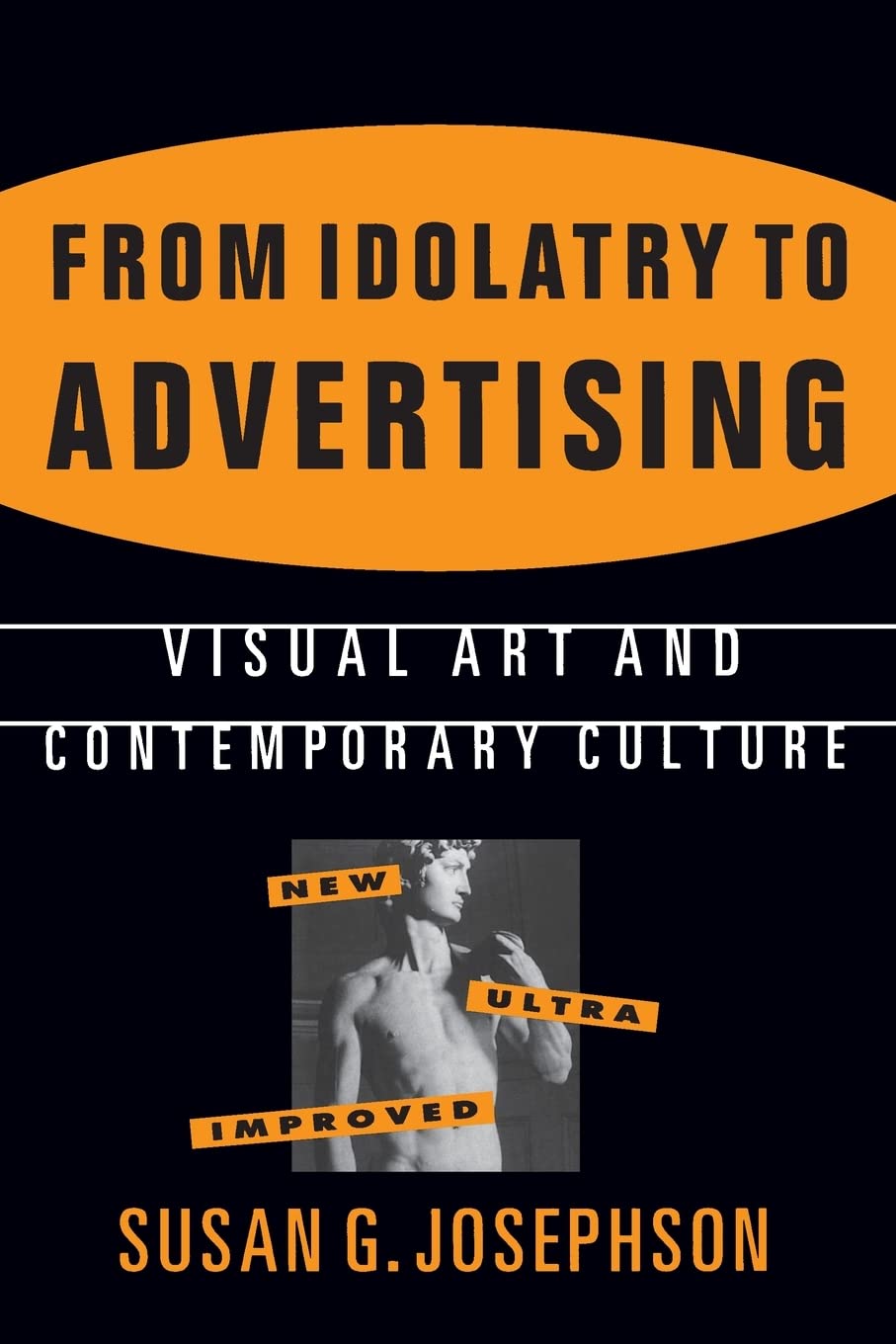
Title

From Idolatry to Advertising: Visual Art and Contemporary Culture: Visual Art and Contemporary Culture,Used
Sold by Ergodebooks, an authorized reseller.
Returns accepted within 30 days | support@ergodebooks.com
Shipping Information
- Free Standard Shipping — United States only
- Processing Time: 3–5 business days
- Estimated Delivery: 6–10 business days after dispatch
- Double-boxed, fully insured & discreetly packaged
- Tracking number sent via email once dispatched
Returns & Refund
Returns accepted within 30 days of delivery.
Damaged or Defective Item
Free return shipping + replacement or full refund
Wrong Item Received
Free return shipping + replacement or full refund
Change of Mind
Return shipping at customer's expense · 25% restocking fee applies
Payment Option

This book records the conclusions that I came to as I thought through the cultural evolution of each of the different sorts of visual art and tried to piece together their story from the perspective of philosophy. Chapter 1 discusses how culture shapes art to be what it is from the outside, like a mold shapes clay, and the great power of art to affect the way we think and to promote cultural change. Chapter 2 discusses the evolution of Fine Art from its birth in the Renaissance to its present old age and decline. Chapter 3 discusses the institutional structures that make art for popular taste its own sort of art, and the culture wars over censorship and whether public art should be Fine Art, or art for popular taste. Chapters 4 and 5 discuss the life histories of design and advertising.This book is also the story of how art interacts with technology. In my work in Artificial Intelligence research I saw that there is an intimate connection between the evolution of design in engineering and design in art. In both sorts of design there is a growing understanding of how to make and use levels of packaging, and how to approach things from the functional perspective of the artifact. This is discussed in Chapter 4. My talk in Chapter 1 of how art styles affect us also reflects this functional approach. That is, instead of approaching art styles in the traditional ways, I have approached them in terms of the tasks of vision and how art delivers information packaged to be understood at different levels of visual processing. Using this functional approach, I stress what art does for us rather than what art is.I also tried to address the evolution of culture given the mass media and mass market, and the role of art in the growing marriage between television and computer. As I thought about computers in my work in Artificial Intelligence, I saw that a new sort of idolatry was arising where ^he computers were being asked to be infallible experts giving us advice on everything from taxes to marriage problems and our health. I saw that computers were being used not just as art tools and artists, but also as art objects like the ancient idols. This started me thinking about how other ancient functions of religion were being filled by advertising and the media.
⚠️ WARNING (California Proposition 65):
This product may contain chemicals known to the State of California to cause cancer, birth defects, or other reproductive harm.
For more information, please visit www.P65Warnings.ca.gov.