
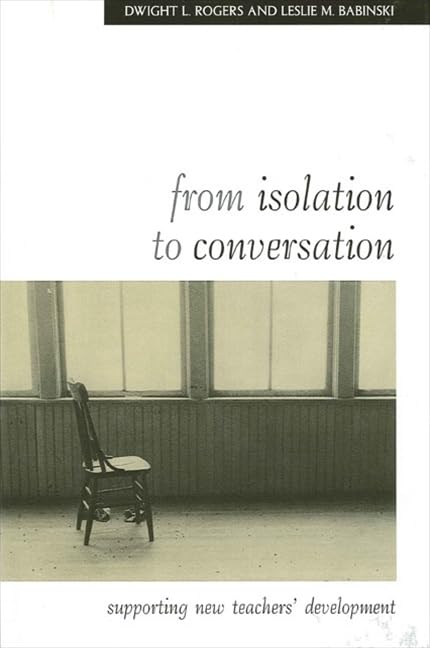
Title
From Isolation to Conversation: Supporting New Teachers' Development (Teacher Preparation and Development),Used
Sold by Ergodebooks, an authorized reseller.
Returns accepted within 30 days | support@ergodebooks.com
Shipping Information
- Free Standard Shipping — United States only
- Processing Time: 3–5 business days
- Estimated Delivery: 6–10 business days after dispatch
- Double-boxed, fully insured & discreetly packaged
- Tracking number sent via email once dispatched
Returns & Refund
Returns accepted within 30 days of delivery.
Damaged or Defective Item
Free return shipping + replacement or full refund
Wrong Item Received
Free return shipping + replacement or full refund
Change of Mind
Return shipping at customer's expense · 25% restocking fee applies
Payment Option

Product DescriptionProvides a model to help new teachers adjust to challenges faced as they begin their classroom careers.ReviewThe section of the book containing the teachers poignant reflections reveals the degree of isolation new teachers often feel. It serves as a reminder to those who work with new teachers about the trials and triumphs of the first year of teaching. The book provides a model for helping teachers evaluate and work toward solving some of the difficulties they encounter through peer discussion and support. Childhood Educationan essential read for district and site administrators who want to retain and encourage teacher effectiveness and growth. Middle GroundThe firstyear teacher is, as the authors convincingly demonstrate, cast into the fire without any mentorship from more experienced teachers and without administrative decisions that would make the first year one of more than just survival. The idea of firstyear teachers serving, in their groups, as experts to other firstyear teachers removes the hierarchy of experience and leads to sharing with serious purpose instead of passive reception with hopelessness. Margaret Zidon, University of North DakotaAbout the AuthorDwight L. Rogers is Associate Professor of Education at the University of North Carolina at Chapel Hill.Leslie M. Babinski is Assistant Professor of Education at Bucknell University.
⚠️ WARNING (California Proposition 65):
This product may contain chemicals known to the State of California to cause cancer, birth defects, or other reproductive harm.
For more information, please visit www.P65Warnings.ca.gov.
- Q: What is the main focus of 'From Isolation to Conversation'? A: The book provides a model to help new teachers adjust to the challenges they face as they begin their classroom careers.
- Q: Who are the authors of this book? A: The authors are Dwight L. Rogers, Associate Professor of Education at the University of North Carolina at Chapel Hill, and Leslie M. Babinski, Assistant Professor of Education at Bucknell University.
- Q: What are some key themes discussed in this book? A: Key themes include the isolation new teachers often feel, the importance of peer discussion and support, and strategies for mentorship and collaboration among first-year teachers.
- Q: Is this book suitable for administrators and educators? A: Yes, the book is recommended for district and site administrators who want to retain and encourage teacher effectiveness and growth.
- Q: What is the condition of the used book? A: The book is classified as 'Used Book in Good Condition', indicating it may show some signs of wear but is still in a usable state.
- Q: How many pages does this book have? A: The book contains 135 pages.
- Q: What is the binding type of this book? A: This book is available in paperback binding.
- Q: When was this book published? A: The book was published on February 19, 2002.
- Q: Can this book help new teachers improve their teaching skills? A: Yes, it provides insights and models for new teachers to evaluate and address the difficulties they encounter through peer support.
- Q: What is the significance of peer discussion in this book? A: Peer discussion is highlighted as a critical element for new teachers to share experiences, reduce feelings of isolation, and foster a collaborative learning environment.