
Title
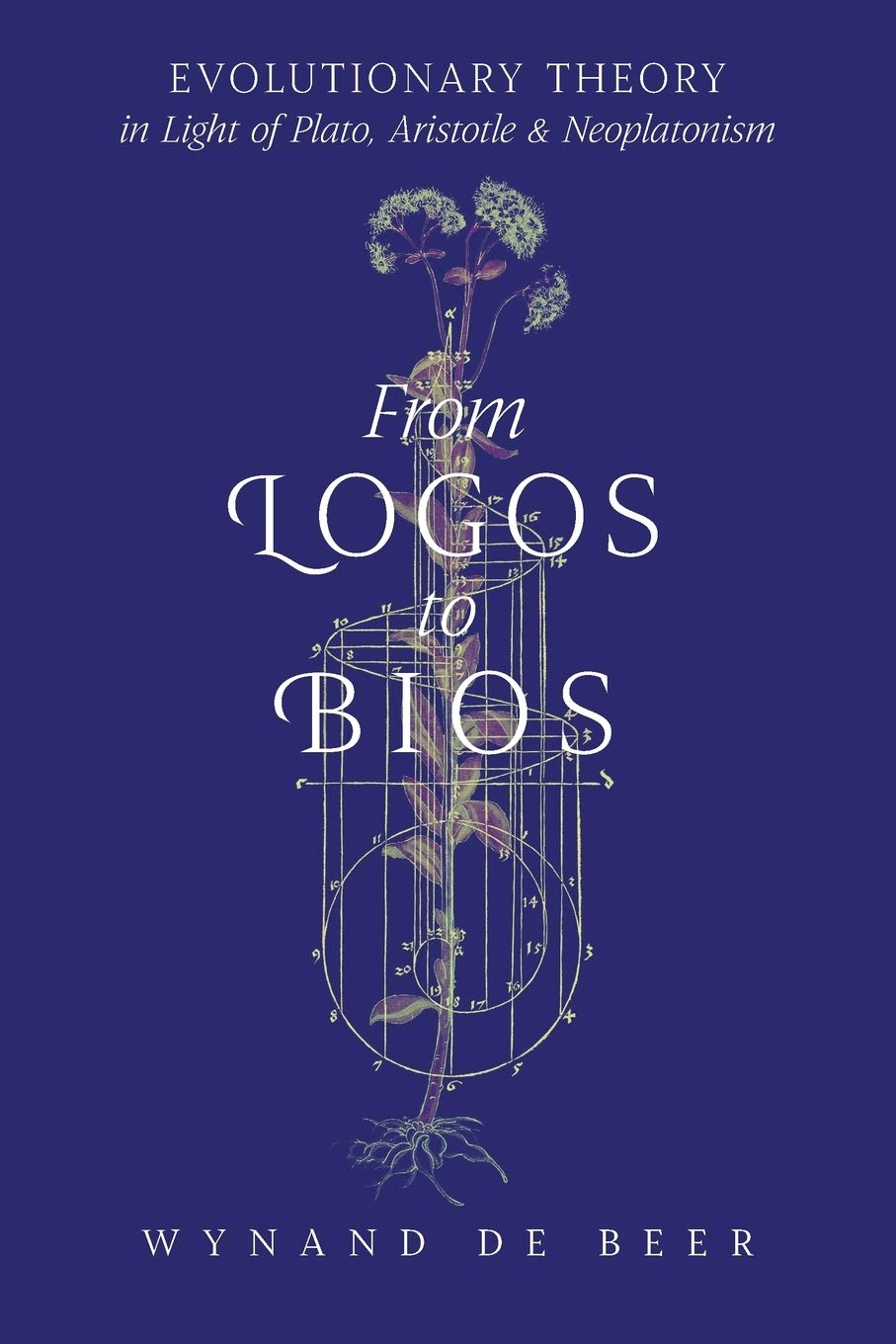
From Logos to Bios: Evolutionary Theory in Light of Plato, Aristotle & Neoplatonism,Used
Sold by Ergodebooks, an authorized reseller.
Returns accepted within 30 days | support@ergodebooks.com
Shipping Information
- Free Standard Shipping — United States only
- Processing Time: 3–5 business days
- Estimated Delivery: 6–10 business days after dispatch
- Double-boxed, fully insured & discreetly packaged
- Tracking number sent via email once dispatched
Returns & Refund
Returns accepted within 30 days of delivery.
Damaged or Defective Item
Free return shipping + replacement or full refund
Wrong Item Received
Free return shipping + replacement or full refund
Change of Mind
Return shipping at customer's expense · 25% restocking fee applies
Payment Option

In this groundbreaking book, Wynand de Beer utilizes insights derived from Hellenic cosmology and biophilosophy in a wideranging discussion of the fundamental question of the origins and mechanisms of organic diversity on our planet Earth. These insights include: the numerical cosmology of Pythagoras and its extension into the organic realm; the Logos of Heraclitus as cosmic lawgiver and regulator; the role of the Demiurge in Platos cosmology; the fourfold causal scheme of Aristotle; the Neoplatonic reasonprinciples (logoi) indwelling the manifested order; and the hierarchical, allembracing Chain of Being linking the levels of cosmic realityan essential element in Greek Patristic and Latin Scholastic traditions. Building upon the traditional concept of evolution as the unfolding of inherent possibilities, de Beer also explores organic form and transformation, emphasizing the mathematical foundations thereof.The NeoDarwinian theory of evolution is subjected to a wide range of criticism on both philosophical and scientific grounds, without denying the reality of organic evolution. A clear distinction is made between two dimensions of evolution: microevolution and macroevolution. The author develops an alternative theory of macroevolution, characterized by regularity, direction, and convergence, incorporating nomogenesis (evolution according to natural law) and orthogenesis (directed evolution). In this way evidence from palaeontology and molecular biology is accommodated, while fulfilling the metaphysical requirements of formal and final causality.From Logos to Bios provides a welcome reminder of approaches to evolution, and to nature in general, that lie beyond the amputated imaginations of UltraDarwinists and materialist ideologues. Moreover, we are in the authors debt for drawing to our attention again the genius of DArcy Thompson, whose expansive approach to nature is more than ever needed, not only in cuttingedge biology, but in chemistry and physics alsoa state of affairs requiring, nay, demanding, just such a return of a rich metaphysics as this book encourages and exemplifies.CONOR CUNNINGHAM, author of Darwins Pious IdeaWynand de Beer takes on some of the most difficult questions facing a student of nature: the origins of form in living things and the apparent directedness of biological evolution. Anyone interested in these critical matters will find here much food for thought.DAVID BRADSHAW, author of Aristotle East and West: Metaphysics and the Division of ChristendomAn invaluable contribution to the critique of Darwinism: in a domain comprising a thousand treatises of just about every description, de Beers pervasive reference to the metaphysical traditions of antiquity adds a focus and dimension of depth truly deserving of the epithet new.WOLFGANG SMITH, author of Cosmos & Transcendence and The Quantum EnigmaFor any thinking person it has been apparent for some time that a new conversation is sorely needed about the world of living beings. With From Logos to Bios, we now have Wynand de Beer to thank for initiating this conversation. Tossing out Darwinian dogma while focusing traditional themes upon the great mystery of organic forms in the Great Chain of Being, de Beer brings forward Hellenic philosophy, with its acute analyses of causation, as an interlocutor in this imperative conversation. This is joy enough, but he also enlists DArcy Wentworth Thompsons work to discover the simple principle of turning inside out at the heart of the complexity of organic evolution. From Logos to Bios offers a superbly cleareyed path of escape from the tangled bank Darwin sculpted, and to which the materialist world still haplessly clings.KEVIN DANN, author of Across the Great Border Fault: The Naturalist Myth in America
⚠️ WARNING (California Proposition 65):
This product may contain chemicals known to the State of California to cause cancer, birth defects, or other reproductive harm.
For more information, please visit www.P65Warnings.ca.gov.
- Q: What is the main focus of 'From Logos to Bios'? A: The book explores evolutionary theory through the lens of Hellenic cosmology and bio-philosophy, discussing the origins and mechanisms of organic diversity.
- Q: Who is the author of 'From Logos to Bios'? A: The author is Wynand de Beer, who integrates insights from ancient philosophy into modern discussions of evolution.
- Q: What are the key themes discussed in the book? A: Key themes include the numerical cosmology of Pythagoras, the Logos of Heraclitus, the role of the Demiurge in Plato’s cosmology, and Neoplatonic principles.
- Q: How does this book differ from traditional Darwinian perspectives? A: It critiques Neo-Darwinian theory and presents an alternative view on macro-evolution, emphasizing natural law and directed evolution.
- Q: What is the significance of the Chain of Being in the book? A: The Chain of Being is presented as a fundamental concept linking different levels of cosmic reality, relevant in both Greek and Latin traditions.
- Q: Is 'From Logos to Bios' suitable for beginners in evolutionary studies? A: While the book engages with complex philosophical ideas, it is designed to provoke thought and is suitable for anyone interested in evolution, including beginners.
- Q: What type of readers would benefit from this book? A: Readers interested in philosophy, biology, and the critique of Darwinism, as well as those exploring the intersections between science and metaphysics, will find it beneficial.
- Q: What is the publication date of 'From Logos to Bios'? A: The book was published on April 11, 2018.
- Q: How many pages does 'From Logos to Bios' have? A: The book contains 290 pages.
- Q: What format is 'From Logos to Bios' available in? A: It is available in paperback format.