
Title
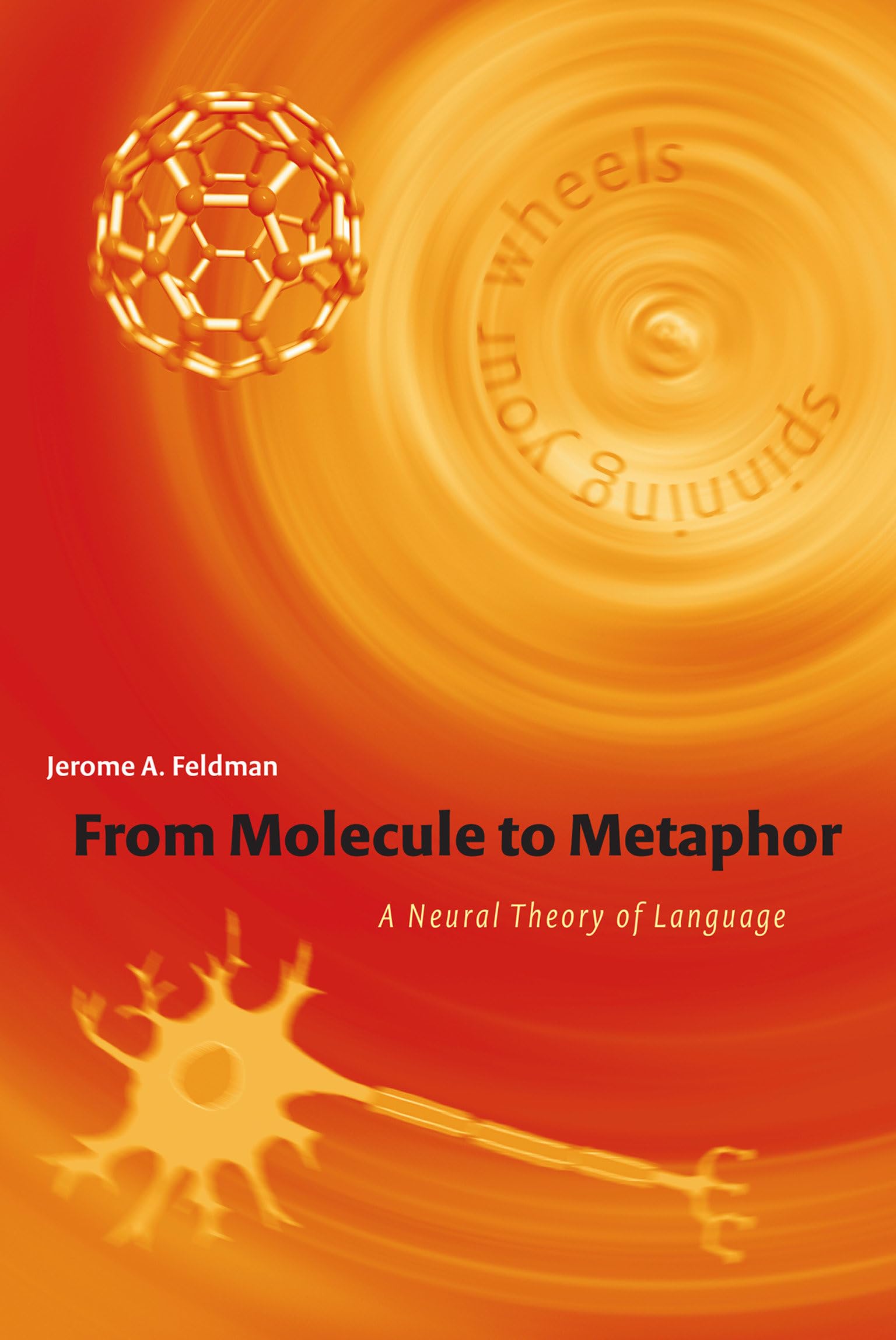
From Molecule To Metaphor: A Neural Theory Of Language (Bradford Books),Used
Sold by Ergodebooks, an authorized reseller.
Returns accepted within 30 days | support@ergodebooks.com
Shipping Information
- Free Standard Shipping — United States only
- Processing Time: 3–5 business days
- Estimated Delivery: 6–10 business days after dispatch
- Double-boxed, fully insured & discreetly packaged
- Tracking number sent via email once dispatched
Returns & Refund
Returns accepted within 30 days of delivery.
Damaged or Defective Item
Free return shipping + replacement or full refund
Wrong Item Received
Free return shipping + replacement or full refund
Change of Mind
Return shipping at customer's expense · 25% restocking fee applies
Payment Option

In From Molecule to Metaphor, Jerome Feldman proposes a theory of language and thought that treats language not as an abstract symbol system but as a human biological ability that can be studied as a function of the brain, as vision and motor control are studied. This theory, he writes, is a 'bridging theory' that works from extensive knowledge at two ends of a causal chain to explicate the links between. Although the cognitive sciences are revealing much about how our brains produce language and thought, we do not yet know exactly how words are understood or have any methodology for finding out. Feldman develops his theory in computer simulationsformal models that suggest ways that language and thought may be realized in the brain. Combining key findings and theories from biology, computer science, linguistics, and psychology, Feldman synthesizes a theory by exhibiting programs that demonstrate the required behavior while remaining consistent with the findings from all disciplines.After presenting the essential results on language, learning, neural computation, the biology of neurons and neural circuits, and the mind/brain, Feldman introduces specific demonstrations and formal models of such topics as how children learn their first words, words for abstract and metaphorical concepts, understanding stories, and grammar (including 'hotbutton' issues surrounding the innateness of human grammar). With this accessible, comprehensive book Feldman offers readers who want to understand how our brains create thought and language a theory of language that is intuitively plausible and also consistent with existing scientific data at all levels.
⚠️ WARNING (California Proposition 65):
This product may contain chemicals known to the State of California to cause cancer, birth defects, or other reproductive harm.
For more information, please visit www.P65Warnings.ca.gov.
- Q: What is the page count of this book? A: This book has three hundred seventy-eight pages. It provides an in-depth exploration of language and thought.
- Q: What are the dimensions of the book? A: The book measures five point nine eight inches in length, zero point nine four inches in width, and nine point zero two inches in height. These dimensions make it easy to handle and read.
- Q: What type of binding does this book have? A: This book is paperback bound. This type of binding is lightweight and flexible, ideal for easy reading.
- Q: Who is the author of this book? A: The author of this book is Jerome Feldman. He presents a unique theory on language and thought in this work.
- Q: What is the main topic of this book? A: This book discusses the neural theory of language. It explores how language is a biological ability studied through brain functions.
- Q: What features does this book include? A: The book features new condition, mint condition quality, same-day dispatch for orders received before noon, guaranteed packaging, and a no-quibble return policy. This ensures a positive buying experience.
- Q: Who would benefit from reading this book? A: This book is suitable for anyone interested in psychology and linguistics. It is particularly beneficial for students and professionals in cognitive sciences.
- Q: Can this book help in understanding language acquisition? A: Yes, the book provides insights into how children learn their first words. It discusses various aspects of language development.
- Q: Is this book accessible for general readers? A: Yes, the book is written in an accessible manner. It synthesizes complex theories into understandable concepts for a broad audience.
- Q: What are the key themes explored in this book? A: Key themes include language learning, neural computation, and the biology of neurons. These themes connect language with cognitive and biological sciences.
- Q: How should I store this book to keep it in good condition? A: Store this book in a cool, dry place away from direct sunlight. This will help maintain its condition and prevent fading.
- Q: Are there any special care instructions for this book? A: No special care instructions are necessary. Just handle it gently and keep it away from moisture to preserve its quality.
- Q: What if my book arrives damaged? A: If your book arrives damaged, you can return it under the no-quibble returns policy. Ensure to contact customer service for assistance.
- Q: Is this book suitable for academic purposes? A: Yes, this book is suitable for academic purposes. It provides a comprehensive overview of theories relevant to cognitive sciences.
- Q: How can I return the book if I am not satisfied? A: You can return the book by following the no-quibble return policy. Ensure to keep the original packaging for a smooth return process.
- Q: Does this book include practical examples of its theories? A: Yes, the book includes computer simulations and formal models as practical examples. These demonstrations clarify the theories presented.