
Title
From Monuments To Traces: Artifacts Of German Memory, 18701990 (Weimar And Now: German Cultural Criticism) (Volume 24),New
Sold by Ergodebooks, an authorized reseller.
Returns accepted within 30 days | support@ergodebooks.com
Shipping Information
- Free Standard Shipping — United States only
- Processing Time: 3–5 business days
- Estimated Delivery: 6–10 business days after dispatch
- Double-boxed, fully insured & discreetly packaged
- Tracking number sent via email once dispatched
Returns & Refund
Returns accepted within 30 days of delivery.
Damaged or Defective Item
Free return shipping + replacement or full refund
Wrong Item Received
Free return shipping + replacement or full refund
Change of Mind
Return shipping at customer's expense · 25% restocking fee applies
Payment Option

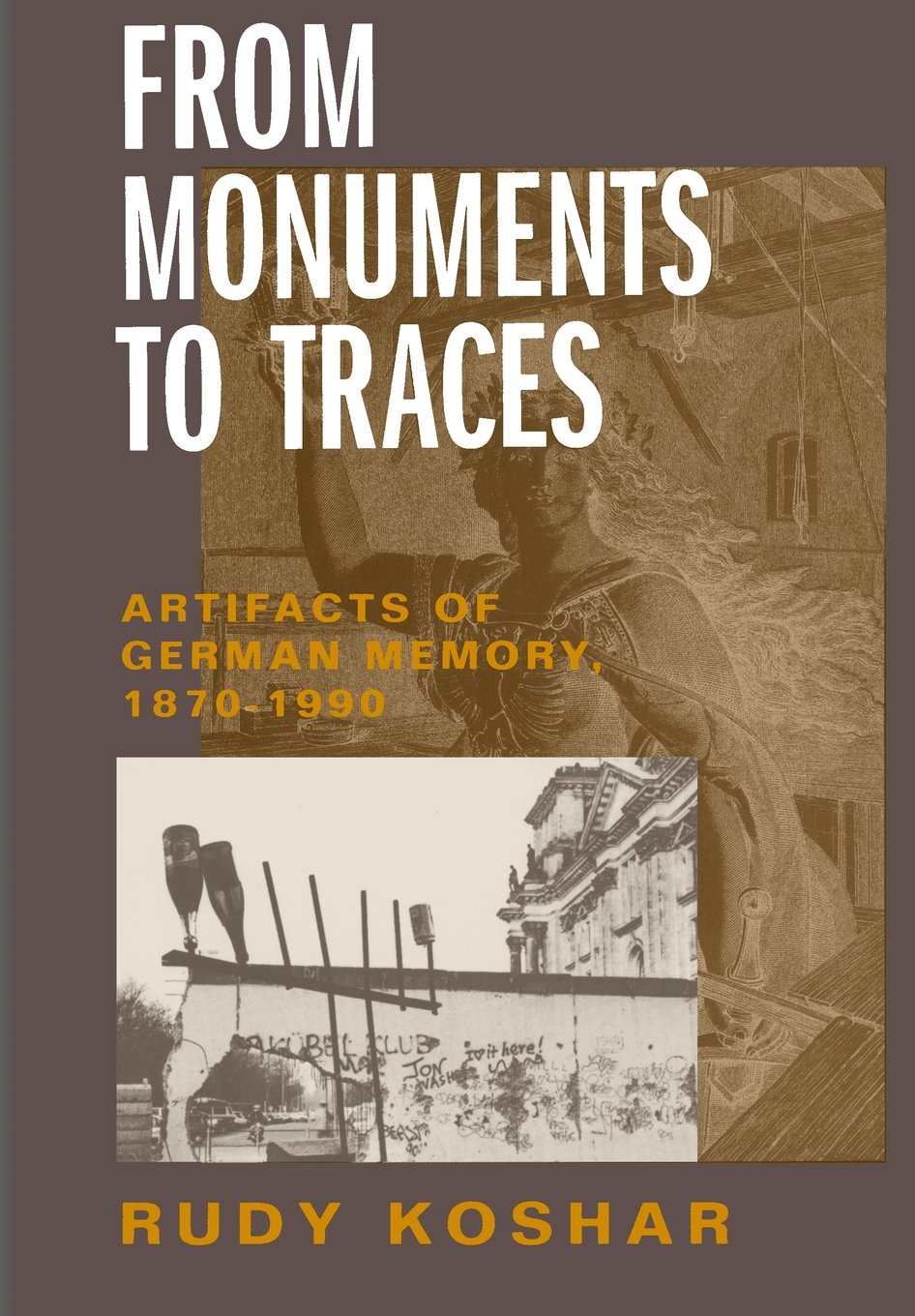
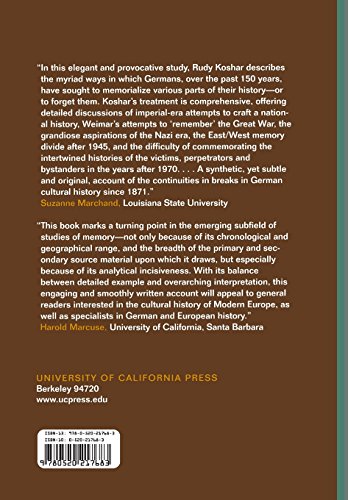
Rudy Koshar Constructs A Powerful Framework In Which To Examine The Subject Of German Collective Memory, Which For More Than A Half Century Has Been Shaped By The Experience Of Nazism, World War Ii, And The Holocaust. Finding The Assumptions Of Many Writers And Scholars Shortsighted, Koshar Surveys The Evidence Of Postwar German Memory In The Context Of Previous Traditions. From Monuments To Traces Follows The Evolution Of German 'Memory Landscapes' All The Way From National Unification In 187071 Through The World Wars And Political Division To Reunification In 1990.The Memory Landscapes Of Any Society May Incorporate Monuments, Historical Buildings, Memorials And Cemeteries, Battlefields, Streets, Or Natural Environments That Foster Shared Memories Of Important Events Or Personalities. They May Also Be Designed To Divert Public Attention From Embarrassing Or Traumatic Histories. Koshar Argues That In Germany, Memory Landscapes Have Taken Shape According To Four Separate Paradigmsthe National Monument, The Ruin, The Reconstruction, And The Tracewhich He Analyzes In Relation To The Changing Political Agendas That Have Guided Them Over Time. Despite The Massive Ruptures Of Germany'S History, We See That Significant Continuities Have Served To Counterbalance The Traumas Of The German Past.
⚠️ WARNING (California Proposition 65):
This product may contain chemicals known to the State of California to cause cancer, birth defects, or other reproductive harm.
For more information, please visit www.P65Warnings.ca.gov.
- Q: How many pages does the book have? A: The book has three hundred sixty-eight pages. This length allows for an in-depth exploration of German collective memory.
- Q: What is the binding type of this book? A: The book is hardcover. This provides durability and a premium feel compared to paperback editions.
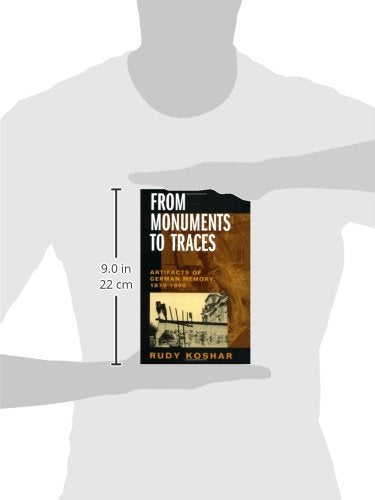
- Q: What are the dimensions of the book? A: The book measures six point two two inches in length, one point two inches in width, and nine point two five inches in height. These dimensions make it a standard size for easy handling.
- Q: Who is the author of this book? A: The author is Rudy Koshar. He is known for his contributions to the field of German cultural criticism.
- Q: What historical context does this book cover? A: The book covers German history from eighteen seventy to nineteen ninety. It examines the evolution of memory landscapes surrounding significant historical events.
- Q: What themes are explored in this book? A: The book explores themes of collective memory, trauma, and the impact of Nazism and World War II on German society. It analyzes how these memories shape cultural identity.
- Q: How does this book approach German collective memory? A: The book constructs a framework to critically examine German collective memory. It challenges existing narratives and provides a broader historical context.
- Q: Is this book suitable for academic research? A: Yes, the book is suitable for academic research. It provides a thorough analysis backed by historical evidence, making it a valuable resource.
- Q: What type of readers would benefit from this book? A: Readers interested in history, cultural studies, and German studies would benefit from this book. It is particularly useful for scholars and students.
- Q: What is the main argument of the author? A: The main argument is that German memory landscapes are shaped by four paradigms: national monument, ruin, reconstruction, and trace. Koshar analyzes their evolution over time.
- Q: How can I ensure this book stays in good condition? A: To keep this book in good condition, store it upright on a shelf away from direct sunlight. Avoid exposing it to moisture to prevent damage.
- Q: What should I do if the book arrives damaged? A: If the book arrives damaged, contact the seller for a return or exchange. Most sellers have a policy to address such issues promptly.
- Q: Can this book be used for a book club discussion? A: Yes, this book can be used for a book club discussion. Its rich themes and historical context provide ample material for conversation.
- Q: Is this book appropriate for children? A: No, this book is not appropriate for children. It discusses complex historical topics that may not be suitable for younger audiences.
- Q: What insights does the book offer about Germany's past? A: The book offers insights into how Germany's past traumas influence contemporary memory and identity. It explores how societies remember and forget.
- Q: Does this book include references or a bibliography? A: Yes, the book includes references and a bibliography. This supports its academic rigor and provides sources for further reading.