
Title
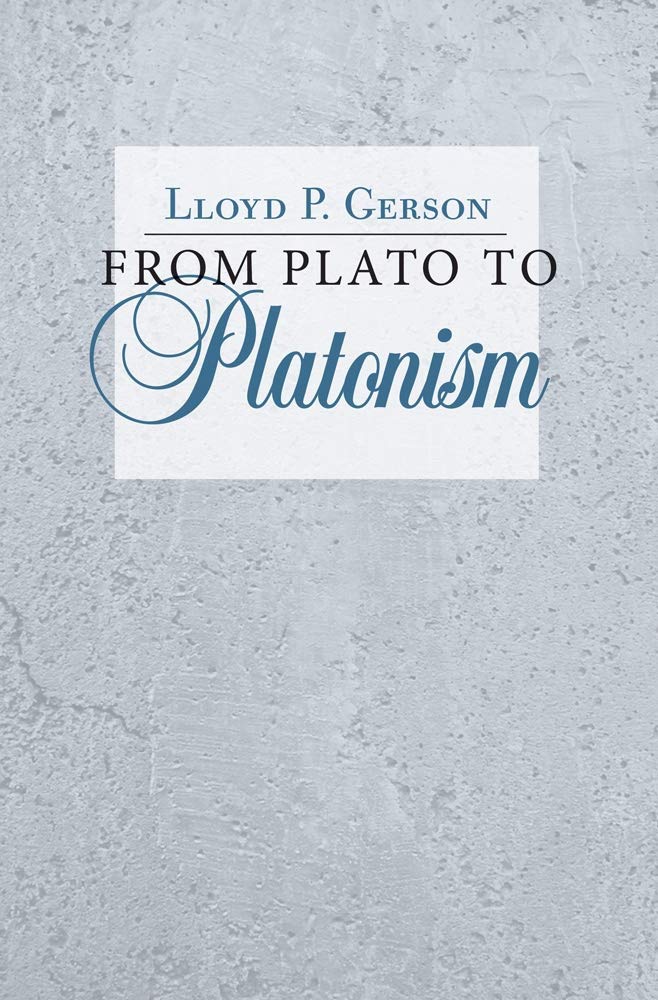
From Plato to Platonism,Used
Sold by Ergodebooks, an authorized reseller.
Returns accepted within 30 days | support@ergodebooks.com
Shipping Information
- Free Standard Shipping — United States only
- Processing Time: 3–5 business days
- Estimated Delivery: 6–10 business days after dispatch
- Double-boxed, fully insured & discreetly packaged
- Tracking number sent via email once dispatched
Returns & Refund
Returns accepted within 30 days of delivery.
Damaged or Defective Item
Free return shipping + replacement or full refund
Wrong Item Received
Free return shipping + replacement or full refund
Change of Mind
Return shipping at customer's expense · 25% restocking fee applies
Payment Option

"Gerson's book is a highly valuable, wellwritten contribution to Platonism research. It persuasively makes a case for understanding Plato's philosophy as a coherent system that has an intricate and meaningful relation to later Platonistic philosophical positions. From this point, Plato appears as a Platonist indeed." Claas Lattman CLASSICAL JOURNALWas Plato a Platonist? While ancient disciples of Plato would have answered this question in the affirmative, modern scholars have generally denied that Platos own philosophy was in substantial agreement with that of the Platonists of succeeding centuries. In From Plato to Platonism, Lloyd P. Gerson argues that the ancients are correct in their assessment. He arrives at this conclusion in an especially ingenious manner, challenging fundamental assumptions about how Platos teachings have come to be understood. Through deft readings of the philosophical principles found in Plato's dialogues and in the Platonic tradition beginning with Aristotle, he shows that Platonism, broadly conceived, is the polar opposite of naturalism and that the history of philosophy from Plato until the seventeenth century was the history of various efforts to find the most consistent and complete version of "antinaturalism."Gerson contends that the philosophical position of PlatoPlatos own Platonism, so to speakwas produced out of a matrix he calls "UrPlatonism." According to Gerson, UrPlatonism is the conjunction of five "antis" that in total arrive at antinaturalism: antinominalism, antimechanism, antimaterialism, antirelativism, and antiskepticism. Platos Platonism is an attempt to construct the most consistent and defensible positive system uniting the five "antis." It is also the system that all later Platonists throughout Antiquity attributed to Plato when countering attacks from critics including Peripatetics, Stoics, and Sceptics.In conclusion, Gerson shows that Late Antique philosophers such as Proclus were right in regarding Plotinus as "the great exegete of the Platonic revelation."
⚠️ WARNING (California Proposition 65):
This product may contain chemicals known to the State of California to cause cancer, birth defects, or other reproductive harm.
For more information, please visit www.P65Warnings.ca.gov.