If you have any questions, you are always welcome to contact us. We'll get back to you as soon as possible, withing 24 hours on weekdays.
Customer service
All questions about your order, return and delivery must be sent to our customer service team by e-mail at yourstore@yourdomain.com
Sale & Press
If you are interested in selling our products, need more information about our brand or wish to make a collaboration, please contact us at press@yourdomain.com
Help
If you have any questions, you are always welcome to contact us. We'll get back to you as soon as possible, withing 24 hours on weekdays.
Customer service
All questions about your order, return and delivery must be sent to our customer service team by e-mail at yourstore@yourdomain.com
Sale & Press
If you are interested in selling our products, need more information about our brand or wish to make a collaboration, please contact us at press@yourdomain.com
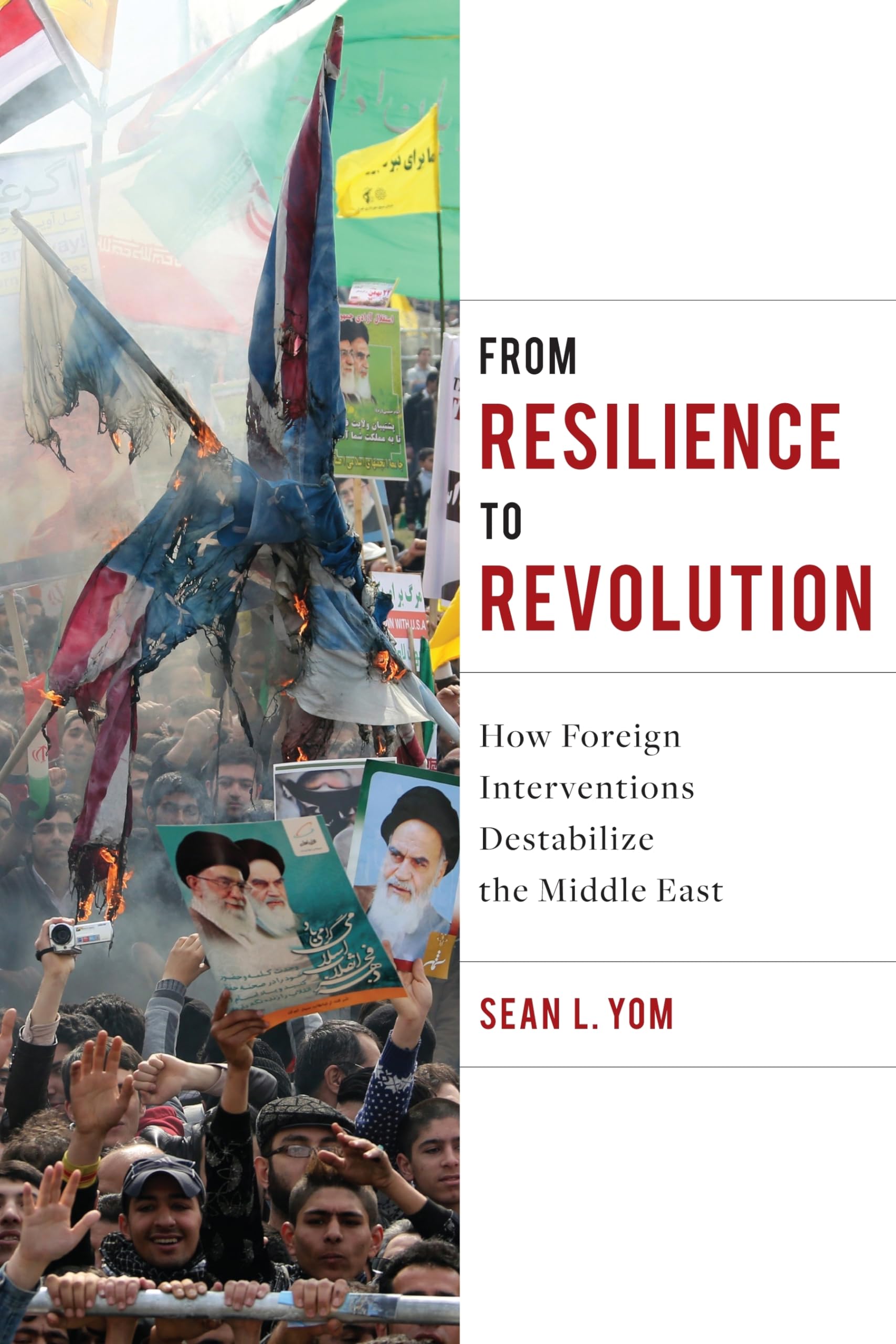
Based on comparative historical analyses of Iran, Jordan, and Kuwait, Sean L. Yom examines the foreign interventions, coalitional choices, and state outcomes that made the political regimes of the modern Middle East. A key text for foreign policy scholars, From Resilience to Revolution shows how outside interference can corrupt the most basic choices of governance: who to reward, who to punish, who to compensate, and who to manipulate.As colonial rule dissolved in the 1930s and 1950s, Middle Eastern autocrats constructed new political states to solidify their reigns, with varying results. Why did equally ambitious authoritarians meet such unequal fates? Yom ties the durability of Middle Eastern regimes to their geopolitical origins. At the dawn of the postcolonial era, many autocratic states had little support from their people and struggled to overcome widespread opposition. When foreign powers intervened to bolster these regimes, they unwittingly sabotaged the prospects for longterm stability by discouraging leaders from reaching out to their people and bargaining for mass supportearly coalitional decisions that created repressive institutions and planted the seeds for future unrest. Only when they were secluded from larger geopolitical machinations did Middle Eastern regimes come to grips with their weaknesses and build broader coalitions.
⚠️ WARNING (California Proposition 65):
This product may contain chemicals known to the State of California to cause cancer,
birth defects, or other reproductive harm.
For MAP (Minimum Advertised Price) violations and Intellectual Property (IP) or Trademark concerns, please contact:
support@ergodebooks.com
⚠️ California Proposition 65 Warning: Some products sold on this website may expose you to chemicals known to the State of California to cause cancer, birth defects, or other reproductive harm. For more information, visit www.P65Warnings.ca.gov.