
Title
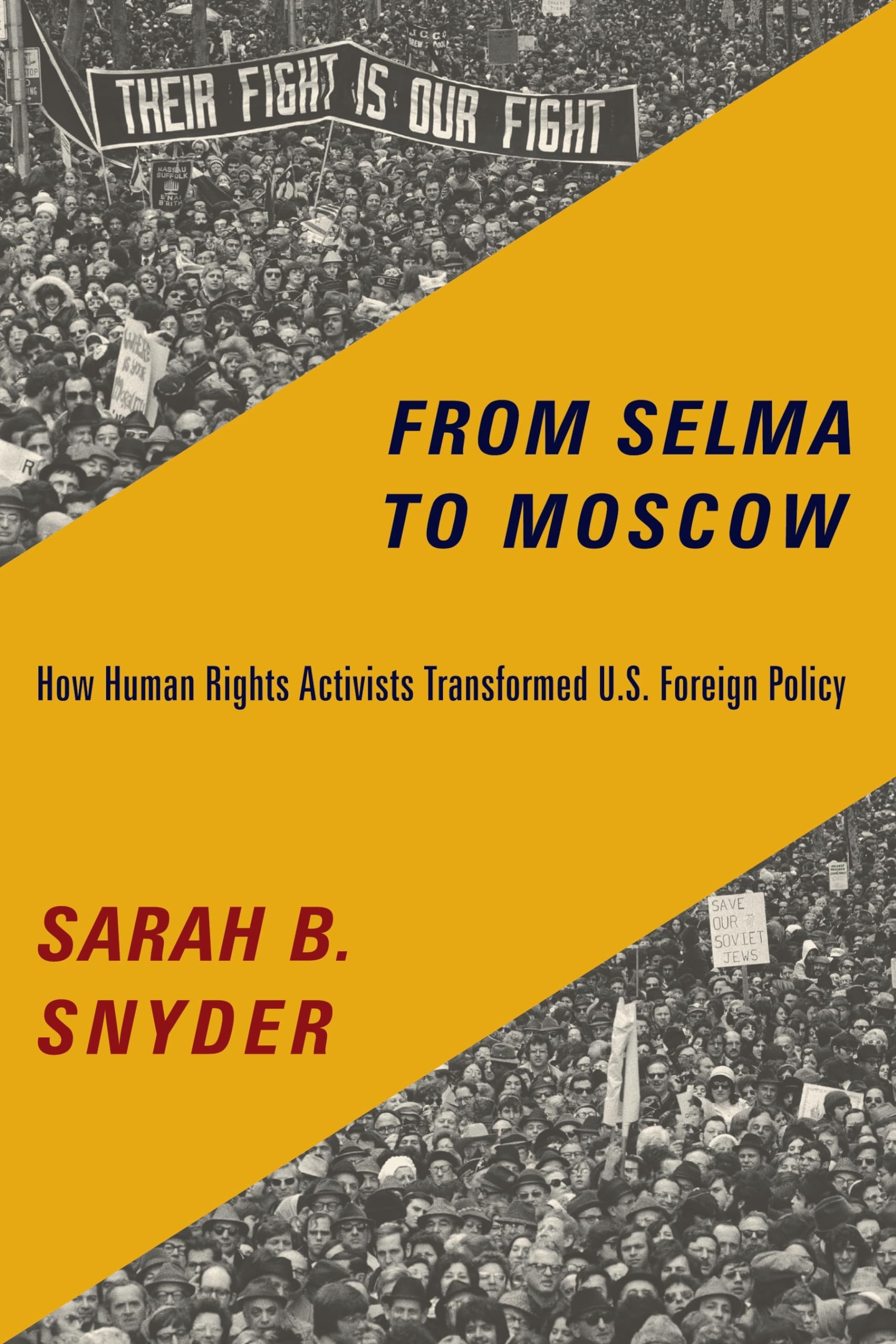
From Selma to Moscow: How Human Rights Activists Transformed U.S. Foreign Policy,Used
Sold by Ergodebooks, an authorized reseller.
Returns accepted within 30 days | support@ergodebooks.com
Shipping Information
- Free Standard Shipping — United States only
- Processing Time: 3–5 business days
- Estimated Delivery: 6–10 business days after dispatch
- Double-boxed, fully insured & discreetly packaged
- Tracking number sent via email once dispatched
Returns & Refund
Returns accepted within 30 days of delivery.
Damaged or Defective Item
Free return shipping + replacement or full refund
Wrong Item Received
Free return shipping + replacement or full refund
Change of Mind
Return shipping at customer's expense · 25% restocking fee applies
Payment Option

The 1960s marked a transformation of human rights activism in the United States. At a time of increased concern for the rights of their fellow citizenscivil and political rights, as well as the social and economic rights that Great Society programs sought to securemany Americans saw inconsistencies between domestic and foreign policy and advocated for a new approach. The activism that arose from the upheavals of the 1960s fundamentally altered U.S. foreign policyyet previous accounts have often overlooked its crucial role.In From Selma to Moscow, Sarah B. Snyder traces the influence of human rights activists and advances a new interpretation of U.S. foreign policy in the long 1960s. She shows how transnational connections and social movements spurred American activism that achieved legislation that curbed military and economic assistance to repressive governments, created institutions to monitor human rights around the world, and enshrined human rights in U.S. foreign policy making for years to come. Snyder analyzes how Americans responded to repression in the Soviet Union, racial discrimination in Southern Rhodesia, authoritarianism in South Korea, and coups in Greece and Chile. By highlighting the importance of nonstate and lowerlevel actors, Snyder shows how this activism established the networks and tactics critical to the institutionalization of human rights. A major work of international and transnational history, From Selma to Moscow reshapes our understanding of the role of human rights activism in transforming U.S. foreign policy in the 1960s and 1970s and highlights timely lessons for those seeking to promote a policy agenda resisted by the White House.
⚠️ WARNING (California Proposition 65):
This product may contain chemicals known to the State of California to cause cancer, birth defects, or other reproductive harm.
For more information, please visit www.P65Warnings.ca.gov.
- Q: What is the main focus of 'From Selma to Moscow'? A: The book focuses on the transformation of human rights activism in the United States during the 1960s and how it influenced U.S. foreign policy.
- Q: Who is the author of 'From Selma to Moscow'? A: The author is Sarah B. Snyder, a historian who examines the impact of human rights activism on U.S. policies.
- Q: What key events are discussed in the book? A: The book discusses various events such as repression in the Soviet Union, racial discrimination in Southern Rhodesia, authoritarianism in South Korea, and coups in Greece and Chile.
- Q: What is the publication date of 'From Selma to Moscow'? A: The book was published on April 24, 2018.
- Q: How many pages does 'From Selma to Moscow' have? A: The book contains 320 pages.
- Q: Is 'From Selma to Moscow' available in different editions? A: Yes, it is available in an illustrated edition.
- Q: What is the binding type of 'From Selma to Moscow'? A: The book is available in paperback binding.
- Q: What condition is the book 'From Selma to Moscow' in? A: The book is in new condition.
- Q: Does 'From Selma to Moscow' provide insights into U.S. foreign policy? A: Yes, the book analyzes how human rights activism reshaped U.S. foreign policy in the 1960s and 1970s.
- Q: Can I find lessons for current activism in 'From Selma to Moscow'? A: Yes, the book highlights timely lessons for those seeking to promote a policy agenda that may face resistance.