If you have any questions, you are always welcome to contact us. We'll get back to you as soon as possible, withing 24 hours on weekdays.
Customer service
All questions about your order, return and delivery must be sent to our customer service team by e-mail at yourstore@yourdomain.com
Sale & Press
If you are interested in selling our products, need more information about our brand or wish to make a collaboration, please contact us at press@yourdomain.com
Help
If you have any questions, you are always welcome to contact us. We'll get back to you as soon as possible, withing 24 hours on weekdays.
Customer service
All questions about your order, return and delivery must be sent to our customer service team by e-mail at yourstore@yourdomain.com
Sale & Press
If you are interested in selling our products, need more information about our brand or wish to make a collaboration, please contact us at press@yourdomain.com
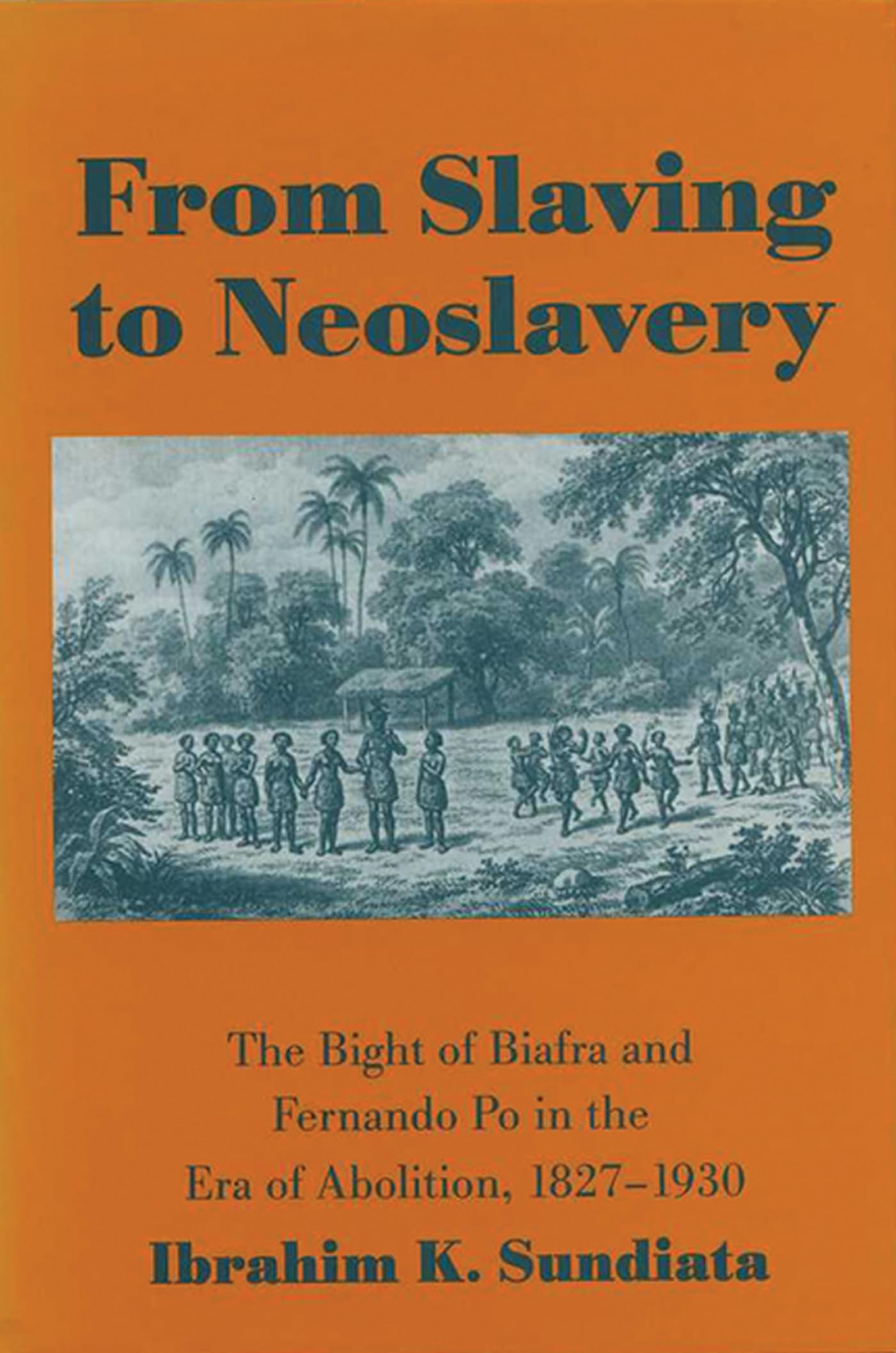
Fernando Po, home to the Bantuspeaking Bubi people, has an unusually complex history. Long touted as the key to West Africa, it is the largest West African island and the last to enter the world economy. Confronted by both African resistance and ecological barriers, early British and Spanish imperialism foundered there. Not until the late nineteenth century did foreign settlement take hold, abetted by a class of westernized black planters. It was only then that Fernando Po developed a plantation economy dependent on migrant labor, working under conditions similar to slavery.In From Slaving to Neoslavery, Ibrahim K. Sundiata offers a comprehensive history of Fernando Po, explains the continuities between slavery and free contract labor, and challenges standard notions of labor development and progress in various colonial contexts. Sundiatas work is interdisciplinary, considering the influences of the environment, disease, slavery, abolition, and indigenous state formation in determining the interaction of African peoples with colonialism.From Slaving to Neoslavery has manifold implications. Historians usually depict the nineteenth century as the period in which free labor triumphed over slavery, but Sundiata challenges this notion. By examining the history of Fernando Po, he illuminates the larger debate about slavery current among scholars of Africa.
⚠️ WARNING (California Proposition 65):
This product may contain chemicals known to the State of California to cause cancer,
birth defects, or other reproductive harm.
For MAP (Minimum Advertised Price) violations and Intellectual Property (IP) or Trademark concerns, please contact:
support@ergodebooks.com
⚠️ California Proposition 65 Warning: Some products sold on this website may expose you to chemicals known to the State of California to cause cancer, birth defects, or other reproductive harm. For more information, visit www.P65Warnings.ca.gov.