
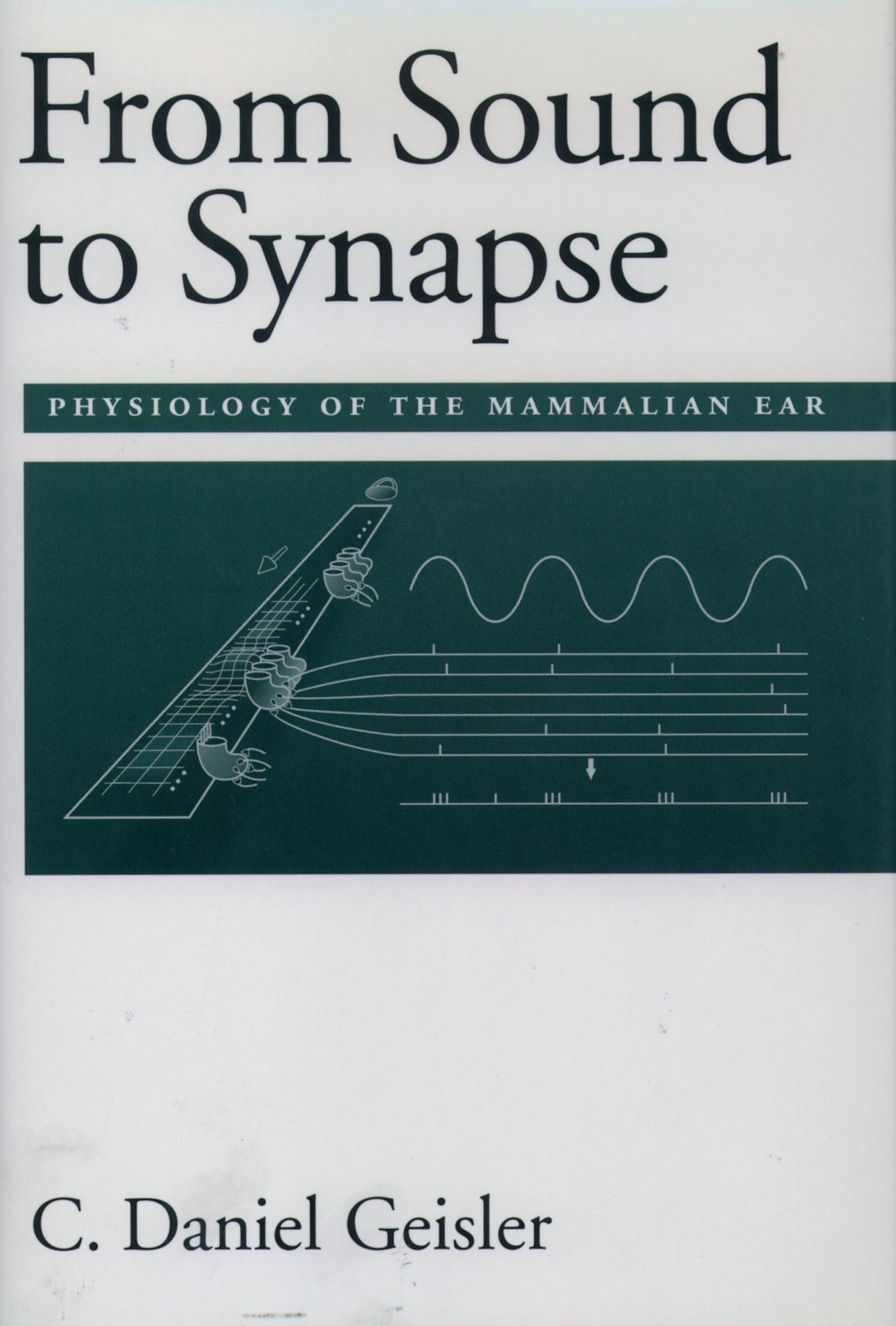
Title
From Sound To Synapse: Physiology Of The Mammalian Ear
Sold by Ergodebooks, an authorized reseller.
Returns accepted within 30 days | support@ergodebooks.com
Shipping Information
- Free Standard Shipping — United States only
- Processing Time: 3–5 business days
- Estimated Delivery: 6–10 business days after dispatch
- Double-boxed, fully insured & discreetly packaged
- Tracking number sent via email once dispatched
Returns & Refund
Returns accepted within 30 days of delivery.
Damaged or Defective Item
Free return shipping + replacement or full refund
Wrong Item Received
Free return shipping + replacement or full refund
Change of Mind
Return shipping at customer's expense · 25% restocking fee applies
Payment Option

This Comprehensive Introduction To The Functions Of The Mammalian Ear Describes The Major Steps By Which Sound Is Transformed Into Nerve Impulses. The Author Leads The Reader Along The Pathway Followed By The Acoustic Signal. He Starts With The Collection Of Sound By The Outer Ear, Proceeds To Its Transfer By The Middle Ear, And Finally Analyzes Its Modification In The Inner Ear, Where The Sound Waves Are Transformed Into Nerve Impulses. The Book Concludes With Descriptions Of Some Common Ear Impairments And A Brief Survey Of The Treatments Available For Them.At Each Stage Of The Ear'S Sound Processing, Professor Geisler Discusses The Basic Mechanisms, Covering Current Theories And Illustrating The Discussions With Experimental Data. Although He Uses An Extensive Array Of Analogies And Mathematical Models, He Considers Only The Basic Theory And The Outputs Of The Models, Not Their Derivation Or Formal Usage. Where Appropriate, Related Mechanisms In The Ears Of Other Vertebrates Are Considered.From Sound To Synapse Is Written In Lucid, Accessible Style That Makes No Assumptions About The Scientific Background Of The Reader Apart From A Basic Familiarity With Pulse Generation By Neurons. It Will Be Of Value To Researchers And Students In Sensory Physiology, Neurophysiology, Acoustics, Bioengineering, Psychoacoustics, And Neuroscience. It Will Also Benefit Neurologists, Audiologists, Otolaryngologists, And Other Clinicians Interested In A More Detailed Description Of Sound Processing.
⚠️ WARNING (California Proposition 65):
This product may contain chemicals known to the State of California to cause cancer, birth defects, or other reproductive harm.
For more information, please visit www.P65Warnings.ca.gov.
- Q: What are the dimensions of the book? A: The book measures nine and a half inches in length, one point zero eight inches in width, and nine point four nine inches in height.
- Q: How many pages does the book have? A: The book contains three hundred eighty-one pages, offering a comprehensive exploration of the mammalian ear.
- Q: What type of binding does this book have? A: This book is bound in hardcover, ensuring durability and a professional presentation.
- Q: How do I read and understand this book? A: To effectively read this book, familiarize yourself with basic concepts of sound processing and neuroscience, as it is accessible to those with a foundational understanding.
- Q: Is this book suitable for beginners? A: Yes, this book is suitable for beginners who have a basic familiarity with pulse generation by neurons and an interest in sensory physiology.
- Q: What audience is this book intended for? A: This book is intended for researchers, students in various fields, and clinicians interested in the physiology of the mammalian ear.
- Q: How do I keep the book in good condition? A: To maintain the book's condition, store it in a cool, dry place and avoid exposing it to direct sunlight to prevent fading.
- Q: Can I safely clean the book's cover? A: Yes, you can gently wipe the hardcover with a soft, dry cloth to remove dust and prevent damage.
- Q: What should I do if the book arrives damaged? A: If the book arrives damaged, contact the seller immediately to discuss return options or receive a replacement.
- Q: Is there a warranty for this book? A: No, typically books do not come with a warranty, but check with the seller for their specific return policy.
- Q: How does this book compare to others in the same genre? A: This book stands out due to its detailed analysis of sound processing in the mammalian ear, making it a valuable resource for those studying sensory physiology.
- Q: Is this book appropriate for professionals in audiology? A: Yes, this book provides valuable insights and detailed descriptions of sound processing that are beneficial for audiologists and related professionals.
- Q: What are the key features of this book? A: The key features include a comprehensive overview of sound transformation, experimental data, and discussions of ear impairments and treatments.
- Q: Is there a specific reading level for this book? A: The book is suitable for college-level readers and above, especially those studying biology, neuroscience, or related fields.
- Q: Can this book help with understanding hearing impairments? A: Yes, the book includes descriptions of common ear impairments and potential treatments, making it relevant for those studying hearing issues.