
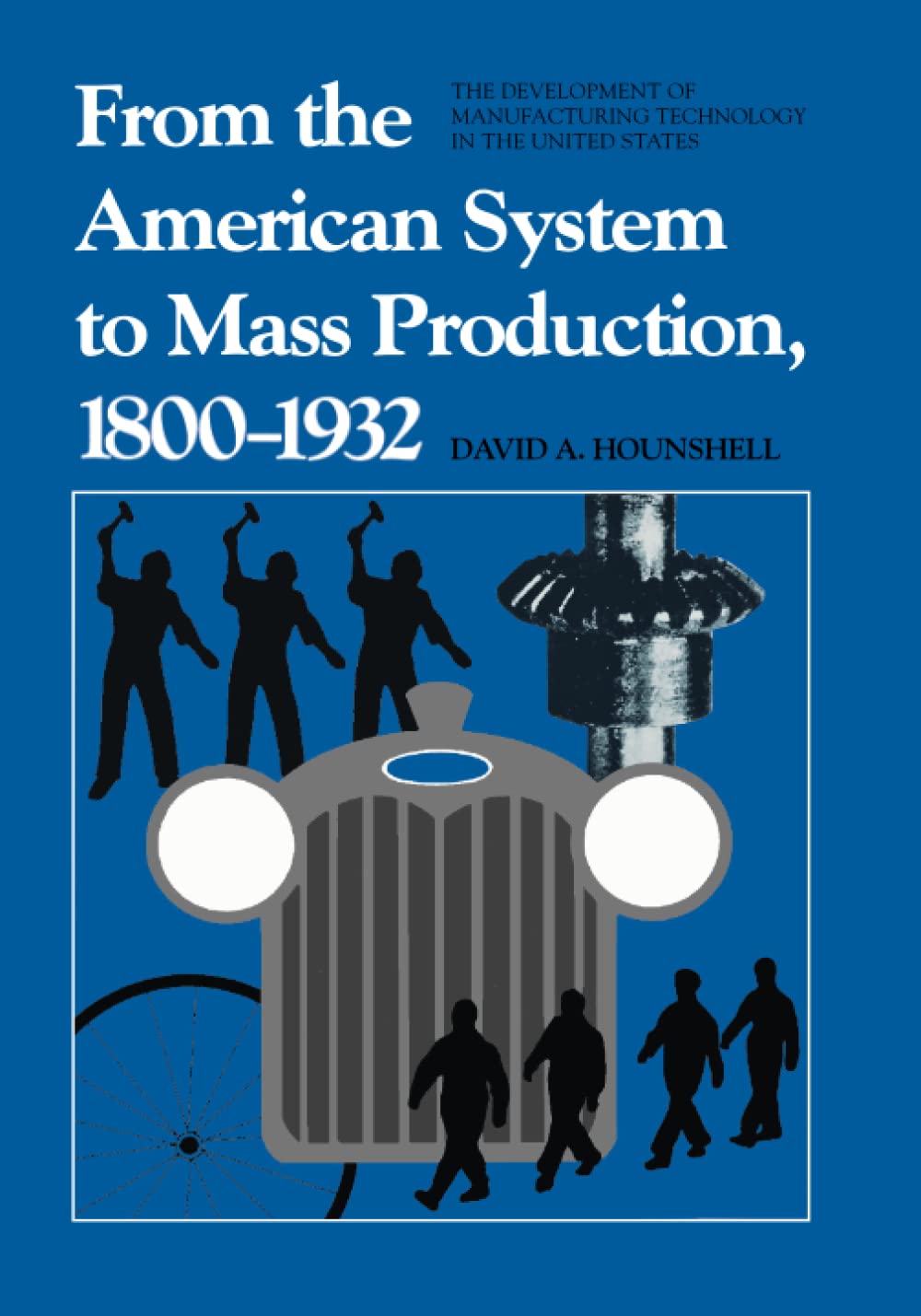
Title
From The American System To Mass Production, 18001932: The Development Of Manufacturing Technology In The United States (Studie
Sold by Ergodebooks, an authorized reseller.
Returns accepted within 30 days | support@ergodebooks.com
Shipping Information
- Free Standard Shipping — United States only
- Processing Time: 3–5 business days
- Estimated Delivery: 6–10 business days after dispatch
- Double-boxed, fully insured & discreetly packaged
- Tracking number sent via email once dispatched
Returns & Refund
Returns accepted within 30 days of delivery.
Damaged or Defective Item
Free return shipping + replacement or full refund
Wrong Item Received
Free return shipping + replacement or full refund
Change of Mind
Return shipping at customer's expense · 25% restocking fee applies
Payment Option

David A. Houndshell'S Widely Acclaimed History Explores The American Genius For Mass Production And Races Its Origins In The Nineteenthcentury American System Of Manufacture.Previous Writers On The American System Have Argued That The Technical Problems Of Mass Production Had Been Solved By Armsmakers Before The Civil War. Drawing Upon The Extensive Business And Manufacturing Records If Leading American Firms, Hounshell Demonstrates That The Diffusion Of Arms Production Technology Was Neither As Fast Now As Smooth As Had Been Assumed. Exploring The Manufacture Of Sewing Machines And Furniture, Bicycles And Reapers, He Shows That Both The Expression Mass Production And The Technology That Lay Behind It Were Developments Of The Twentieth Century, Attributable In Large Part To The Ford Motor Company.Hounshell Examines The Importance Of Individuals In The Diffusion And Development Of Production Technology And The Central Place Of Marketing Strategy In The Success Of Selected American Manufacturers. Whereaas Ford Was The Seedbed Of The Assembly Line Revolution, It Was General Motors That Initiated A New Era With Its Introduction Of The Annual Model Change. With The New Marketing Strategy, The Technology Of The Changeover Became Of Paramount Importance. Hounshell Chronicles How Painfully Ford Learned This Lesson And Recounts How The Successful Mass Production Of Automobiles Led To The Establishment Of An Ethos Of Mass Production, To An Era In Which Propoments Of Fordism Argued That Mass Production Would Solve All Of America'S Social Problems.
⚠️ WARNING (California Proposition 65):
This product may contain chemicals known to the State of California to cause cancer, birth defects, or other reproductive harm.
For more information, please visit www.P65Warnings.ca.gov.
- Q: What is the title of the book? A: The title of the book is 'From the American System to Mass Production, 1800-1932: The Development of Manufacturing Technology in the United States'.
- Q: Who is the author of this book? A: The author of the book is David A. Hounshell.
- Q: How many pages does this book have? A: This book contains four hundred forty pages.
- Q: What is the binding type of the book? A: The book is available in paperback binding.
- Q: What are the dimensions of this book? A: The dimensions of the book are seven point zero one inches in length, zero point ninety-nine inches in width, and ten inches in height.
- Q: What genre does this book belong to? A: The book belongs to the Economics genre.
- Q: Is this book suitable for academic research? A: Yes, this book is suitable for academic research, particularly in manufacturing technology and economic history.
- Q: Can anyone read this book, or is it for professionals only? A: This book can be read by anyone interested in manufacturing technology, though it may contain complex concepts better suited for readers with some background knowledge.
- Q: What themes are explored in this book? A: The book explores themes such as mass production, manufacturing technology, and the historical development of industry in the United States.
- Q: How should I care for this book? A: To care for this book, keep it in a dry place and avoid exposing it to direct sunlight to prevent fading.
- Q: Is this book safe for young readers? A: Yes, the book is generally safe for young readers, but it may contain advanced topics that would be more suitable for older teens and adults.
- Q: What if the book arrives damaged? A: If the book arrives damaged, you should contact the seller for a return or replacement according to their return policy.
- Q: How do I store this book to keep it in good condition? A: Store the book upright on a shelf or in a bookcase to keep it in good condition.
- Q: What makes this book a good choice for someone studying economics? A: This book provides a detailed historical perspective on manufacturing technology, making it a valuable resource for students studying economics.
- Q: Can I find this book in libraries? A: Yes, this book is likely available in many academic and public libraries.
- Q: Does this book include illustrations or photographs? A: No, this book does not include illustrations or photographs; it focuses on text-based historical analysis.