If you have any questions, you are always welcome to contact us. We'll get back to you as soon as possible, withing 24 hours on weekdays.
Customer service
All questions about your order, return and delivery must be sent to our customer service team by e-mail at yourstore@yourdomain.com
Sale & Press
If you are interested in selling our products, need more information about our brand or wish to make a collaboration, please contact us at press@yourdomain.com
Help
If you have any questions, you are always welcome to contact us. We'll get back to you as soon as possible, withing 24 hours on weekdays.
Customer service
All questions about your order, return and delivery must be sent to our customer service team by e-mail at yourstore@yourdomain.com
Sale & Press
If you are interested in selling our products, need more information about our brand or wish to make a collaboration, please contact us at press@yourdomain.com
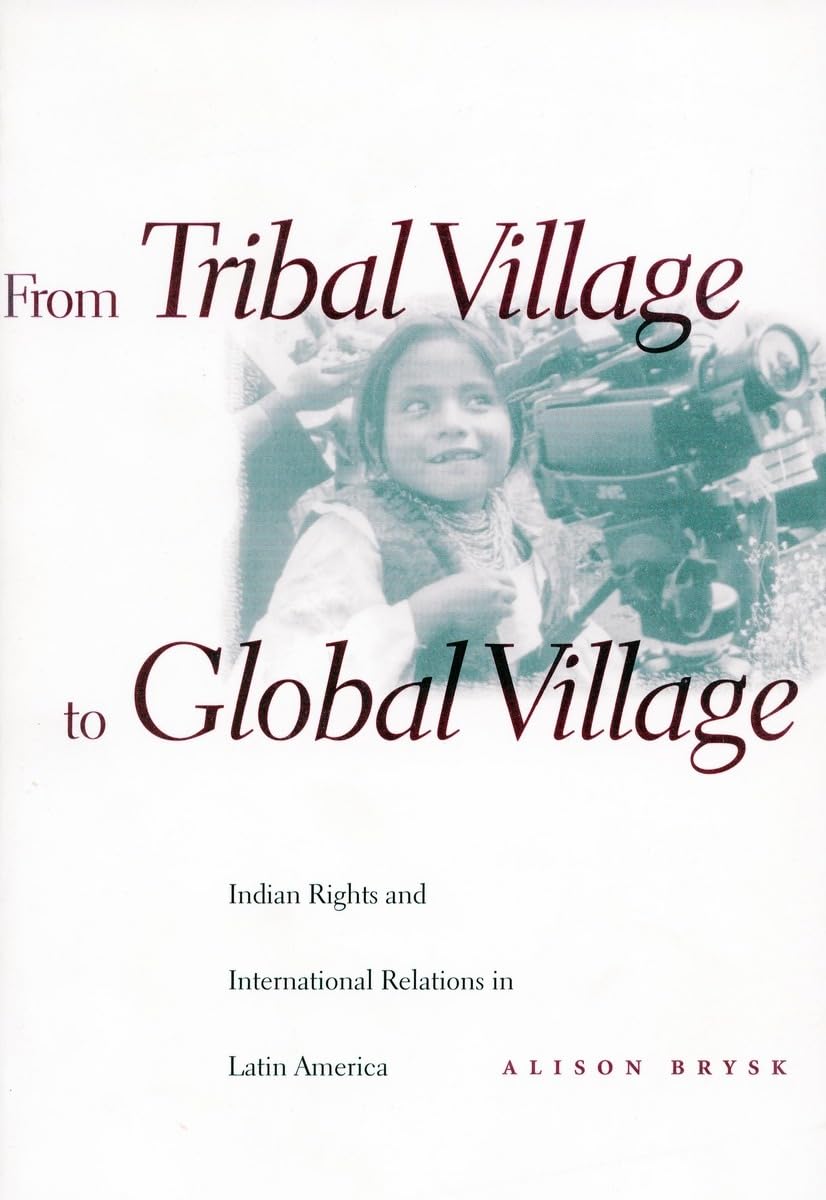
In Ecuador, every year since 1990 Indian protestors have brought the country to a standstill; in Mexico, Zapatista indigenous guerillas rose up in arms to protest North American free trade. In Brazil, shamans faced down bulldozers to block World Bank dams, while in Bolivia, peasants attacked U.S. troops for the right to grow coca. These are a few examples of the rise of a transnational human rights movement among the hemispheres most isolated and powerless people, Latin American Indians.This book tells the story of the unexpected impact of the Indian rights movement on world politics, from reforming the United Nations to evicting oil companies. Using a constructivist theoretical approach that synthesizes international relations, social movement theory, ethnic politics, and work on democratic transitions, the author argues that marginalized people have responded to globalization with new, internationalized forms of identity politics that reconstruct power relations.Based on case studies from Ecuador, Mexico, Brazil, Nicaragua, and Bolivia, this book analyzes the implications of these human rights experiences for all of Latin Americas 40 million indigenous citizens, and the 300 million native people throughout the world. The thematic organization of the book allows the author to trace distinctive dynamics of interstate relations, global markets, and transnational civil society. The book concludes with an analysis of the movements impact and policy recommendations.
⚠️ WARNING (California Proposition 65):
This product may contain chemicals known to the State of California to cause cancer,
birth defects, or other reproductive harm.
For MAP (Minimum Advertised Price) violations and Intellectual Property (IP) or Trademark concerns, please contact:
support@ergodebooks.com
⚠️ California Proposition 65 Warning: Some products sold on this website may expose you to chemicals known to the State of California to cause cancer, birth defects, or other reproductive harm. For more information, visit www.P65Warnings.ca.gov.