
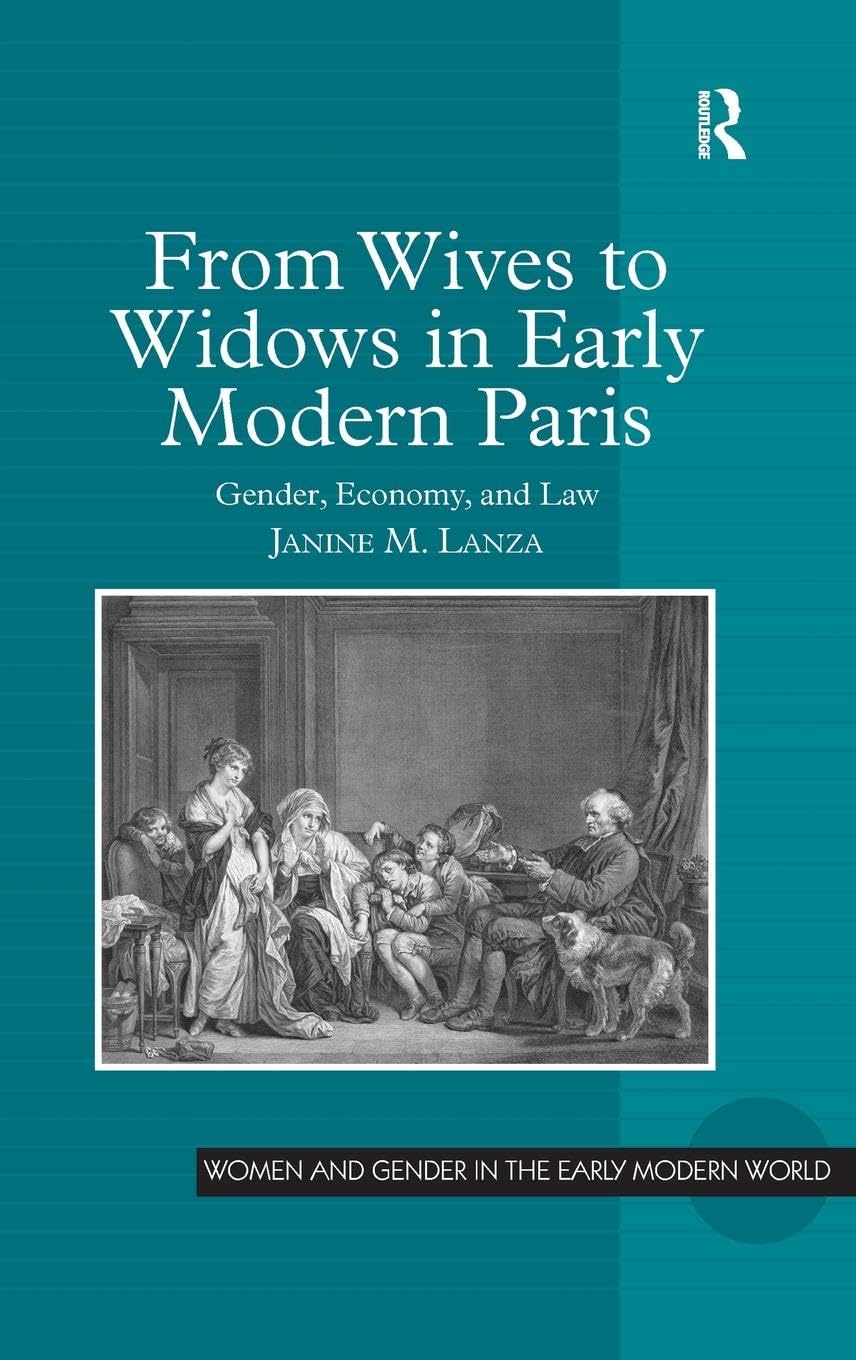
Title
From Wives to Widows in Early Modern Paris: Gender, Economy, and Law (Women and Gender in the Early Modern World),New
Sold by Ergodebooks, an authorized reseller.
Returns accepted within 30 days | support@ergodebooks.com
Shipping Information
- Free Standard Shipping — United States only
- Processing Time: 3–5 business days
- Estimated Delivery: 6–10 business days after dispatch
- Double-boxed, fully insured & discreetly packaged
- Tracking number sent via email once dispatched
Returns & Refund
Returns accepted within 30 days of delivery.
Damaged or Defective Item
Free return shipping + replacement or full refund
Wrong Item Received
Free return shipping + replacement or full refund
Change of Mind
Return shipping at customer's expense · 25% restocking fee applies
Payment Option

Looking especially at widows of master craftsmen in early modern Paris, this study provides analysis of the social and cultural structures that shaped widows' lives as well as their daytoday experiences. Janine Lanza examines widows in early modern Paris at every social and economic level, beginning with the late sixteenth century when changes in royal law curtailed the movement of property within families up to the time of the French Revolution. The glimpses she gives us of widows running businesses, debating remarriage, and negotiating marriage contracts offer precious insights into the daily lives of women in this period. Lanza shows that understanding widows dramatically alters our understanding of gender, not only in terms of how it was lived in this period but also how historians can use this idea as a category of analysis. Her study also engages the historiographical issue of business and entrepreneurship, particularly women's participation in the world of work; and explicitly examines the place of the law in the lived experience of the early modern period. How did widowed women use their newly acquired legal emancipation? How did they handle their emotional loss? How did their roles in their families and their communities change? How did they remain financially solvent without a man in the house? How did they make decisions that had always been made by the men around them? These questions all touch upon the experience of widows and on the ways women related to prevalent structures and ideologies in this society. Lanza's study of these women, the ways they were represented and how they experienced their widowhood, challenges many historical assumptions about women and their roles with respect to the law, the family, and economic activity.
⚠️ WARNING (California Proposition 65):
This product may contain chemicals known to the State of California to cause cancer, birth defects, or other reproductive harm.
For more information, please visit www.P65Warnings.ca.gov.