
Title
Fubar: Soldier Slang Of World War Ii
Sold by Ergodebooks, an authorized reseller.
Returns accepted within 30 days | support@ergodebooks.com
Shipping Information
- Free Standard Shipping — United States only
- Processing Time: 3–5 business days
- Estimated Delivery: 6–10 business days after dispatch
- Double-boxed, fully insured & discreetly packaged
- Tracking number sent via email once dispatched
Returns & Refund
Returns accepted within 30 days of delivery.
Damaged or Defective Item
Free return shipping + replacement or full refund
Wrong Item Received
Free return shipping + replacement or full refund
Change of Mind
Return shipping at customer's expense · 25% restocking fee applies
Payment Option

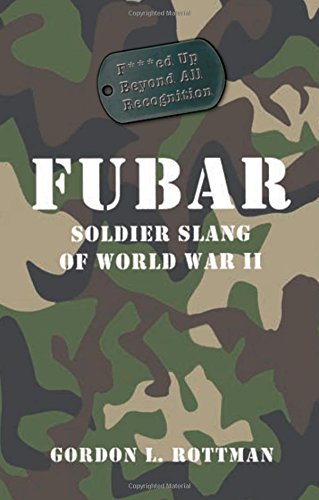
FUBAR is your handy dictionary of soldiers' vocabulary and slang from World War I and World War II that has evolved from US, German, and Commonwealth troops.FUBAR is a detailed survey of the slang of World War II as it was used and evolved by US, German, and Commonwealth fighting men and women. This book lists hundreds of distinctive and evocative slangs, complete with their definitions and origins. FUBAR also includes period accurate cartoons and images that will transport you back through the decades into the world of the WWII warrior.Humorous, sarcastic, sober, pessimistic, fatalistic, defiant, or defeatist, slang is an important part of every soldier's vocabulary. Whether they're making themselves understood, saving time, or 'lightening' the mood with some gallows humor, these words were so ingrained into the soldier's vocabulary that their use was continued by a new generation of soldiers. By the end of the war some terms had even passed into standard everyday usage.
⚠️ WARNING (California Proposition 65):
This product may contain chemicals known to the State of California to cause cancer, birth defects, or other reproductive harm.
For more information, please visit www.P65Warnings.ca.gov.
- Q: What are the dimensions of this book? A: The book measures five point twelve inches in length, one point zero six inches in width, and seven point six inches in height.
- Q: How many pages does 'FUBAR: Soldier Slang of World War II' have? A: This book contains two hundred ninety-six pages filled with slang and definitions from World War II.
- Q: What type of binding does this book have? A: The book is bound in hardcover, ensuring durability for readers.
- Q: Who is the author of this book? A: The author of 'FUBAR: Soldier Slang of World War II' is Gordon Rottman.
- Q: What is the main focus of this book? A: The book focuses on the vocabulary and slang used by soldiers during World War I and World War II.
- Q: How can I use this book for research? A: You can use this book as a reference for understanding military slang and its evolution during the World Wars.
- Q: Is this book suitable for younger readers? A: While there are no explicit age restrictions, the slang terms may not be appropriate for very young children.
- Q: Can this book be used as a teaching aid? A: Yes, it can serve as a teaching aid for history classes focused on World War II or military studies.
- Q: What should I do to keep this book in good condition? A: Store the book in a cool, dry place and avoid exposing it to direct sunlight to preserve its quality.
- Q: How should I clean this book if it gets dirty? A: Use a soft, dry cloth to gently wipe the cover and avoid using water or any cleaning solutions.
- Q: Is there a warranty for this book? A: Books typically do not come with a warranty, but check with the retailer for their specific return policy.
- Q: What if the book arrives damaged? A: If the book arrives damaged, contact the retailer immediately to inquire about return or exchange options.
- Q: How does this book compare to other military slang dictionaries? A: This book is unique in its focus on World War II slang from multiple perspectives, including US, German, and Commonwealth troops.
- Q: Is this book appropriate for military history enthusiasts? A: Absolutely, it provides valuable insights into the language and culture of soldiers during major historical events.
- Q: What themes are covered in this book? A: The book covers themes of soldier life, humor, and the evolution of language during wartime.
- Q: How can I find specific slang terms in this book? A: You can look up specific terms in the book's index or by browsing through its chapters dedicated to different eras.