
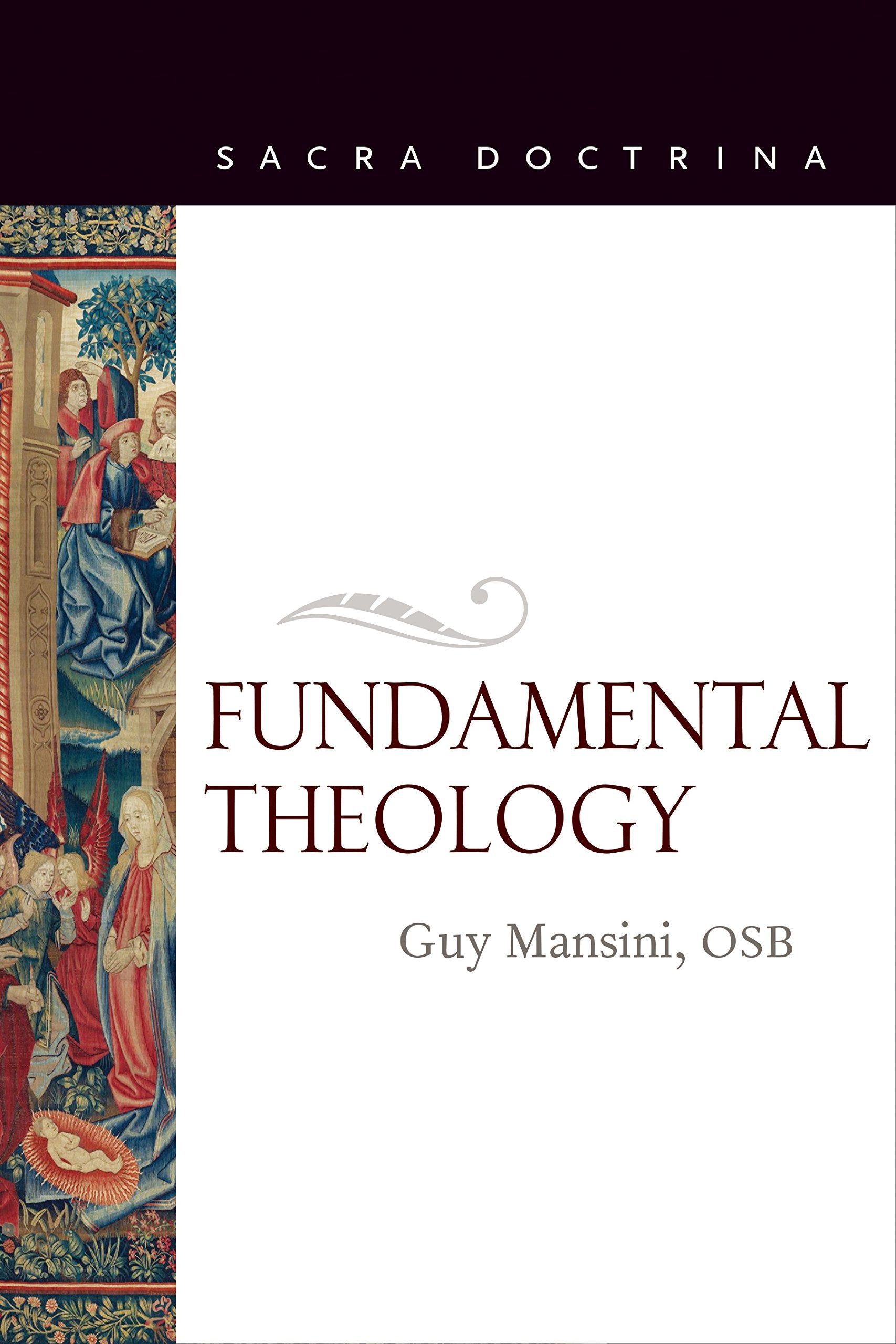
Title
Fundamental Theology (Sacra Doctrina),Used
Sold by Ergodebooks, an authorized reseller.
Returns accepted within 30 days | support@ergodebooks.com
Shipping Information
- Free Standard Shipping — United States only
- Processing Time: 3–5 business days
- Estimated Delivery: 6–10 business days after dispatch
- Double-boxed, fully insured & discreetly packaged
- Tracking number sent via email once dispatched
Returns & Refund
Returns accepted within 30 days of delivery.
Damaged or Defective Item
Free return shipping + replacement or full refund
Wrong Item Received
Free return shipping + replacement or full refund
Change of Mind
Return shipping at customer's expense · 25% restocking fee applies
Payment Option

Fundamental Theology examines the light by which the mysteries of Christ and the Church, the Trinity and the Sacraments, are revealed to us. That light we call 'revelation,' and fundamental theology examines in the first place what this light shows about itself, and how it is sustained in the world. Or again, fundamental theology considers what the word of God has to say both about itself and what it has to say about where in the world it is to be heard. So, first it is a theology of Revelation (chapter 1), and second, a theology of the transmission of Revelation in Tradition, Scripture, and the Church (chapters 2, 3, and 4). Why must Revelation have the shape it does, and why must it be constituted by both word and event? Why is Tradition prior to Scripture, why must the word of God be written down, and why must Scripture come to us in two testaments? And why must the message conveyed in Tradition and Scripture have a living interpreter in the Church?Since no word is spoken unless it is heard, fundamental theology also investigates the conditions of hearing the word of God, the very hearing itself in the assent of faith, and a necessary consequence of this hearing. The remote conditions of hearing are also what theology calls our ability to come to the knowledge of the preambula fidei the things about God than can be known by the natural light (chapter 5). The immediate condition of hearing is the credibility of the word (chapter 6). Hearing is faith (chapter 7). And true hearing gives the hearer to recapitulate what is heard in his own wondering and thankful voice in theology (chapter 8). The introduction to theology in the last chapter is by way of considering the history of Catholic theology in the 20th century.
⚠️ WARNING (California Proposition 65):
This product may contain chemicals known to the State of California to cause cancer, birth defects, or other reproductive harm.
For more information, please visit www.P65Warnings.ca.gov.
- Q: What is the primary focus of Fundamental Theology? A: Fundamental Theology primarily examines the concept of revelation, exploring how the mysteries of Christ, the Church, the Trinity, and the Sacraments are revealed to humanity.
- Q: Who is the author of Fundamental Theology? A: The author of Fundamental Theology is Guy Mansini.
- Q: What topics are covered in the book? A: The book covers topics such as the nature of revelation, the transmission of revelation in Tradition, Scripture, and the Church, as well as the conditions for hearing the word of God.
- Q: When was Fundamental Theology published? A: Fundamental Theology was published on January 11, 2018.
- Q: What is the format of the book? A: The book is available in a paperback binding format.
- Q: How many pages does Fundamental Theology have? A: Fundamental Theology contains 304 pages.
- Q: Is Fundamental Theology suitable for beginners in theology? A: Yes, the book is designed to introduce readers to fundamental concepts in theology, making it suitable for both beginners and those with more advanced knowledge.
- Q: What type of audience would benefit from reading this book? A: This book is beneficial for students of theology, clergy, and anyone interested in understanding the foundations of Catholic beliefs.
- Q: Does the book include historical context about Catholic theology? A: Yes, the last chapter of the book considers the history of Catholic theology in the 20th century.
- Q: What are some key themes discussed in the book? A: Key themes include the relationship between Tradition and Scripture, the importance of the Church as an interpreter of revelation, and the conditions necessary for understanding and hearing the word of God.