
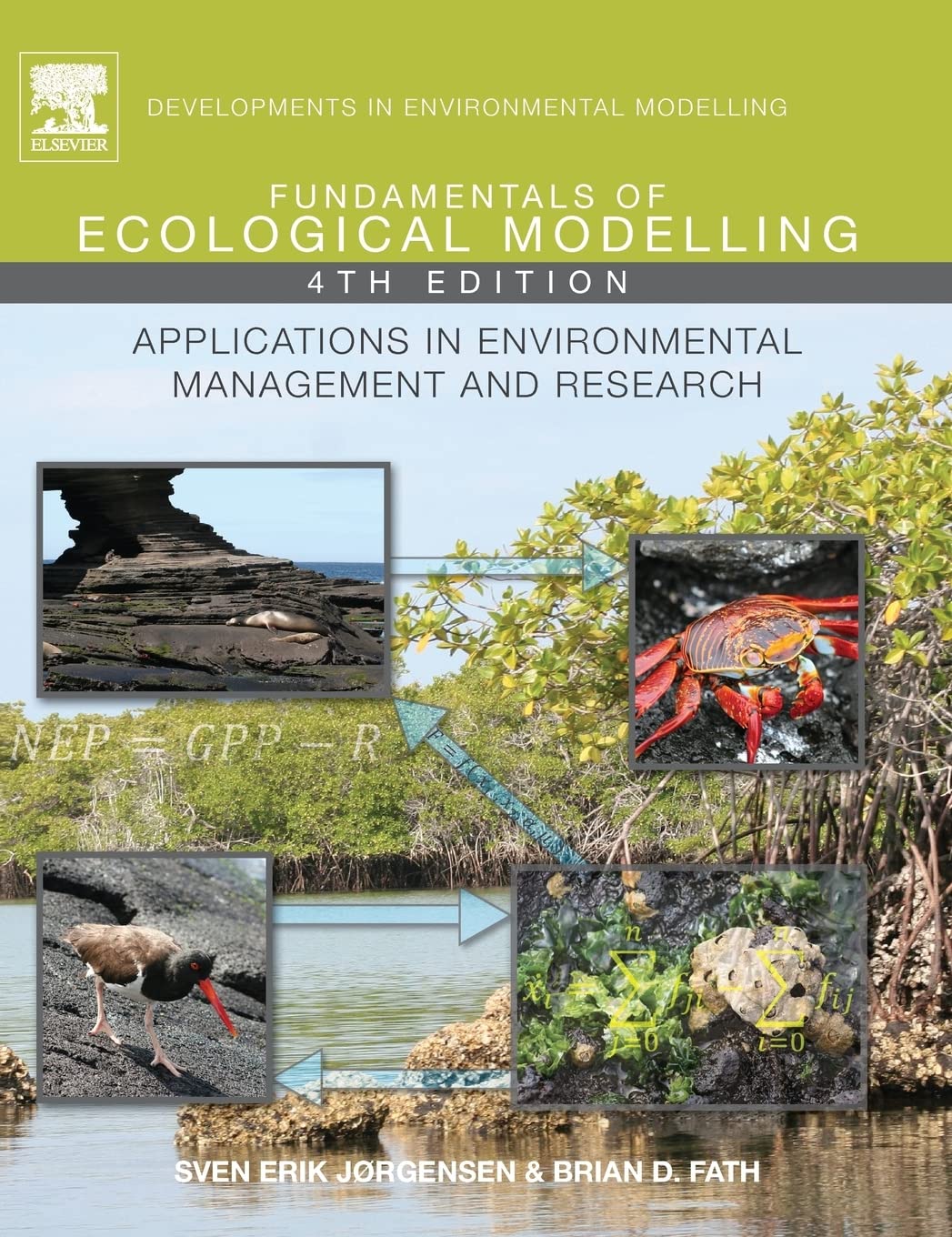
Title
Fundamentals of Ecological Modelling: Applications in Environmental Management and Research (Volume 21) (Developments in Environ,New
Sold by Ergodebooks, an authorized reseller.
Returns accepted within 30 days | support@ergodebooks.com
Shipping Information
- Free Standard Shipping — United States only
- Processing Time: 3–5 business days
- Estimated Delivery: 6–10 business days after dispatch
- Double-boxed, fully insured & discreetly packaged
- Tracking number sent via email once dispatched
Returns & Refund
Returns accepted within 30 days of delivery.
Damaged or Defective Item
Free return shipping + replacement or full refund
Wrong Item Received
Free return shipping + replacement or full refund
Change of Mind
Return shipping at customer's expense · 25% restocking fee applies
Payment Option

Fundamentals of Ecological Modelling: Applications in Environmental Management and Research, Fourth Edition, provides a comprehensive discussion of the fundamental principles of ecological modeling. The first two editions of this book (published in 1986 and 1994) focused on the roots of the discipline the four main model types that dominated the field 3040 years ago: (1) dynamic biogeochemical models; (2) population dynamic models; (3) ecotoxicological models; and (4) steadystate biogeochemical and energy models. The third edition focused on the mathematical formulations of ecological processes that are included in ecological models. This fourth edition uses the four model types previously listed as the foundation and expands the latest model developments in spatial models, structural dynamic models, and individualbased models. As these seven types of models are very different and require different considerations in the model development phase, a separate chapter is devoted to the development of each of the model types. Throughout the text, the examples given from the literature emphasize the application of models for environmental management and research. Presents the most commonly used model types with a stepbystep outline of the modeling procedure used for each Shows readers through an illustrated example of how to use each model in research and management settings New edition is revised to include only essential theory with a focus on applications Includes case studies, illustrations, and exercises (case study of an ecological problem with full illustration on how to solve the problem)
⚠️ WARNING (California Proposition 65):
This product may contain chemicals known to the State of California to cause cancer, birth defects, or other reproductive harm.
For more information, please visit www.P65Warnings.ca.gov.