
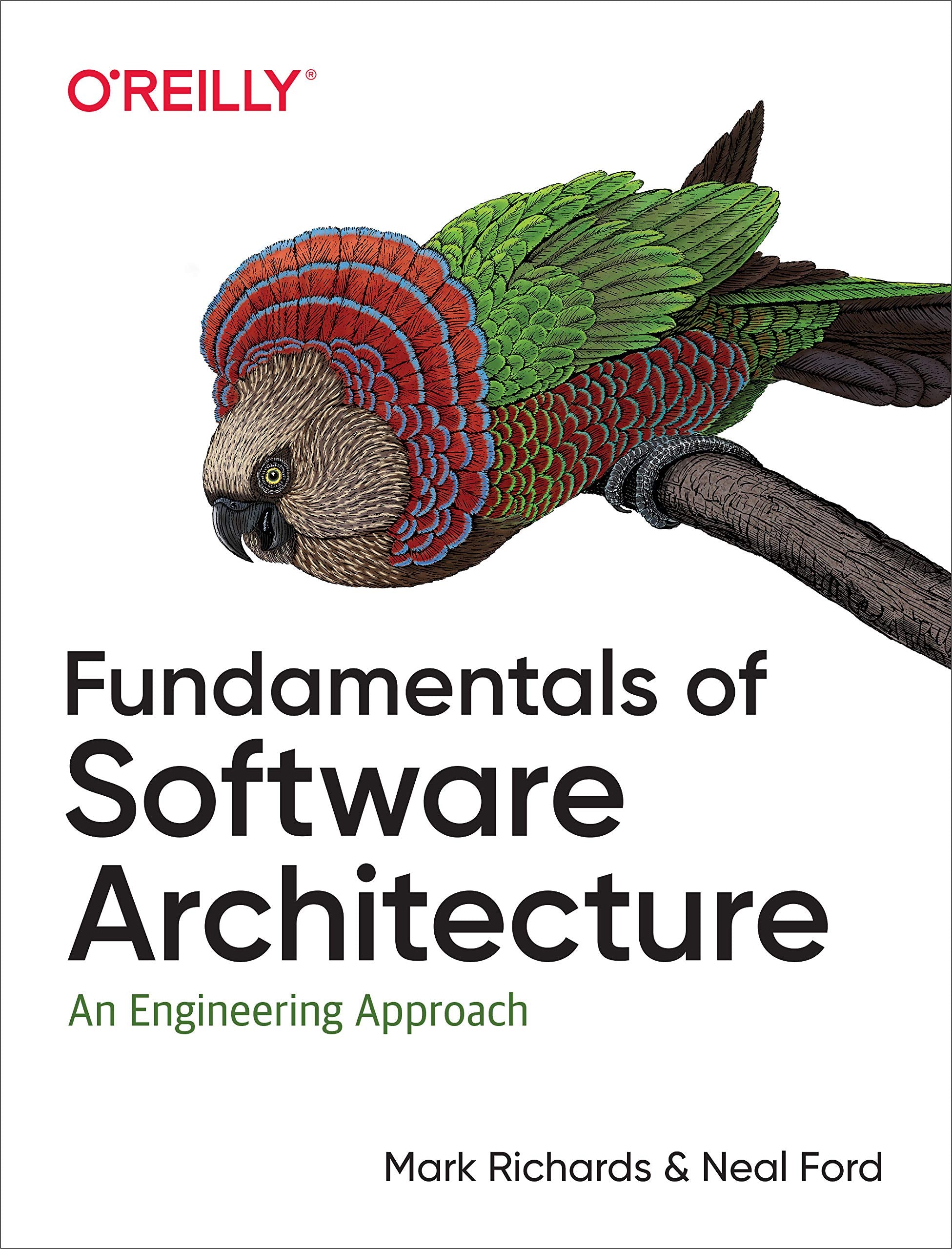
Title
Fundamentals of Software Architecture: An Engineering Approach,New
Sold by Ergodebooks, an authorized reseller.
Returns accepted within 30 days | support@ergodebooks.com
Shipping Information
- Free Standard Shipping — United States only
- Processing Time: 3–5 business days
- Estimated Delivery: 6–10 business days after dispatch
- Double-boxed, fully insured & discreetly packaged
- Tracking number sent via email once dispatched
Returns & Refund
Returns accepted within 30 days of delivery.
Damaged or Defective Item
Free return shipping + replacement or full refund
Wrong Item Received
Free return shipping + replacement or full refund
Change of Mind
Return shipping at customer's expense · 25% restocking fee applies
Payment Option

Salary surveys worldwide regularly place software architect in the top 10 best jobs, yet no real guide exists to help developers become architects. Until now. This book provides the first comprehensive overview of software architecture's many aspects. Aspiring and existing architects alike will examine architectural characteristics, architectural patterns, component determination, diagramming and presenting architecture, evolutionary architecture, and many other topics.Mark Richards and Neal Fordhandson practitioners who have taught software architecture classes professionally for yearsfocus on architecture principles that apply across all technology stacks. You'll explore software architecture in a modern light, taking into account all the innovations of the past decade.This book examines: Architecture patterns: The technical basis for many architectural decisions Components: Identification, coupling, cohesion, partitioning, and granularity Soft skills: Effective team management, meetings, negotiation, presentations, and more Modernity: Engineering practices and operational approaches that have changed radically in the past few years Architecture as an engineering discipline: Repeatable results, metrics, and concrete valuations that add rigor to software architecture
⚠️ WARNING (California Proposition 65):
This product may contain chemicals known to the State of California to cause cancer, birth defects, or other reproductive harm.
For more information, please visit www.P65Warnings.ca.gov.
- Q: What is the main focus of 'Fundamentals of Software Architecture'? A: The book provides a comprehensive overview of software architecture, covering aspects such as architectural patterns, component determination, and evolutionary architecture, aimed at both aspiring and existing architects.
- Q: Who are the authors of this book? A: 'Fundamentals of Software Architecture' is authored by Mark Richards and Neal Ford, both of whom have extensive experience in teaching software architecture.
- Q: What type of binding does this book have? A: This book is available in paperback binding, making it easy to handle and read.
- Q: When was 'Fundamentals of Software Architecture' published? A: The book was published on March 3, 2020.
- Q: How many pages are in the book? A: The book contains a total of 419 pages.
- Q: What skills does the book cover for software architects? A: It covers both technical skills such as architectural patterns and components, as well as soft skills like team management, negotiation, and effective presentations.
- Q: Is this book suitable for beginners in software architecture? A: Yes, the book is suitable for both beginners and experienced architects as it covers fundamental concepts and advanced topics in software architecture.
- Q: What is the significance of architectural patterns discussed in the book? A: Architectural patterns provide a technical basis for making architectural decisions, helping practitioners understand how to structure their software effectively.
- Q: Does the book include practical examples of software architecture? A: Yes, the authors share practical insights and examples based on their real-world experiences in software architecture.
- Q: Can this book help with modern software engineering practices? A: Absolutely, it addresses modern engineering practices and operational approaches that have evolved in recent years, making it relevant for today’s software landscape.