
Title
Gadamer'S Path To Plato: A Response To Heidegger And A Rejoinder By Stanley Rosen,Used
Sold by Ergodebooks, an authorized reseller.
Returns accepted within 30 days | support@ergodebooks.com
Shipping Information
- Free Standard Shipping — United States only
- Processing Time: 3–5 business days
- Estimated Delivery: 6–10 business days after dispatch
- Double-boxed, fully insured & discreetly packaged
- Tracking number sent via email once dispatched
Returns & Refund
Returns accepted within 30 days of delivery.
Damaged or Defective Item
Free return shipping + replacement or full refund
Wrong Item Received
Free return shipping + replacement or full refund
Change of Mind
Return shipping at customer's expense · 25% restocking fee applies
Payment Option

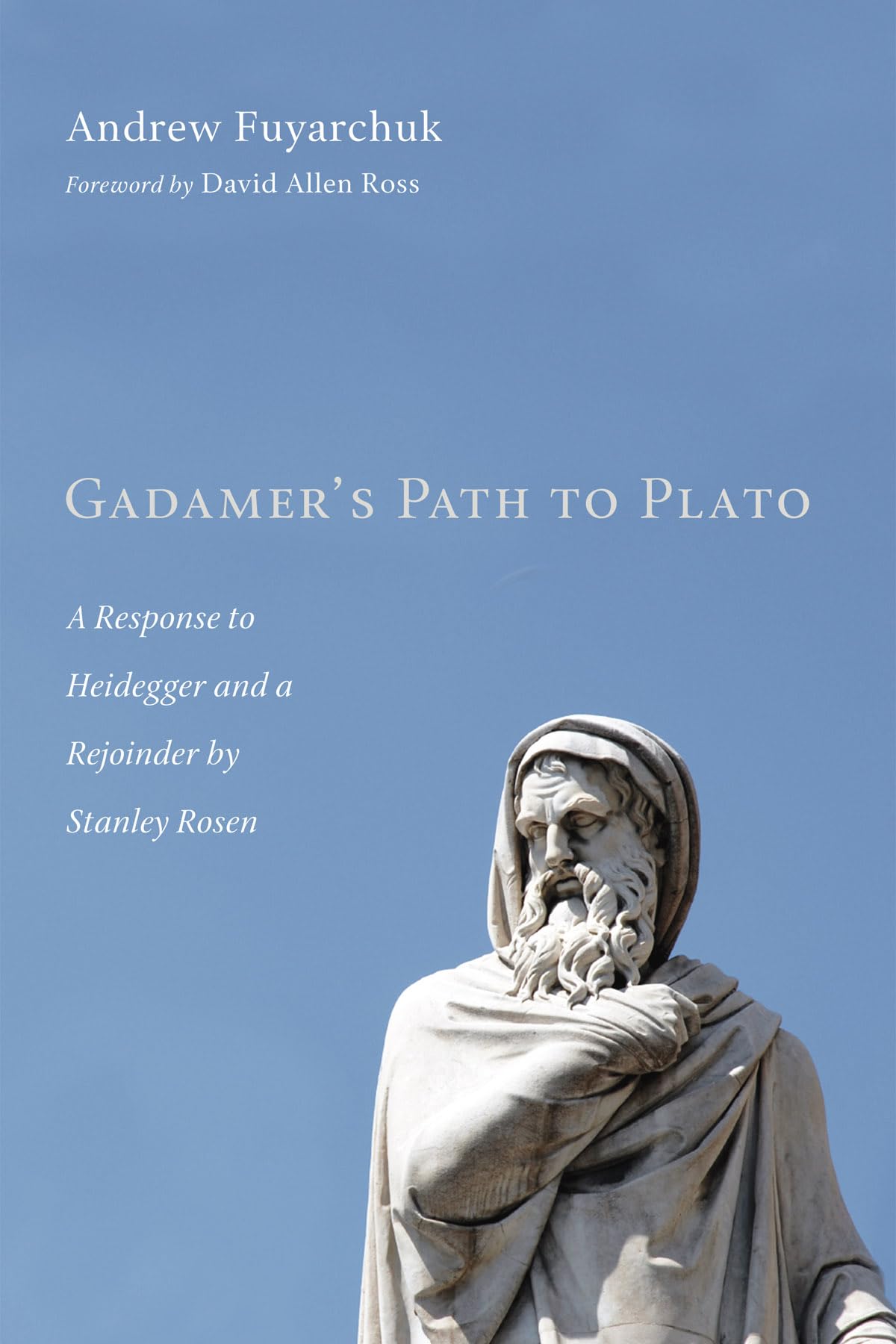
Gadamer's Path to Plato investigates the formative years of HansGeorg Gadamer's Plato studies, while studying with Martin Heidegger at Marburg University. It outlines the evolution of Heidegger's understanding of Plato, explains why his hermeneutics and phenomenological method inspired Gadamer, and why Heidegger's argument, that Plato was responsible for Western civilization's forgetting the meaning of existence, provoked him. Heidegger's provocation was crucial to the development of Gadamer's understanding of Plato. This book thus puts forward an argument for Gadamer's having indirectly refuted Heidegger's Plato. This involves a dialogical relationship to the past and a reexamination of the relation of Plato to Aristotle in matters of ethics, physics, and truth. Above all, however, it is Gadamer's concept of Platonic dialectic that refutes Heidegger. This challenge to Heidegger's Plato was commensurate with the origination of Gadamer's positive hermeneutical philosophy. In order to test the alleged openness of that philosophy to the other as other Gadamer's reading of the Republic is scrutinized by using the brilliant scholarship of Stanley Rosen. An examination of their interpretations of the Republic includes an inquiry into their intellectual influences. For Gadamer these include Hegel, the Tubingen school and Jacob Klein; for Rosen, the poetic genius of Leo Strauss. Rosen's mathematical and poetic orientation is then compared to Gadamer's dialectical orientation to Plato. The mathematical approach dovetails with a theory of human nature and procedural rationalism in Gadamer's hermeneutical philosophy that explains why he, in contrast to Rosen, bypasses important dimensions of the Republic such as the significance of particular characters and settings to understanding the whole. In turn, this methodological shortcoming calls into question the truth of Gadamer's method and, with it, the foundations of a truly open and pluralist society.
⚠️ WARNING (California Proposition 65):
This product may contain chemicals known to the State of California to cause cancer, birth defects, or other reproductive harm.
For more information, please visit www.P65Warnings.ca.gov.