
Title
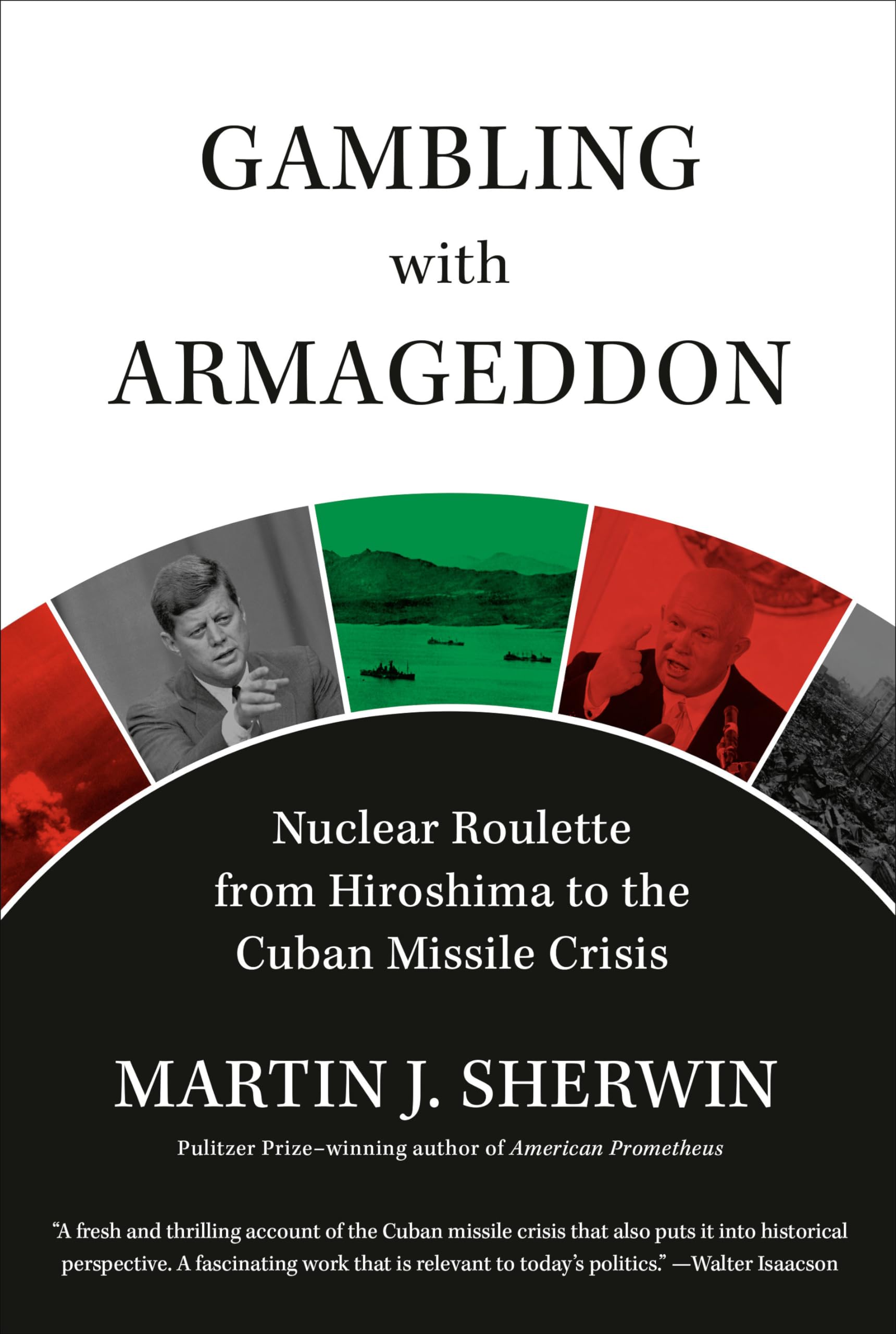
Gambling With Armageddon: Nuclear Roulette From Hiroshima To The Cuban Missile Crisis,New
Sold by Ergodebooks, an authorized reseller.
Returns accepted within 30 days | support@ergodebooks.com
Shipping Information
- Free Standard Shipping — United States only
- Processing Time: 3–5 business days
- Estimated Delivery: 6–10 business days after dispatch
- Double-boxed, fully insured & discreetly packaged
- Tracking number sent via email once dispatched
Returns & Refund
Returns accepted within 30 days of delivery.
Damaged or Defective Item
Free return shipping + replacement or full refund
Wrong Item Received
Free return shipping + replacement or full refund
Change of Mind
Return shipping at customer's expense · 25% restocking fee applies
Payment Option

From The Pulitzer Prizewinning Author Of American Prometheus Comes The First Effort To Set The Cuban Missile Crisis, With Its Potential For Nuclear Holocaust, In A Wider Historical Narrative Of The Cold Warhow Such A Crisis Arose, And Why At The Very Last Possible Moment It Didn'T Happen.In This Groundbreaking Look At The Cuban Missile Crisis, Martin Sherwin Not Only Gives Us A Riveting Sometimes Hourbyhour Explanation Of The Crisis Itself, But Also Explores The Origins, Scope, And Consequences Of The Evolving Place Of Nuclear Weapons In The Postworld War Ii World. Mining New Sources And Materials, And Going Far Beyond The Scope Of Earlier Works On This Critical Faceoff Between The United States And The Soviet Uniontriggered When Khrushchev Began Installing Missiles In Cuba At Castro'S Behestsherwin Shows How This Volatile Event Was An Integral Part Of The Wider Cold War And Was A Consequence Of Nuclear Arms.Gambling With Armageddon Looks In Particular At The Original Debate In The Truman Administration About Using The Atomic Bomb; The Way In Which President Eisenhower Relied On The Threat Of Massive Retaliation To Project U.S. Power In The Early Cold War Era; And How President Kennedy, Though Unprepared To Deal With The Bay Of Pigs Debacle, Came Of Age During The Cuban Missile Crisis. Here Too Is A Clarifying Picture Of What Was Going On In Khrushchev'S Soviet Union.Martin Sherwin Has Spent His Career In The Study Of Nuclear Weapons And How They Have Shaped Our World. Gambling With Armegeddon Is An Outstanding Capstone To His Work Thus Far.
⚠️ WARNING (California Proposition 65):
This product may contain chemicals known to the State of California to cause cancer, birth defects, or other reproductive harm.
For more information, please visit www.P65Warnings.ca.gov.
- Q: What is the page count of 'Gambling with Armageddon'? A: The book has six hundred twenty-four pages. This extensive page count allows for a deep exploration of the Cuban Missile Crisis and its historical context.
- Q: What are the dimensions of the book? A: The dimensions are six point five four inches in length, one point five five inches in width, and nine point five three inches in height. These measurements make it a standard size for a hardcover book.
- Q: What type of binding does the book have? A: The book is bound in hardcover. This type of binding is known for its durability and longevity, making it suitable for frequent reading.
- Q: Who is the author of 'Gambling with Armageddon'? A: The author is Martin J. Sherwin. He is a Pulitzer Prize-winning author known for his expertise in the study of nuclear weapons.
- Q: What genre does this book fall under? A: The book is categorized as a historical narrative. It delves into the Cold War era and the specifics of the Cuban Missile Crisis.
- Q: How does 'Gambling with Armageddon' approach the Cuban Missile Crisis? A: The book provides a detailed hour-by-hour explanation of the crisis. It also examines the origins and consequences of nuclear weapons in the post-World War II context.
- Q: Is 'Gambling with Armageddon' suitable for young readers? A: The book is not specifically designed for children. Its themes include complex historical and political topics that may be better suited for older teens and adults.
- Q: What historical events does the book cover? A: The book covers events from Hiroshima to the Cuban Missile Crisis. It places these events within the broader context of the Cold War.
- Q: What themes does Martin Sherwin explore in this book? A: Sherwin explores themes of nuclear weapons, political decision-making, and the dynamics of U.S.-Soviet relations. These themes are crucial in understanding the Cold War.
- Q: How can I best utilize this book for research? A: This book can serve as a primary source for understanding the Cuban Missile Crisis. Its extensive references and narrative style make it valuable for academic research.
- Q: What recommendations does the book make about nuclear strategy? A: The book discusses the original debates within the Truman Administration regarding the use of the Atomic Bomb. It highlights the evolution of U.S. nuclear strategy during the Cold War.
- Q: What type of audience is the book intended for? A: The book is intended for readers interested in history, particularly Cold War history. It is suitable for academics, students, and general readers.
- Q: Does the book include new sources of information? A: Yes, the book mines new sources and materials. This contributes to a more nuanced understanding of the events surrounding the Cuban Missile Crisis.
- Q: Is there a focus on President Kennedy's role in the crisis? A: Yes, the book examines President Kennedy's actions during the Cuban Missile Crisis. It highlights his development as a leader during this pivotal moment.
- Q: What insights does Sherwin provide about Khrushchev? A: Sherwin provides a clarifying picture of the political environment in Khrushchev's Soviet Union. This context is critical to understanding the motivations behind the crisis.
- Q: What can readers expect from the writing style? A: Readers can expect a compelling and engaging narrative style. Sherwin's storytelling approach makes complex historical events accessible and interesting.