
Title
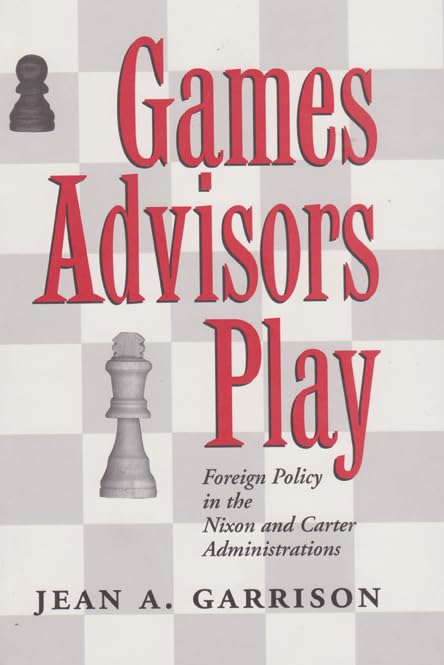
Games Advisors Play: Foreign Policy in the Nixon and Carter Administrations (Joseph V. Hughes Jr. and Holly O. Hughes Series on ,Used
Sold by Ergodebooks, an authorized reseller.
Returns accepted within 30 days | support@ergodebooks.com
Shipping Information
- Free Standard Shipping — United States only
- Processing Time: 3–5 business days
- Estimated Delivery: 6–10 business days after dispatch
- Double-boxed, fully insured & discreetly packaged
- Tracking number sent via email once dispatched
Returns & Refund
Returns accepted within 30 days of delivery.
Damaged or Defective Item
Free return shipping + replacement or full refund
Wrong Item Received
Free return shipping + replacement or full refund
Change of Mind
Return shipping at customer's expense · 25% restocking fee applies
Payment Option

What happens when presidential advisors, in Machiavellian terms, think more of themselves than of the prince and seek their own profit more than the goals of the president or the "good of the realm"? In Games Advisors Play, Jean A. Garrison examines case studies of foreign policy in the Nixon and Carter administrations and addresses how and why advisors manipulate the group process, under what conditions advisors engage in power games, and in what situations they are most effective in influencing presidential policy choices.Given the high stakes, policy advocates employ various tactics to manipulate the advisory process and decision outcome. Three types of tactics are used: structural maneuvers, procedural maneuvers, and interpersonal maneuvers. Although these tools are important to the success of an advisor, the advisory process is a dynamic group process, and advisors must recognize that others have potential influence as well. The effectiveness of advisors therefore also depends on their power and authority, their manipulative skills, their interpersonal communication skills, and the relationships among members of the inner circle.Using the internal policy debate over arms control to trace the influence advisors have on specific decisions, Garrison compares the power games in Nixon's hierarchical system Number Three: Joseph V. Hughes, Jr., and Holly O. Hughes Series in the Presidency and Leadership Studies to Carter's more open advisory system. The disparate advisory systems provided advisors with different opportunities to influence the president and overall policy making.As a contribution to the decisionmaking literature in foreign policy, Games Advisers Play challenges static conceptions of the advisory process. Foreignpolicy scholars, presidential scholars, and political psychologists will find this an exciting and thoughtprovoking study.
⚠️ WARNING (California Proposition 65):
This product may contain chemicals known to the State of California to cause cancer, birth defects, or other reproductive harm.
For more information, please visit www.P65Warnings.ca.gov.