
Title
Gardening With Carnivores: Sarracenia Pitcher Plants In Cultivation & In The Wild,Used
Sold by Ergodebooks, an authorized reseller.
Returns accepted within 30 days | support@ergodebooks.com
Shipping Information
- Free Standard Shipping — United States only
- Processing Time: 3–5 business days
- Estimated Delivery: 6–10 business days after dispatch
- Double-boxed, fully insured & discreetly packaged
- Tracking number sent via email once dispatched
Returns & Refund
Returns accepted within 30 days of delivery.
Damaged or Defective Item
Free return shipping + replacement or full refund
Wrong Item Received
Free return shipping + replacement or full refund
Change of Mind
Return shipping at customer's expense · 25% restocking fee applies
Payment Option

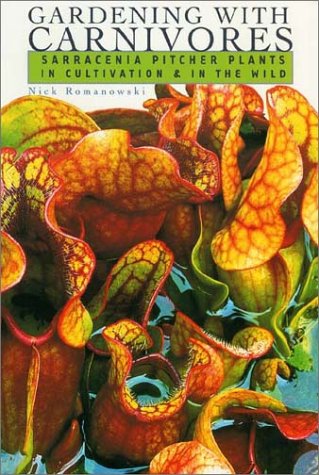
For the keen collector, there is no shortage of information here.'Roger Spencer, Royal Botanic Gardens, Melbourne, AustraliaNative to the swamplands of the southeastern United States, the North American pitcher plants (Sarracenia) are among the world's most spectacular carnivorous plants, and also the easiest to grow in temperate climates. Although they have long been confused with unrelated tropical Nepenthes pitchers, gardeners are learning that many of these hardy plants will thrive in the open yearround, from parts of southern Canada to the cooler subtropics. Sarracenia grow best in the open garden and usually show their most vivid colors in full sun.Gardening with Carnivores is the first complete guide to these ornamental plants, from natural history to hybridization, and from creating a bog garden to using the pitchers as longlasting cut flowers. The book combines both practical and academic information to provide new insights into the biology and evolution of this dynamically changing group. Nearly 80 photographs capture the photogenic nature of this plant group, and all species and many hybrids are showcased in their richest colors.In the wild, most stands of these species have disappeared, mostly through drainage of wetlands but also through poaching and cutting for the florist trade. To ease some of the many pressures on the wild populations, commercial growersfrom collectors and florists to aquaculturistsare considering raising many species and hybrids for cut pitchers. The final chapter describes how to produce these exoticlooking yet readily raised pitchers for sale.Nick Romanowski is a biologist and commercial grower of aquatic and water'sedge plants, maintaining one of the world's most diverse wetland collections at Dragonfly Aquatics, his nursery in Victoria, New South Wales.
⚠️ WARNING (California Proposition 65):
This product may contain chemicals known to the State of California to cause cancer, birth defects, or other reproductive harm.
For more information, please visit www.P65Warnings.ca.gov.
- Q: What is 'Gardening with Carnivores' about? A: 'Gardening with Carnivores: Sarracenia Pitcher Plants in Cultivation & in the Wild' is a comprehensive guide that covers the cultivation and natural history of North American pitcher plants, specifically Sarracenia. It provides insights on growing these unique carnivorous plants in gardens and their ecological importance.
- Q: Who is the author of this book? A: The book is authored by Nick Romanowski, a biologist and commercial grower known for his extensive collection of wetland plants.
- Q: When was 'Gardening with Carnivores' published? A: 'Gardening with Carnivores' was published on February 3, 2002.
- Q: What type of plants does this book focus on? A: The book focuses on Sarracenia pitcher plants, which are a type of carnivorous plant native to the southeastern United States.
- Q: Is this book suitable for beginners? A: Yes, 'Gardening with Carnivores' is designed to be accessible for both novice and experienced gardeners, offering practical tips on cultivation and care.
- Q: What is included in the book's content? A: The book includes information on natural history, hybridization, creating bog gardens, and utilizing pitcher plants as cut flowers, along with nearly 80 photographs.
- Q: How many pages does the book have? A: 'Gardening with Carnivores' contains 110 pages of detailed information and guidance.
- Q: What is the binding type of the book? A: The book is available in paperback binding, making it easy to handle and read.
- Q: Can Sarracenia plants be grown in colder climates? A: Yes, Sarracenia pitcher plants can thrive in temperate climates, and they are capable of surviving in cooler areas, including parts of southern Canada.
- Q: What is the significance of the final chapter in the book? A: The final chapter discusses the cultivation of Sarracenia for commercial purposes, emphasizing sustainable practices to support wild populations.