If you have any questions, you are always welcome to contact us. We'll get back to you as soon as possible, withing 24 hours on weekdays.
Customer service
All questions about your order, return and delivery must be sent to our customer service team by e-mail at yourstore@yourdomain.com
Sale & Press
If you are interested in selling our products, need more information about our brand or wish to make a collaboration, please contact us at press@yourdomain.com
Help
If you have any questions, you are always welcome to contact us. We'll get back to you as soon as possible, withing 24 hours on weekdays.
Customer service
All questions about your order, return and delivery must be sent to our customer service team by e-mail at yourstore@yourdomain.com
Sale & Press
If you are interested in selling our products, need more information about our brand or wish to make a collaboration, please contact us at press@yourdomain.com
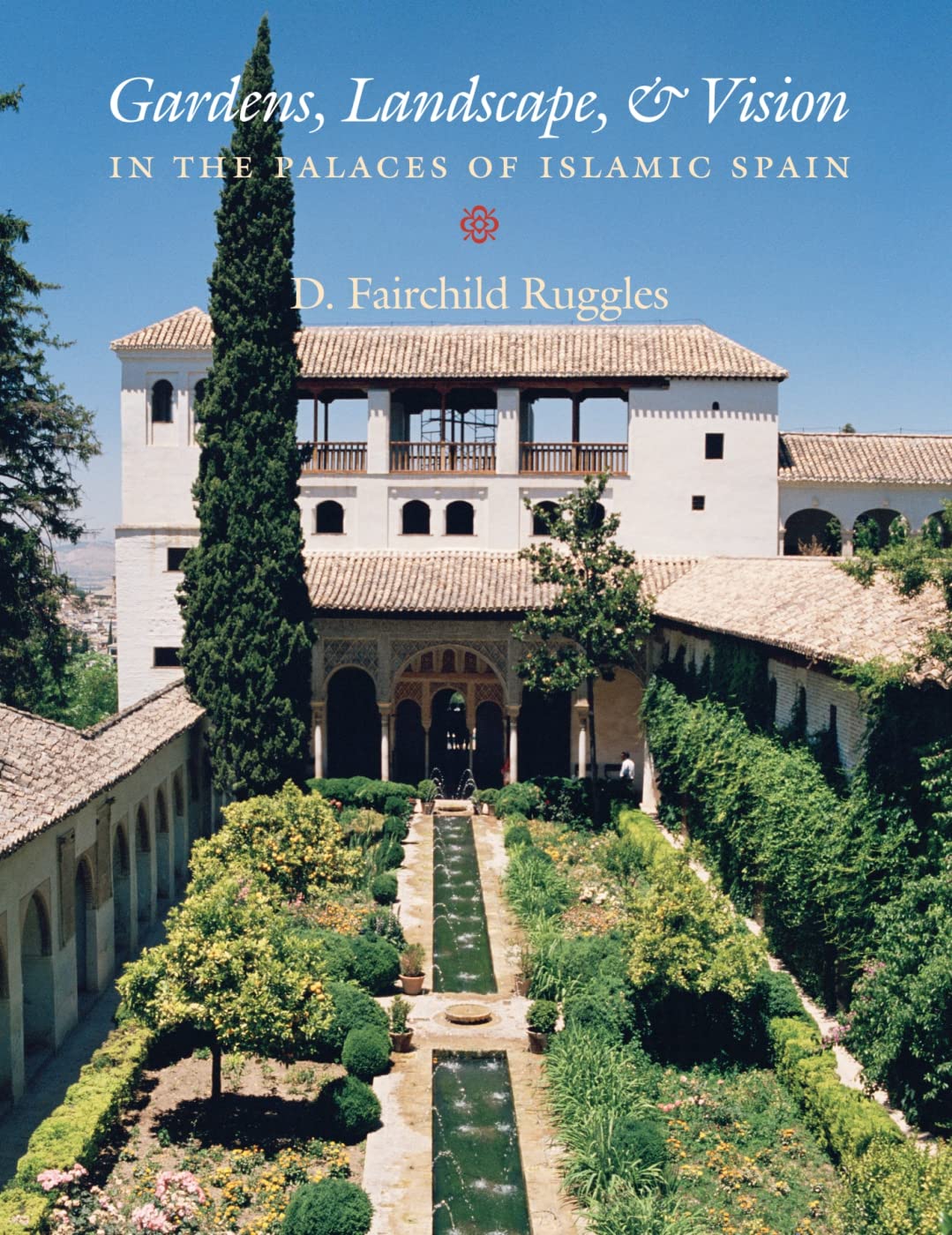
Islamic gardens, with their waterways and beds of plants and trees, are generally regarded as an earthly reflection of paradise. D. Fairchild Ruggles offers a new interpretation, contending that the palace garden was primarily an environmental, economic, and political construct.She discusses three aspects of medieval Islamic Spain: the landscape and agricultural transformation documented in Arabic scientific literature, the formation of the garden and its symbolism from the eighth through the fifteenth centuries, and the role of the gaze and the frame in the spatial structures through which sovereignty was constituted.Although the repertory of architectural and garden forms was largely unchanged from the tenth through the fifteenth centuries, Ruggles explains that their meaning changed dramatically. The royal palace gardens of Cordoba expressed a political ideology that placed the king above and at the center of the garden and, metaphorically, of his kingdom.This conception of the world began to falter in later centuries, but patrons clung to the forms and motifs of the golden age. Instead of creating new forms, artists at the Alhambra in Granada reworked and refined familiar vocabulary and materials. The vistas fixed by windows and pavilions referred not to the actual relationship of the king to his domain but rather to the memory of a onceexpanding territory.
⚠️ WARNING (California Proposition 65):
This product may contain chemicals known to the State of California to cause cancer,
birth defects, or other reproductive harm.
For MAP (Minimum Advertised Price) violations and Intellectual Property (IP) or Trademark concerns, please contact:
support@ergodebooks.com
⚠️ California Proposition 65 Warning: Some products sold on this website may expose you to chemicals known to the State of California to cause cancer, birth defects, or other reproductive harm. For more information, visit www.P65Warnings.ca.gov.