
Title
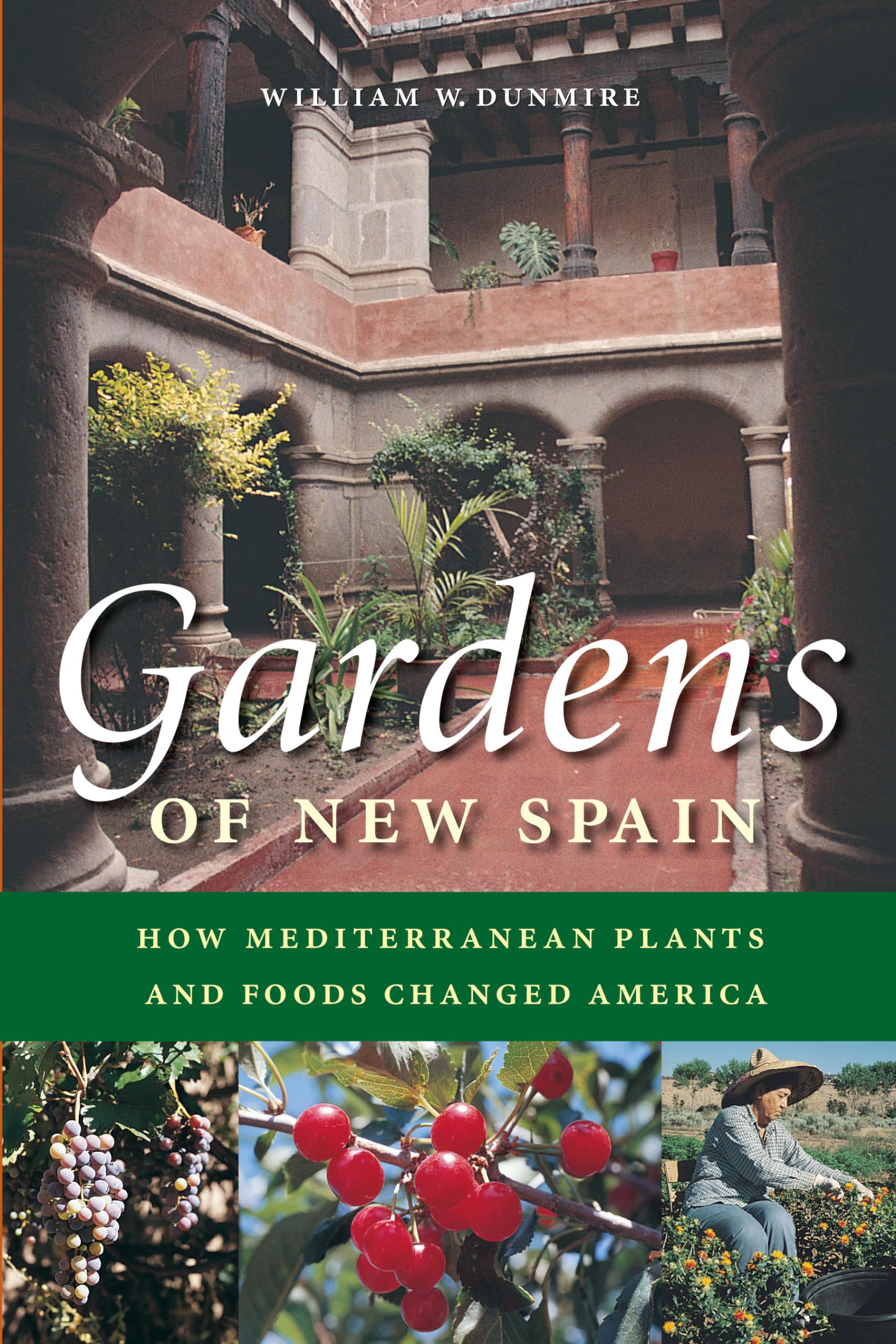
Gardens of New Spain: How Mediterranean Plants and Foods Changed America,New
Sold by Ergodebooks, an authorized reseller.
Returns accepted within 30 days | support@ergodebooks.com
Shipping Information
- Free Standard Shipping — United States only
- Processing Time: 3–5 business days
- Estimated Delivery: 6–10 business days after dispatch
- Double-boxed, fully insured & discreetly packaged
- Tracking number sent via email once dispatched
Returns & Refund
Returns accepted within 30 days of delivery.
Damaged or Defective Item
Free return shipping + replacement or full refund
Wrong Item Received
Free return shipping + replacement or full refund
Change of Mind
Return shipping at customer's expense · 25% restocking fee applies
Payment Option

When the Spanish began colonizing the Americas in the late fifteenth and sixteenth centuries, they brought with them the plants and foods of their homelandwheat, melons, grapes, vegetables, and every kind of Mediterranean fruit. Missionaries and colonists introduced these plants to the native peoples of Mexico and the American Southwest, where they became staple crops alongside the corn, beans, and squash that had traditionally sustained the original Americans. This intermingling of Old and New World plants and foods was one of the most significant fusions in the history of international cuisine and gave rise to many of the foods that we so enjoy today. Gardens of New Spain tells the fascinating story of the diffusion of plants, gardens, agriculture, and cuisine from late medieval Spain to the colonial frontier of Hispanic America. Beginning in the Old World, William Dunmire describes how Spain came to adopt plants and their foods from the Fertile Crescent, Asia, and Africa. Crossing the Atlantic, he first examines the agricultural scene of PreColumbian Mexico and the Southwest. Then he traces the spread of plants and foods introduced from the Mediterranean to Spains settlements in Mexico, New Mexico, Arizona, Texas, and California. In lively prose, Dunmire tells stories of the settlers, missionaries, and natives who blended their growing and eating practices into regional plantways and cuisines that live on today in every corner of America.
⚠️ WARNING (California Proposition 65):
This product may contain chemicals known to the State of California to cause cancer, birth defects, or other reproductive harm.
For more information, please visit www.P65Warnings.ca.gov.
- Q: What is the main topic of 'Gardens of New Spain'? A: 'Gardens of New Spain' explores how Mediterranean plants and foods influenced agriculture and cuisine in the Americas during the Spanish colonization, highlighting the fusion of Old and New World practices.
- Q: Who is the author of 'Gardens of New Spain'? A: The author of 'Gardens of New Spain' is William W. Dunmire.
- Q: What is the publication date of this book? A: 'Gardens of New Spain' was published on October 1, 2004.
- Q: How many pages does 'Gardens of New Spain' have? A: This book contains 375 pages.
- Q: What type of binding does 'Gardens of New Spain' have? A: 'Gardens of New Spain' is available in paperback binding.
- Q: Is 'Gardens of New Spain' a new book? A: Yes, 'Gardens of New Spain' is listed as a new item.
- Q: What category does 'Gardens of New Spain' fall under? A: 'Gardens of New Spain' is categorized under State & Local.
- Q: Does 'Gardens of New Spain' include illustrations? A: Yes, 'Gardens of New Spain' is an illustrated edition.
- Q: What themes are covered in 'Gardens of New Spain'? A: The book covers themes of agricultural practices, the introduction of Mediterranean crops to the Americas, and the cultural exchange between Spanish settlers and native peoples.
- Q: Can 'Gardens of New Spain' be useful for understanding American culinary history? A: Yes, 'Gardens of New Spain' provides insights into the historical fusion of food and agricultural practices that shaped American cuisine.