
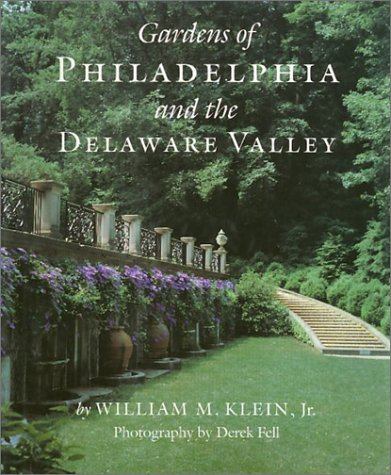
Title
Gardens Of Philadelphia and the Delaware Valley,Used
Sold by Ergodebooks, an authorized reseller.
Returns accepted within 30 days | support@ergodebooks.com
Shipping Information
- Free Standard Shipping — United States only
- Processing Time: 3–5 business days
- Estimated Delivery: 6–10 business days after dispatch
- Double-boxed, fully insured & discreetly packaged
- Tracking number sent via email once dispatched
Returns & Refund
Returns accepted within 30 days of delivery.
Damaged or Defective Item
Free return shipping + replacement or full refund
Wrong Item Received
Free return shipping + replacement or full refund
Change of Mind
Return shipping at customer's expense · 25% restocking fee applies
Payment Option

Once mostly rolling hills and valleys covered with hardwood forest in the seventeenth century, contemporary Philadelphia and the Delaware Valley now claim the largest concentration of many of the finest public and private gardens in the world. William M. Klein explores the broader attitudes and behaviors toward nature that have influenced this developmenttof colonial farms and gardens created for survival to the art of suburban gardens to nature conservatories and public parks.Discover how in 300 years we have moved from fencing nature out to fencing nature in. Out of the past, examine the worm fence at Colonial Pennsylvania Plantations, overgrown by weeds as it would have been during Colonial times, zigzagging across the fields tenuously holding back the great forest that presses down. Into the present, consider the chain link fence at the John Heinz Wildlife Refuge at Tinicum that bounds a threatened wetland habitat from the intrusion of highways and reverberates to the sounds of traffic from I95 and the Philadelphia International Airport.Klein's eloquent and knowledgeable narrative include detailed portraits of fortyfour individual gardens, all lustrously illustrated by noted garden photographer Derek Fell. While considering a particular garden's historical and social influences, Klein discusses the philosophy behind each garden, its planner's goals and even personality, and the garden's interaction with surrounding architecture.This complete guide also includes each location's address, phone number, hours of operation, events, and featured plants, flowers, and trees. Yet this book goes far beyond the usual guides in this search for answers to the perennial questions of how and why each generation struggles to define its place in nature. As we approach the twentyfirst century, the garden has become the metaphor for how we must begin to view all nature todaytended space where we collect, name, nurture, and share our love of plants.
⚠️ WARNING (California Proposition 65):
This product may contain chemicals known to the State of California to cause cancer, birth defects, or other reproductive harm.
For more information, please visit www.P65Warnings.ca.gov.