If you have any questions, you are always welcome to contact us. We'll get back to you as soon as possible, withing 24 hours on weekdays.
Customer service
All questions about your order, return and delivery must be sent to our customer service team by e-mail at yourstore@yourdomain.com
Sale & Press
If you are interested in selling our products, need more information about our brand or wish to make a collaboration, please contact us at press@yourdomain.com
Help
If you have any questions, you are always welcome to contact us. We'll get back to you as soon as possible, withing 24 hours on weekdays.
Customer service
All questions about your order, return and delivery must be sent to our customer service team by e-mail at yourstore@yourdomain.com
Sale & Press
If you are interested in selling our products, need more information about our brand or wish to make a collaboration, please contact us at press@yourdomain.com
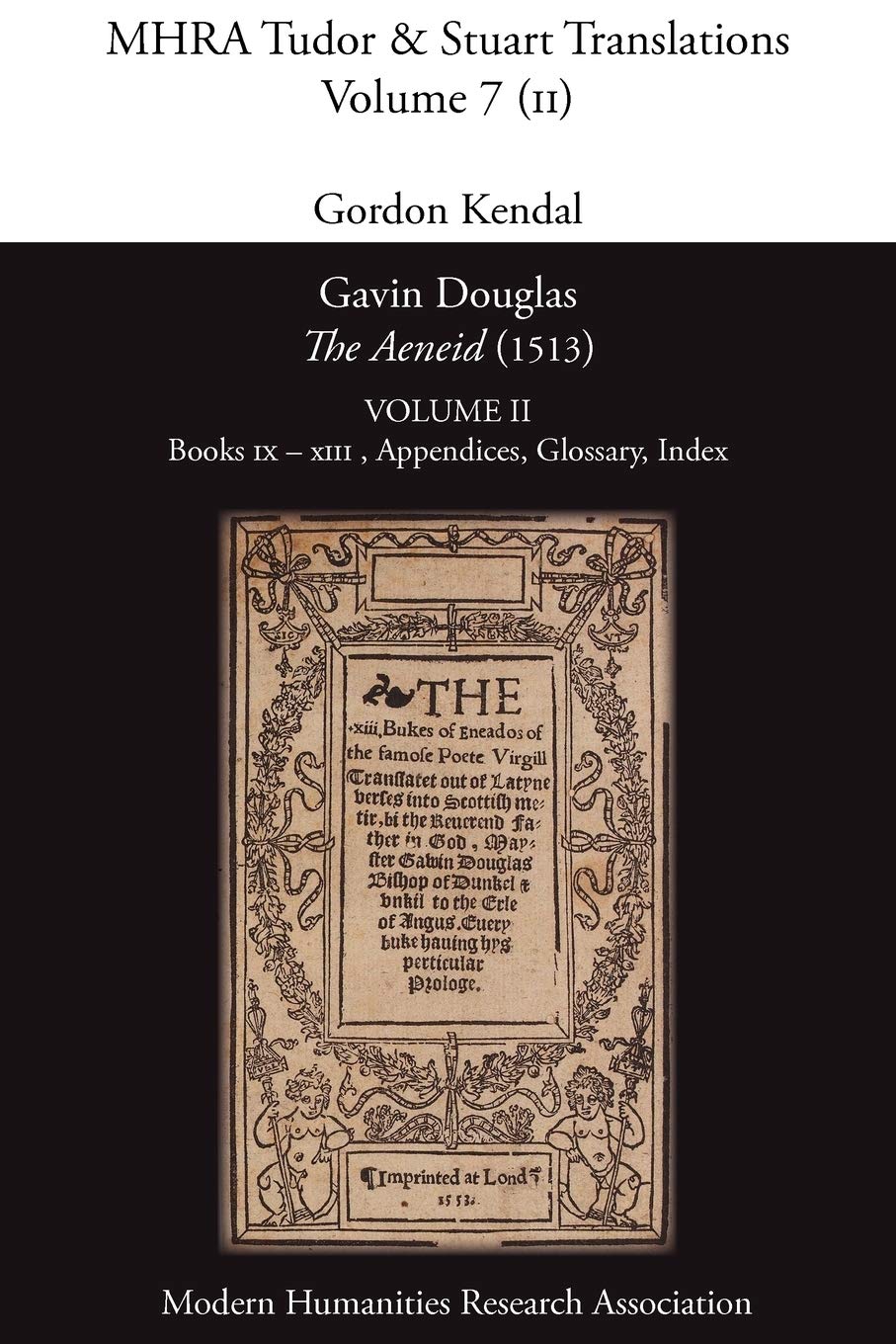
Virgil's story of Aeneas, exiled from fallen Troy and leading his people to a new life through the founding of Rome, was familiar in the middle ages. The first true and full translation into any form of English was completed in Scotland in 1513 by Gavin Douglas and published in print forty years later. His version (still considered by some to be the finest of all) is significant historically but also for its intrinsic qualities: vigour, faithfulness, and a remarkable flair for language. Douglas was a scholar as well as a poet and brought to his task a detailed knowledge of the Latin text and of its major commentators, together with a sensitive mastery of his own language, both Scots and English, contemporary and archaic. The present edition is the first to regularise his spelling and make access easier for the modern reader without compromising the authentic ScotsEnglish blend of his language. Glossaries (side and end) explain obscurities in his vocabulary while the introduction and notes set the work in context and indicate how Douglas understands and refocusses the great Virgilian epic. It will be of interest to medievalists and Renaissance scholars, to classicists and to students of the English language, and not least to the general reader whom Douglas had especially in mind. Gordon Kendal is an Honorary Research Fellow in the School of English, University of St Andrews.
⚠️ WARNING (California Proposition 65):
This product may contain chemicals known to the State of California to cause cancer,
birth defects, or other reproductive harm.
For MAP (Minimum Advertised Price) violations and Intellectual Property (IP) or Trademark concerns, please contact:
support@ergodebooks.com
⚠️ California Proposition 65 Warning: Some products sold on this website may expose you to chemicals known to the State of California to cause cancer, birth defects, or other reproductive harm. For more information, visit www.P65Warnings.ca.gov.