
Title
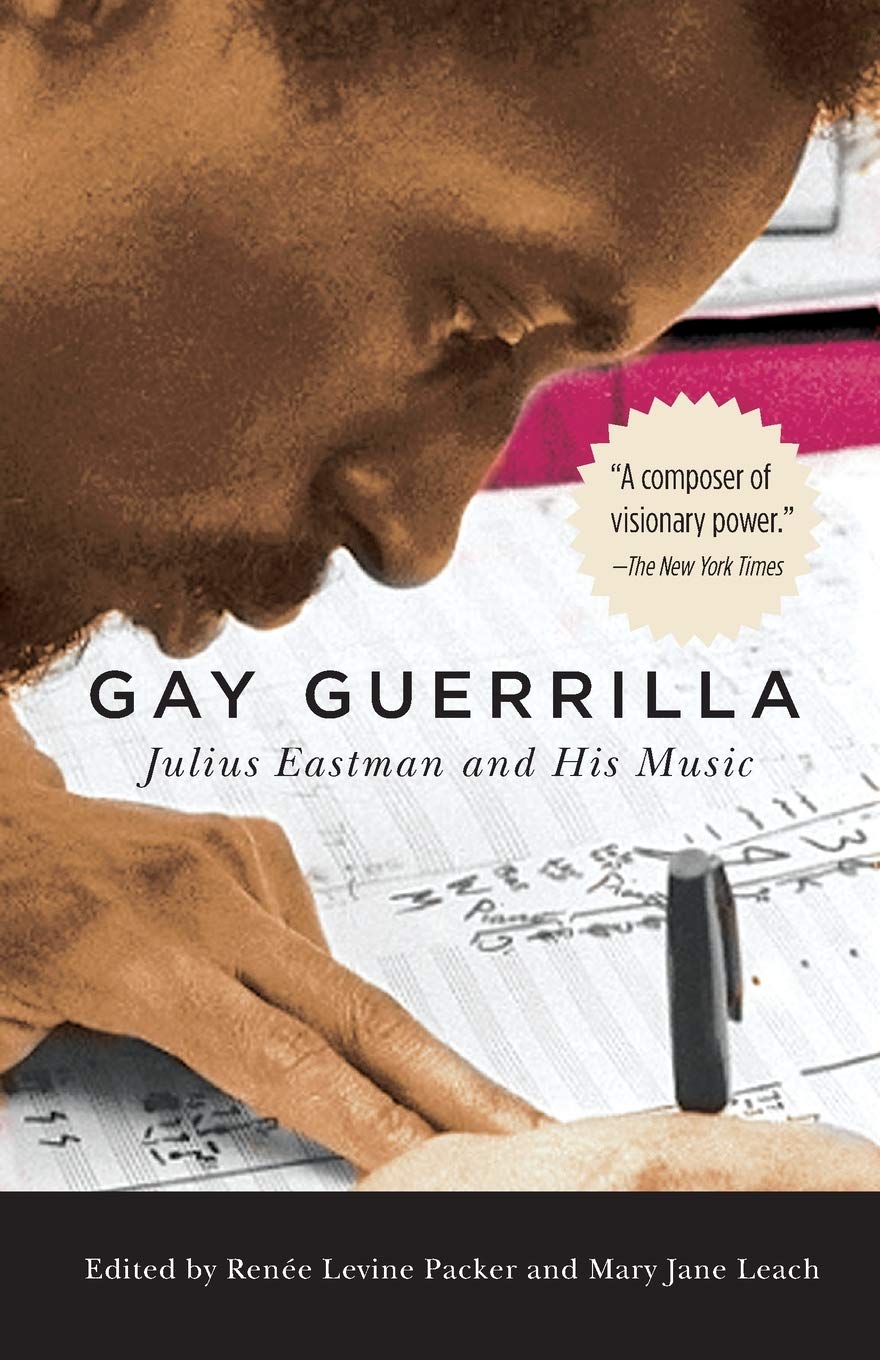
Gay Guerrilla: Julius Eastman and His Music (Eastman Studies in Music, 129),Used
Sold by Ergodebooks, an authorized reseller.
Returns accepted within 30 days | support@ergodebooks.com
Shipping Information
- Free Standard Shipping — United States only
- Processing Time: 3–5 business days
- Estimated Delivery: 6–10 business days after dispatch
- Double-boxed, fully insured & discreetly packaged
- Tracking number sent via email once dispatched
Returns & Refund
Returns accepted within 30 days of delivery.
Damaged or Defective Item
Free return shipping + replacement or full refund
Wrong Item Received
Free return shipping + replacement or full refund
Change of Mind
Return shipping at customer's expense · 25% restocking fee applies
Payment Option

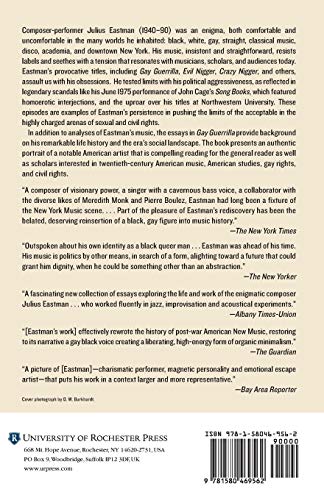
A compelling portrait of composerperformer Julius Eastman's enigmatic and intriguing life and music.Composerperformer Julius Eastman (194090) was an enigma, both comfortable and uncomfortable in the many worlds he inhabited: black, white, gay, straight, classical music, disco, academia, and downtown New York. His music, insistent and straightforward, resists labels and seethes with a tension that resonates with musicians, scholars, and audiences today. Eastman's provocative titles, including Gay Guerrilla, Evil Nigger, Crazy Nigger, and others, assault us with his obsessions.Eastman tested limits with his political aggressiveness, as reflected in legendary scandals like his June 1975 performance of John Cage's Song Books, which featured homoerotic interjections, and the uproar over his titles at Northwestern University. These episodes are examples of Eastman's persistence in pushing the limits of the acceptable in the highly charged arenas of sexual and civil rights.In addition to analyses of Eastman's music, the essays in Gay Guerrilla provide background on his remarkable life history and the era's social landscape. The book presents an authentic portrait of a notable American artist thatis compelling reading for the general reader as well as scholars interested in twentiethcentury American music, American studies, gay rights, and civil rights.This Life of Sounds: Evenings for New Music inBuffalo received an ASCAP Deems Taylor Award for excellence. Mary Jane Leach is a composer and freelance writer, currently writing music and theatre criticism for the Albany TimesUnion.
⚠️ WARNING (California Proposition 65):
This product may contain chemicals known to the State of California to cause cancer, birth defects, or other reproductive harm.
For more information, please visit www.P65Warnings.ca.gov.
- Q: What is 'Gay Guerrilla: Julius Eastman and His Music' about? A: This book provides a compelling portrait of composer-performer Julius Eastman, exploring his enigmatic life and the political and social contexts surrounding his music.
- Q: Who is the author of this book? A: The book is authored by Renée Levine Packer, an established writer and music critic.
- Q: What topics are covered in the essays of this book? A: The essays delve into analyses of Eastman's music, his life history, and the social landscape of the era, focusing on themes of sexual and civil rights.
- Q: How many pages does the book have? A: The book contains 284 pages.
- Q: What is the condition of the book? A: The book is in new condition.
- Q: What type of binding does this book have? A: The book is available in paperback binding.
- Q: When was 'Gay Guerrilla: Julius Eastman and His Music' published? A: The book was published on October 22, 2018.
- Q: What genre does this book fall under? A: This book falls under the category of History & Criticism.
- Q: Is this book suitable for general readers? A: Yes, it is suitable for both general readers and scholars interested in music, American studies, gay rights, and civil rights.
- Q: What makes Julius Eastman's music significant? A: Eastman's music is significant because it resists labels, pushes political and social boundaries, and resonates with contemporary musicians and audiences.