
Title
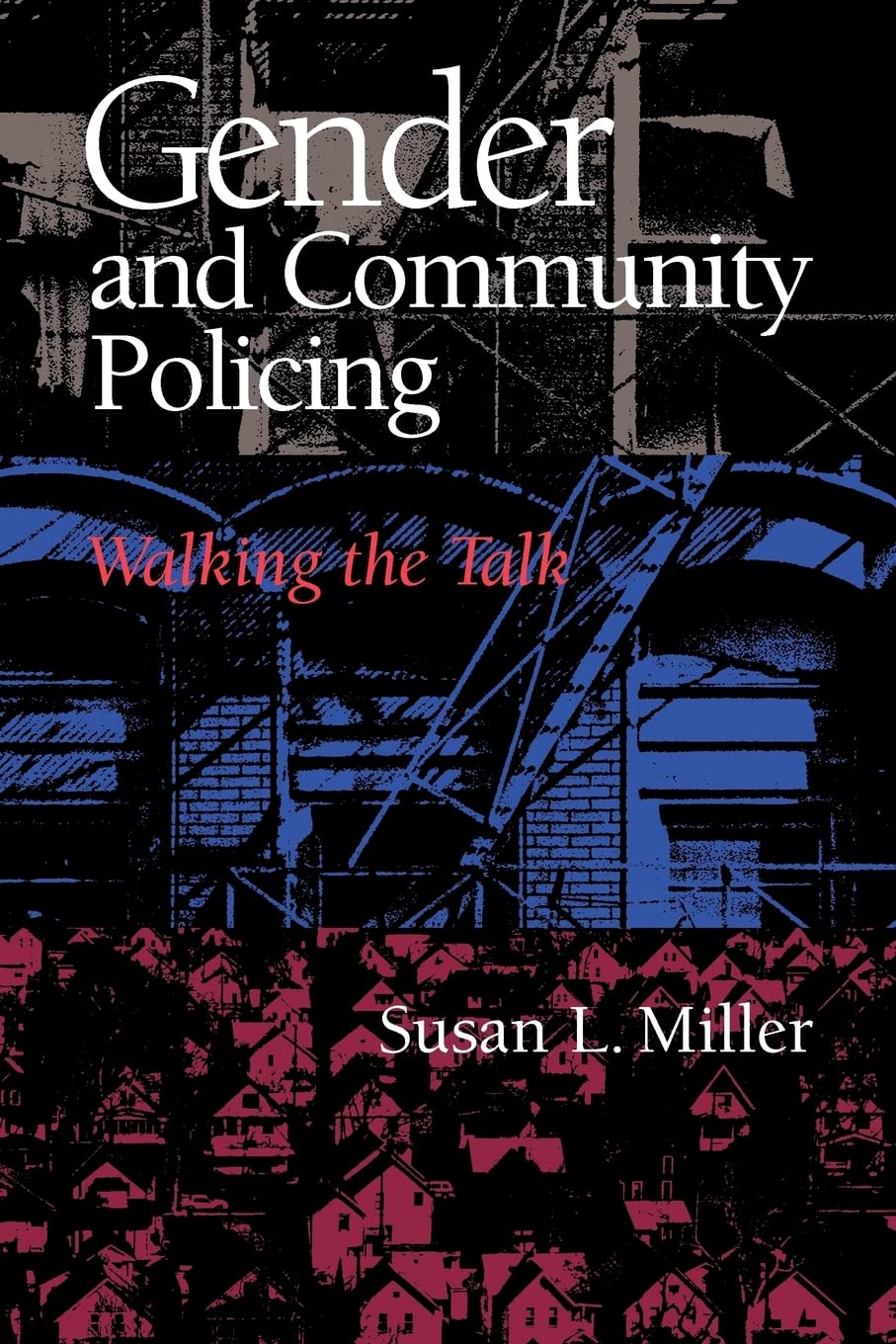
Gender And Community Policing: Walking The Talk (New England Gender, Crime & Law)
Sold by Ergodebooks, an authorized reseller.
Returns accepted within 30 days | support@ergodebooks.com
Shipping Information
- Free Standard Shipping — United States only
- Processing Time: 3–5 business days
- Estimated Delivery: 6–10 business days after dispatch
- Double-boxed, fully insured & discreetly packaged
- Tracking number sent via email once dispatched
Returns & Refund
Returns accepted within 30 days of delivery.
Damaged or Defective Item
Free return shipping + replacement or full refund
Wrong Item Received
Free return shipping + replacement or full refund
Change of Mind
Return shipping at customer's expense · 25% restocking fee applies
Payment Option

While Traditional Policing Celebrated Male Officers As Masculine Crime Fighters Who Were Tough, Aloof, And Physically Intimidating, Policewomen Were Characterized As Too Soft And Emotional For Patrol Assignments And Were Relegated To Roles Focusing On Children, Other Women, Or Clerical Tasks. With The Advent Of Community Policing, Women'S Perceived Skills Are Finally Finding A Legitimate Place In Police Work, And Law Enforcement Structures Now Encourage Such Previously Undervalued Feminine Traits As Trust, Cooperation, Compassion, Interpersonal Communication, And Conflict Resolution.In This Illuminating Study Of Gender And Community Policing, Susan L. Miller Draws On A Combination Of Survey Data, Forthright Interviews With A Diverse Mix Of Police Officers, And Extensive Fieldwork Conducted In A Midwestern City Where Community Policing Has Been Practiced For Over A Decade. She Describes The Differences And Similarities In Policing Styles Of Male And Female Officers, Considers The Relationships That Develop Between Neighborhood Police On Foot And Patrol Officers In Squad Cars, And Explores The Interactions Between Neighborhood Officers And Community Members.Miller Confronts Such Questions As How Police Reconcile Incompatible Images Of Masculinity And Femininity; How Actions Of Neighborhood Police Officers Compare With Those Of Traditional Rapid Response Patrol Officers; How Community Police Cope With Resistance From The Rank And File; And How Gender And Genderrole Expectations Shape Police Activities And The Evaluation Of New Skills.Gender And Community Policing Provides Both A Feminist Framework For Community Policing And A Fresh Examination Of How Race, Gender, And Sexual Orientation Affect Police Image, Identity, And Methods.
⚠️ WARNING (California Proposition 65):
This product may contain chemicals known to the State of California to cause cancer, birth defects, or other reproductive harm.
For more information, please visit www.P65Warnings.ca.gov.
- Q: How many pages does the book have? A: The book has three hundred twenty pages. This length allows for an in-depth exploration of gender and community policing.
- Q: What is the binding type of this book? A: The book is published in paperback binding. This makes it lightweight and suitable for easy reading.
- Q: What are the dimensions of the book? A: The book measures six point fourteen inches in length, zero point seventy-one inches in width, and nine point twenty-five inches in height. These dimensions make it a convenient size for handling.
- Q: What is the primary topic of this book? A: The primary topic of the book is gender and community policing. It examines the evolving roles of male and female officers in law enforcement.
- Q: Who is the author of this book? A: The book is authored by Susan L. Miller. She draws on extensive research and interviews to present her findings.
- Q: Is this book suitable for academic study? A: Yes, this book is suitable for academic study. It provides valuable insights into gender dynamics within policing and community interactions.
- Q: How should I store the book to maintain its condition? A: Store the book in a cool, dry place, away from direct sunlight. This will help preserve the quality of the paperback binding and pages.
- Q: Can I easily read this book in one sitting? A: Yes, you can read this book in one sitting if you have the time. Its engaging content makes it easy to immerse yourself in the material.
- Q: Is the book safe for young adults? A: Yes, the book is safe for young adults. It addresses important social issues related to gender and community policing.
- Q: What should I do if the book arrives damaged? A: If the book arrives damaged, contact the seller for a return or replacement. Most sellers have policies in place for such situations.
- Q: Are there any illustrations or diagrams in the book? A: No, there are no illustrations or diagrams in the book. It focuses primarily on textual analysis and interviews.
- Q: What kind of research methods are used in the book? A: The book uses a combination of survey data, interviews, and fieldwork. This diverse approach enriches the study of community policing.
- Q: How does this book compare to traditional policing literature? A: This book offers a feminist perspective on community policing, contrasting with traditional literature that often focuses on male-centric views.
- Q: Is the book focused more on theory or practical applications? A: The book balances both theory and practical applications. It discusses theoretical frameworks while providing real-world insights from police officers.
- Q: Does the book include a bibliography or references? A: Yes, the book includes references that support its claims and research findings. This makes it a credible resource for further study.