
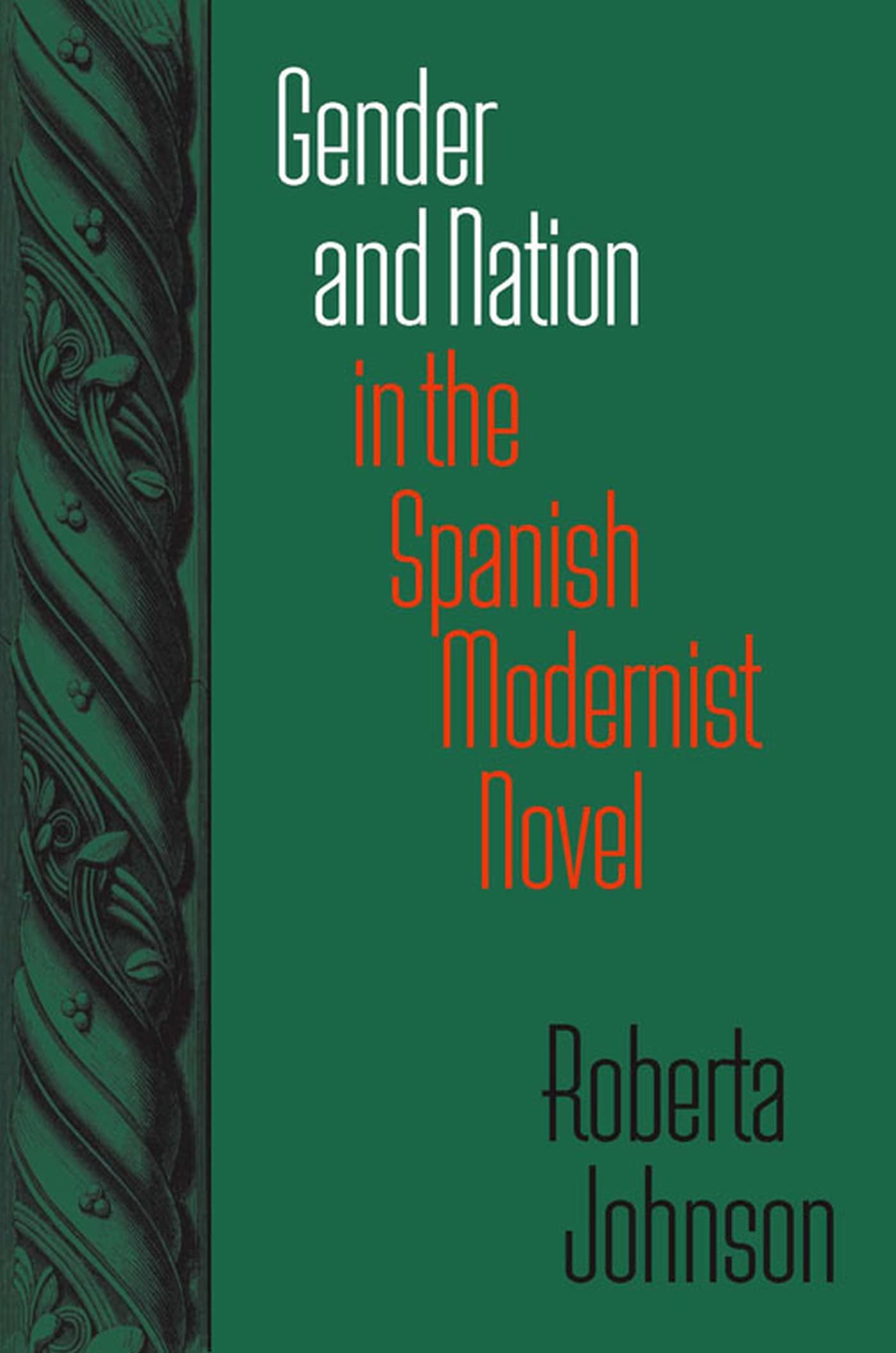
Title
Gender and Nation in the Spanish Modernist Novel,Used
Sold by Ergodebooks, an authorized reseller.
Returns accepted within 30 days | support@ergodebooks.com
Shipping Information
- Free Standard Shipping — United States only
- Processing Time: 3–5 business days
- Estimated Delivery: 6–10 business days after dispatch
- Double-boxed, fully insured & discreetly packaged
- Tracking number sent via email once dispatched
Returns & Refund
Returns accepted within 30 days of delivery.
Damaged or Defective Item
Free return shipping + replacement or full refund
Wrong Item Received
Free return shipping + replacement or full refund
Change of Mind
Return shipping at customer's expense · 25% restocking fee applies
Payment Option

Offering a fresh, revisionist analysis of Spanish fiction from 1900 to 1940, this study examines the work of both men and women writers and how they practiced differing forms of modernism. As Roberta Johnson notes, Spanish male novelists emphasized technical and verbal innovation in representing the contents of an individual consciousness and thus were more modernist in the usual understanding of the term. Female writers, on the other hand, were less aesthetically innovative but engaged in a social modernism that focused on domestic issues, gender roles, and relations between the sexes. Compared to the more conventionaleven reactionaryways their male counterparts treated such matters, Spanish women's fiction in the first half of the twentieth century was often revolutionary.The book begins by tracing the history of public discourse on gender from the 1890s through the 1930s, a discourse that included the rise of feminism. Each chapter then analyzes works by female and male novelists that address key issues related to gender and nationalism: the concept of intrahistoria, or an essential Spanish soul; modernist uses of figures from the Spanish literary tradition, notably Don Quixote and Don Juan; biological theories of gender prevalent in the 1920s and 1930s; and the growth of an organized feminist movement that coincided with the burgeoning Republican movement.This is the first book dealing with this period of Spanish literature to consider women novelists, such as Maria Martinez Sierra, Carmen de Burgos, and Concha Espina, alongside canonical male novelists, including Miguel de Unamuno, Ramon del ValleInclan, and Pio Baroja. With its contrasting conceptions of modernism, Johnson's work provides a compelling new model for bridging the gender divide in the study of Spanish fiction.
⚠️ WARNING (California Proposition 65):
This product may contain chemicals known to the State of California to cause cancer, birth defects, or other reproductive harm.
For more information, please visit www.P65Warnings.ca.gov.
- Q: What is the main focus of 'Gender and Nation in the Spanish Modernist Novel'? A: The book offers a revisionist analysis of Spanish fiction from 1900 to 1940, focusing on the differing approaches to modernism by male and female writers.
- Q: Who is the author of this book? A: The author is Roberta Johnson, who explores the roles of gender and nationalism in Spanish literature.
- Q: What time period does the book cover? A: The book covers the period from 1900 to 1940, highlighting key developments in Spanish fiction during this time.
- Q: Does the book analyze works by female authors? A: Yes, it includes analyses of works by female authors such as Maria Martinez Sierra, Carmen de Burgos, and Concha Espina, alongside male authors.
- Q: What themes are explored in the book? A: Themes include gender roles, domestic issues, intrahistoria, and the impact of modernism on Spanish literature.
- Q: Is this book suitable for academic study? A: Yes, it provides a scholarly approach to gender and modernism in Spanish literature, making it suitable for academic use.
- Q: What is the binding type of this book? A: The book is available in paperback binding.
- Q: How many pages does this book have? A: The book consists of 368 pages.
- Q: When was 'Gender and Nation in the Spanish Modernist Novel' published? A: The book was published on December 12, 2003.
- Q: What distinguishes this book from other studies of Spanish literature? A: It uniquely considers the contributions of women novelists in conjunction with their male counterparts, offering a new perspective on the gender divide in literature.