
Title
Gender and the Modern Research University: The Admission of Women to German Higher Education, 18651914,Used
Sold by Ergodebooks, an authorized reseller.
Returns accepted within 30 days | support@ergodebooks.com
Shipping Information
- Free Standard Shipping — United States only
- Processing Time: 3–5 business days
- Estimated Delivery: 6–10 business days after dispatch
- Double-boxed, fully insured & discreetly packaged
- Tracking number sent via email once dispatched
Returns & Refund
Returns accepted within 30 days of delivery.
Damaged or Defective Item
Free return shipping + replacement or full refund
Wrong Item Received
Free return shipping + replacement or full refund
Change of Mind
Return shipping at customer's expense · 25% restocking fee applies
Payment Option

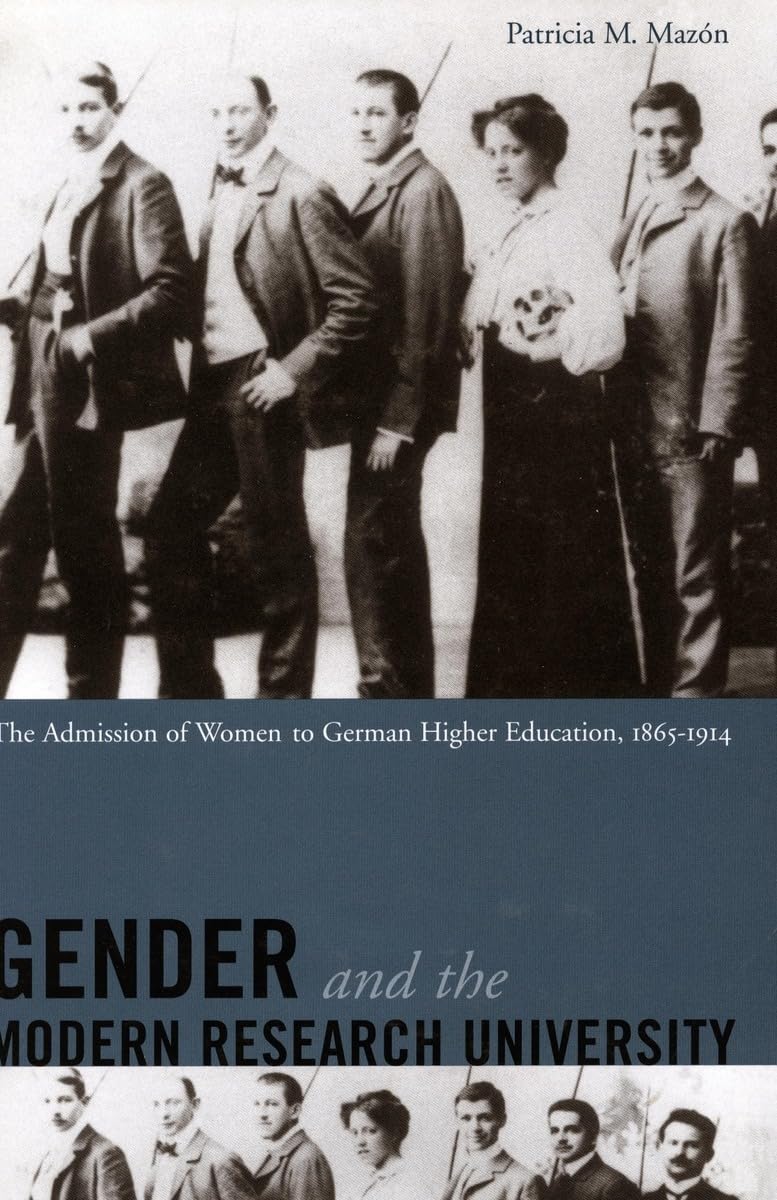
In the 1890s, German feminists fighting for female higher education envied American women their small colleges. Yet by 1910, German women could study at any German university, a level of educational access not reached by American women until the 1960s. This book investigates this development as well as the cultural significance of the tremendous debate generated by aspiring female students.Central to Mazn's analysis is the concept of academic citizenship, a complex discourse permeating German student life. Shaped by this ideal, the student years were a crucial stage in the formation of masculine identity in the educated middle class, and a female student was unthinkable. Only by emphasizing the need for female gynecologists and teachers did the women's movement carve out a niche for academic women.Because the nineteenthcentury German university was the model for the modern research university, the controversy resonates with contemporary American debates surrounding multiculturalism and higher education.
⚠️ WARNING (California Proposition 65):
This product may contain chemicals known to the State of California to cause cancer, birth defects, or other reproductive harm.
For more information, please visit www.P65Warnings.ca.gov.
- Q: How many pages does the book have? A: The book has three hundred forty-four pages. It provides a comprehensive exploration of gender and education in German universities.
- Q: What is the book's binding type? A: The book is hardcover. This ensures durability and a premium feel for readers.
- Q: What are the dimensions of the book? A: The book measures six point fourteen inches in length, one inch in width, and nine point twenty-five inches in height.
- Q: Who is the author of this book? A: The author is Patricia M. Mazón. She analyzes the historical context of women's admission to higher education in Germany.
- Q: What is the main topic of the book? A: The book investigates the admission of women to German higher education from eighteen sixty-five to nineteen fourteen. It highlights the cultural significance of this development.
- Q: What themes does this book explore? A: The book explores themes of gender, academic citizenship, and the historical context of education in Germany.
- Q: Is this book suitable for academic research? A: Yes, this book is suitable for academic research. It contains detailed analysis and historical context relevant to gender studies.
- Q: Can this book be used for teaching? A: Yes, it can be used for teaching. It provides valuable insights into the history of women's education in Germany.
- Q: Who would benefit from reading this book? A: Students, educators, and researchers interested in gender studies and higher education history would benefit from this book.
- Q: How should I care for this hardcover book? A: To care for this hardcover book, keep it in a cool, dry place. Avoid exposure to direct sunlight to prevent fading.
- Q: What if the book arrives damaged? A: If the book arrives damaged, you should contact the seller for return or replacement options. Most sellers offer a satisfaction guarantee.
- Q: Is there a warranty for this book? A: No, there is typically no warranty for books. However, check the return policy for any issues upon arrival.
- Q: How should I store this book to keep it in good condition? A: Store the book upright on a shelf, away from moisture. Ensure it’s not overloaded with other items to prevent bending.
- Q: What if I want to return the book? A: To return the book, refer to the seller's return policy for instructions. Most allow returns within a specified period.
- Q: Is this book appropriate for a general audience? A: Yes, this book is appropriate for a general audience. It provides historical insights that are engaging for various readers.
- Q: Does this book include any illustrations? A: Yes, the book contains nineteen illustrations. These visuals enhance the understanding of the historical context discussed.