
Title
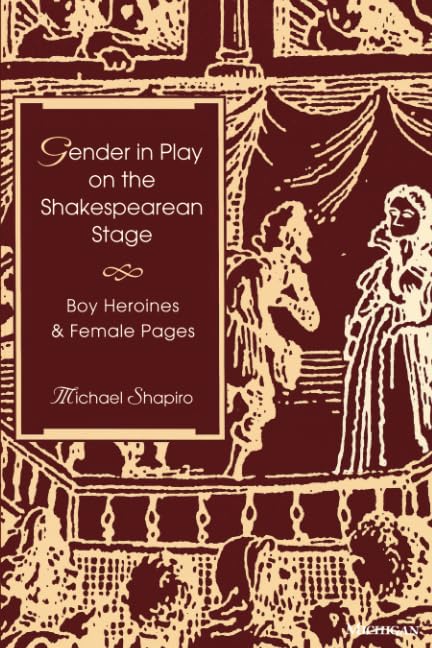
Gender in Play on the Shakespearean Stage: Boy Heroines and Female Pages,Used
Sold by Ergodebooks, an authorized reseller.
Returns accepted within 30 days | support@ergodebooks.com
Shipping Information
- Free Standard Shipping — United States only
- Processing Time: 3–5 business days
- Estimated Delivery: 6–10 business days after dispatch
- Double-boxed, fully insured & discreetly packaged
- Tracking number sent via email once dispatched
Returns & Refund
Returns accepted within 30 days of delivery.
Damaged or Defective Item
Free return shipping + replacement or full refund
Wrong Item Received
Free return shipping + replacement or full refund
Change of Mind
Return shipping at customer's expense · 25% restocking fee applies
Payment Option

Crossdressing, sexual identity, and the performance of gender are among the most hotly discussed topics in contemporary cultural studies. A vital addition to the growing body of literature, this book is the most indepth and historically contextual study to date of Shakespeare's uses of the heroine in male disguisemanplayingwomanplayingmanin all its theatrical and social complexity.Shapiro's study centers on the five plays in which Shakespeare employed the figure of the 'female page': The Two Gentlemen of Verona, The Merchant of Venice, As You Like It, Twelfth Night, and Cymbeline. Combining theater and social history, Shapiro locates Shakespeare's work in relation to controversies over gender roles and crossdressing in Elizabethan England.The popularity of the 'female page' is examined as a playful literary and theatrical way of confronting, avoiding, or merely exploiting issues such as the place of women in a patriarchal culture and the representation of women on stage. Looking beyond and behind the stage for the cultural anxieties that found their way into Shakespearean drama, Shapiro considers such cases as crossdressing women in London being punished as prostitutes and the alleged homoerotic practices of the apprentices who played female roles in adult companies. Shapiro also traces other Elizabethan dramatists' varied uses of the crossdressing motif, especially as they were influenced by Shakespeare's innovations.'Shapiro's engaging study is distinguished by the scope of interrelated topics it draws together and the balance of critical perspectives it brings to bear on them.' ChoiceMichael Shapiro is Professor of English, University of Illinois, Urbana.
⚠️ WARNING (California Proposition 65):
This product may contain chemicals known to the State of California to cause cancer, birth defects, or other reproductive harm.
For more information, please visit www.P65Warnings.ca.gov.
- Q: What is the main topic of 'Gender in Play on the Shakespearean Stage'? A: The book explores cross-dressing, sexual identity, and the performance of gender in Shakespeare's works, focusing on the historical context of female characters in male disguise.
- Q: Who is the author of this book? A: The author is Michael Shapiro, a Professor of English at the University of Illinois, Urbana.
- Q: What are the key plays discussed in this book? A: The book centers on five Shakespearean plays: The Two Gentlemen of Verona, The Merchant of Venice, As You Like It, Twelfth Night, and Cymbeline.
- Q: Is this book suitable for academic study? A: Yes, it is a comprehensive study that adds to the literature on gender roles and cross-dressing in Elizabethan England, making it suitable for academic research.
- Q: What is the condition of the book being sold? A: The book is listed as 'Used Book in Good Condition'.
- Q: How many pages does this book have? A: The book has a total of 296 pages.
- Q: What is the binding type of this book? A: The book is available in paperback binding.
- Q: When was this book published? A: The book was published on July 12, 1996.
- Q: Does the book discuss contemporary cultural issues? A: Yes, it discusses contemporary cultural studies related to gender identity and the representation of women in a patriarchal society.
- Q: What kind of insights does the author provide in this book? A: Shapiro provides insights into the socio-historical context of cross-dressing in Elizabethan drama and examines its implications on gender roles.