
Title
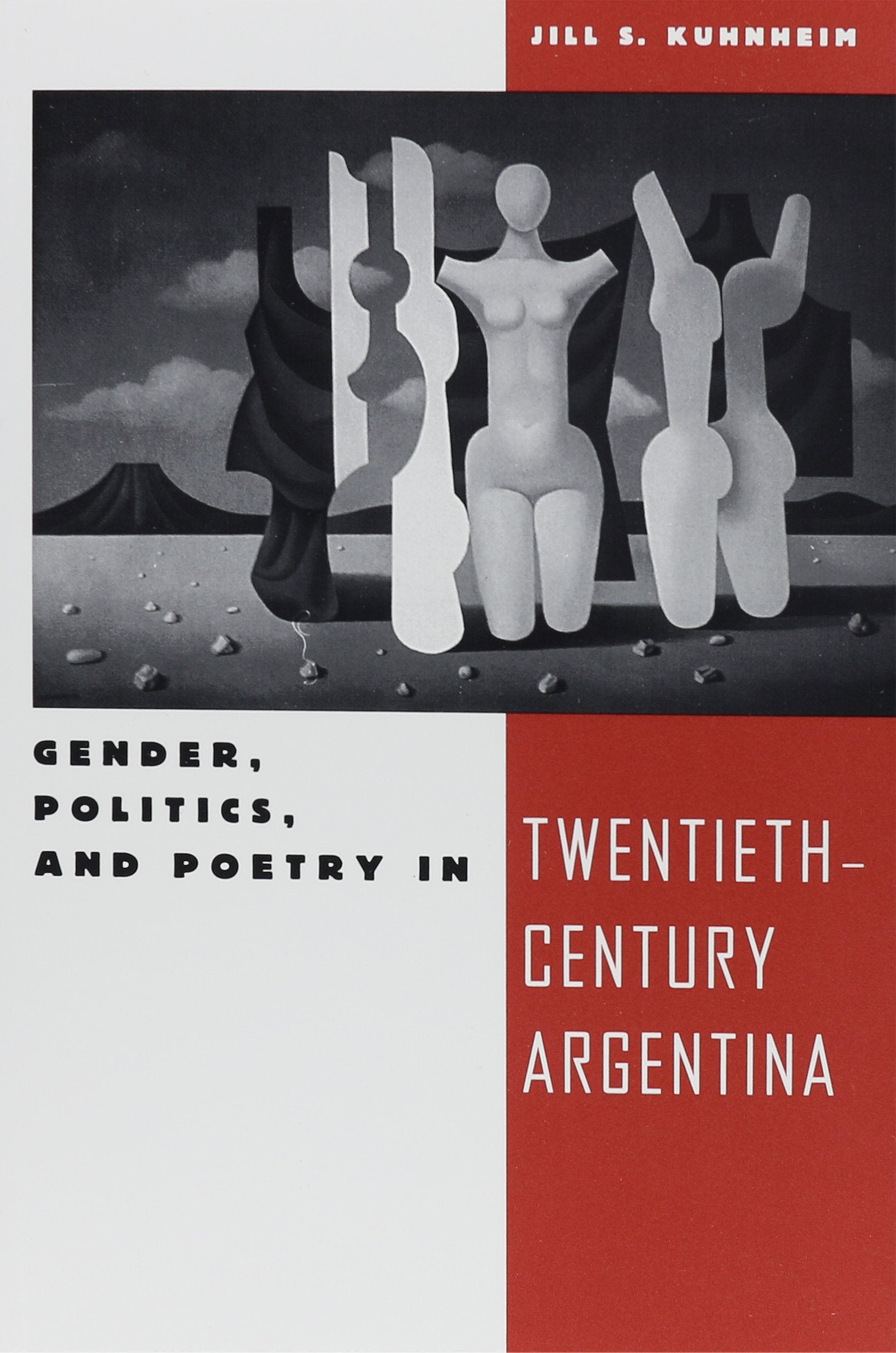
Gender, Politics, And Poetry In Twentiethcentury Argentina,Used
Sold by Ergodebooks, an authorized reseller.
Returns accepted within 30 days | support@ergodebooks.com
Shipping Information
- Free Standard Shipping — United States only
- Processing Time: 3–5 business days
- Estimated Delivery: 6–10 business days after dispatch
- Double-boxed, fully insured & discreetly packaged
- Tracking number sent via email once dispatched
Returns & Refund
Returns accepted within 30 days of delivery.
Damaged or Defective Item
Free return shipping + replacement or full refund
Wrong Item Received
Free return shipping + replacement or full refund
Change of Mind
Return shipping at customer's expense · 25% restocking fee applies
Payment Option

What an intelligent writer! . . . [Kuhnheim] situates Orozco against a series of literary predecessors and inheritors, with quite an original method. . . . The chapters on Eliot, Girondo, Pizarnik, and recent female poets give a new reading of Argentine poetry, and Latin American poetry by extension.'Gwen Kirkpatrick, University of California, BerkeleyOlga Orozco, widely considered one of the most important contemporary woman poets in Latin America, serves as the touchstone for Jill Kuhnheim's examination of the tension between literature and life. Or, as Kuhnheim quotes a student, of the universal question 'Why read poetry?'Born in 1920 in Argentina, Orozco has produced nine volumes of poetry, a play, and a narrative work. As a member of the 'lost generation' of the forties, she is prominent among a group of poets whose work reveals a range of responses to historical circumstances.Taking a feminist approach, and focusing on the specific history of Argentina, Kuhnheim relates Orozco's writing to that of T. S. Eliot, Oliverio Girondo, Alejandra Pizarnik, and more recent Argentine women poets such as Christina Pina, Diana Bellessi, Ines Araoz, and Liliana Lukin. Though much of their work appears to be far removed from social reality, Kuhnheim's reading reveals how even the most apparently distant poetry is inevitably involved with the political processes of the time. Her comparative approach offers a method for reading lyric poetry that connects the aesthetic strand, which views a poem as something distant from the world, to a social thread that marks a particular historical moment.Kuhnheim's work adds to the growing corpus on women writers in Latin America and brings one part of their tradition to an Englishspeaking audience.Jill S. Kuhnheim is assistant professor of Spanish and Latin American literature at the University of Wisconsin, Madison. She has published articles in journals including Revista Monografica, Romance Quarterly, and Contemporary Literature.
⚠️ WARNING (California Proposition 65):
This product may contain chemicals known to the State of California to cause cancer, birth defects, or other reproductive harm.
For more information, please visit www.P65Warnings.ca.gov.