
Title
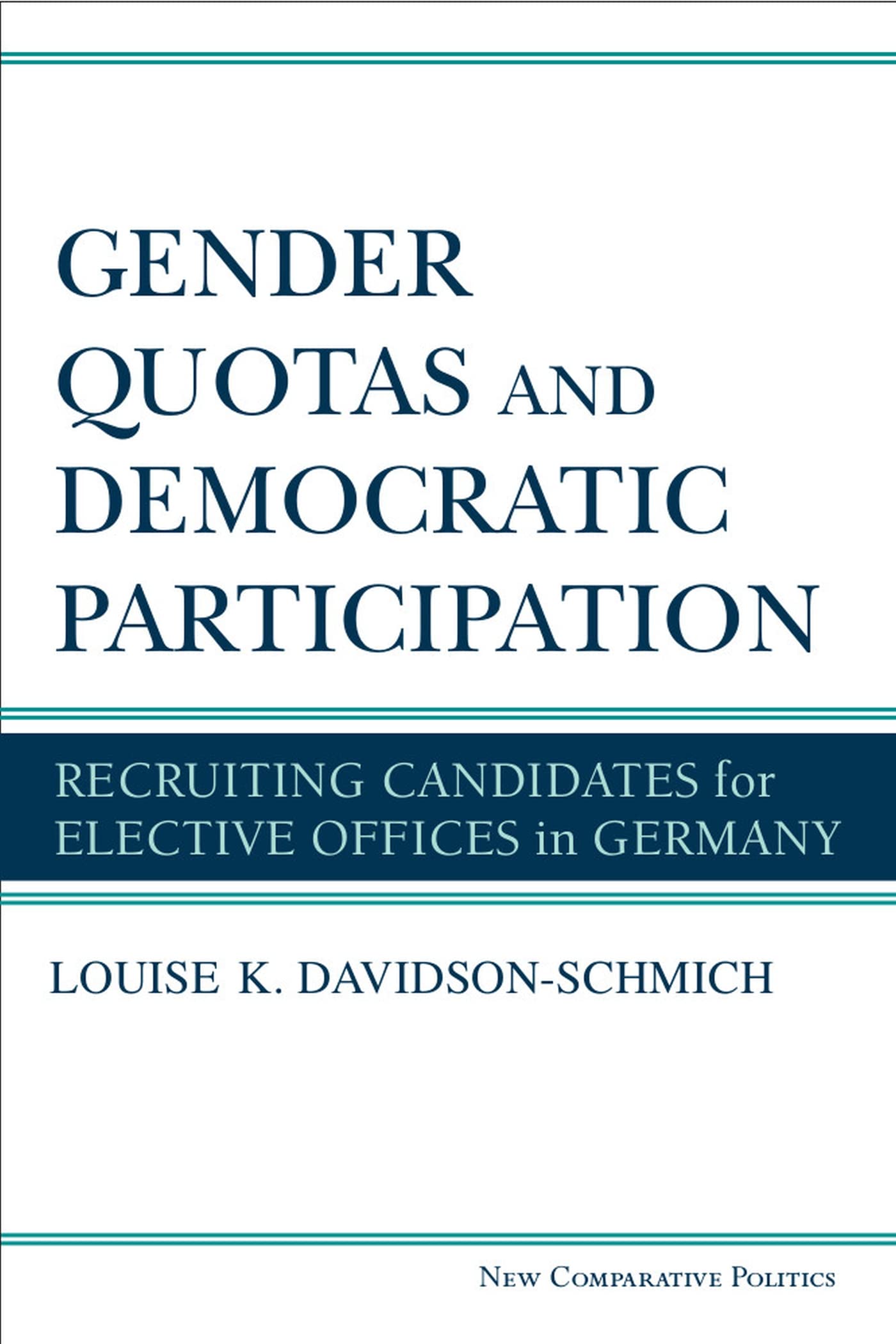
Gender Quotas and Democratic Participation: Recruiting Candidates for Elective Offices in Germany (New Comparative Politics),Used
Sold by Ergodebooks, an authorized reseller.
Returns accepted within 30 days | support@ergodebooks.com
Shipping Information
- Free Standard Shipping — United States only
- Processing Time: 3–5 business days
- Estimated Delivery: 6–10 business days after dispatch
- Double-boxed, fully insured & discreetly packaged
- Tracking number sent via email once dispatched
Returns & Refund
Returns accepted within 30 days of delivery.
Damaged or Defective Item
Free return shipping + replacement or full refund
Wrong Item Received
Free return shipping + replacement or full refund
Change of Mind
Return shipping at customer's expense · 25% restocking fee applies
Payment Option

Since the 1970s, quotas for female political candidates in elections have proliferated worldwide. Beyond increasing the numbers of women in highlevel elected bodies and, thereby, womens political representation, advocates claim that quotas foster genderequal participation in democracy and create female role models. According to this reasoning, quotas also overcome barriers to womens political participation, especially discriminatory practices in the selection of electoral candidates. Though such claims have persuaded policymakers to adopt quotas, little empirical evidence exists to verify their effects.In Gender Quotas and Democratic Participation, Louise K. DavidsonSchmich employs a pathbreaking research design to assess the effects of gender quotas on all phases of political recruitment. Drawing on interviews with, and an original survey of, potential candidates in Germany, she investigates the extent to which quotas and corresponding increases in womens descriptive representation have resulted in similar percentages of men and women joining political parties, aspiring to elected office, pursuing ballot nominations, and securing selection as candidates. She also examines the effect of quotas on discriminatory selection procedures.Ultimately, DavidsonSchmich argues, quotas intended benefits have been only partially realized. Quotas give women greater presence in powerful elected bodies not by encouraging female citizens to pursue political office at rates similar to mens, but by improving the odds that the limited number of politically ambitious women who do join parties will be elected. She concludes with concrete, original policy recommendations for increasing womens political participation.
⚠️ WARNING (California Proposition 65):
This product may contain chemicals known to the State of California to cause cancer, birth defects, or other reproductive harm.
For more information, please visit www.P65Warnings.ca.gov.