
Title
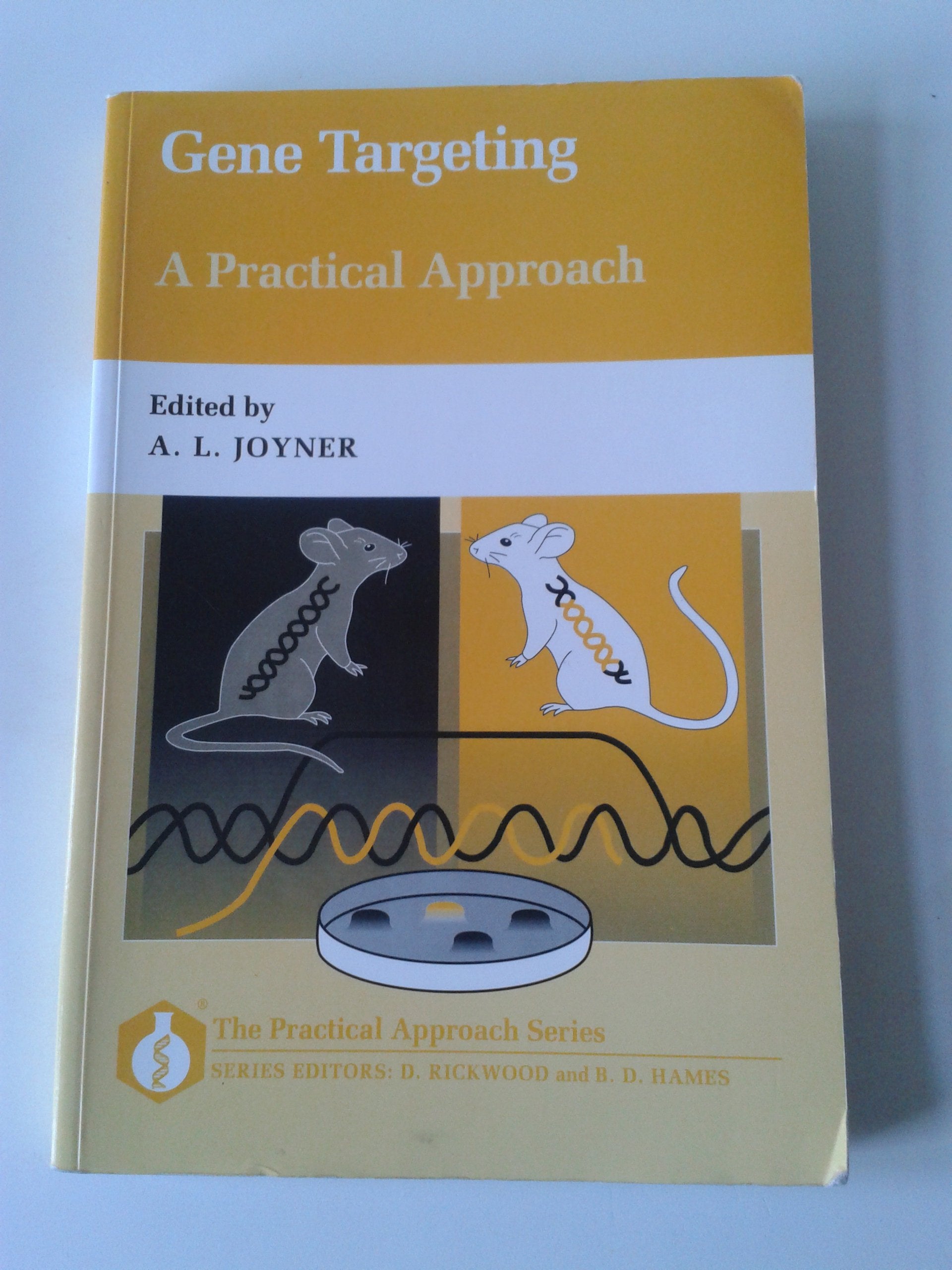
Gene Targeting: A Practical Approach (The ^APractical Approach Series),Used
Sold by Ergodebooks, an authorized reseller.
Returns accepted within 30 days | support@ergodebooks.com
Shipping Information
- Free Standard Shipping — United States only
- Processing Time: 3–5 business days
- Estimated Delivery: 6–10 business days after dispatch
- Double-boxed, fully insured & discreetly packaged
- Tracking number sent via email once dispatched
Returns & Refund
Returns accepted within 30 days of delivery.
Damaged or Defective Item
Free return shipping + replacement or full refund
Wrong Item Received
Free return shipping + replacement or full refund
Change of Mind
Return shipping at customer's expense · 25% restocking fee applies
Payment Option

The book begins by describing in detail the rationale behind designing gene targeting vectors, including both basic replacement vectors for creating null mutations and more sophisticated twostep approaches for creating subtle mutations. It describes the latest techniques for culturing andmanipulating ES cells and a number of approaches for identifying rare targeted cell clones. Techniques for culturing and assaying for mouse and human hematopoietic progenitors in vitro and in vivo are then covered, followed by the design of, and use of, retrovirus vectors for introducing andexpressing genes in bone marrow cells. Two approaches for making ES cell chimeras are described. One chapter covers the more standard approach of ES cell injection into blastocysts as well as morula injection. Another chapter describes techniques for making aggregation chimeras and in particulara recent approach using tetraploid host embryos to produce completely ES cellderived embryos and mice. The critical steps for obtaining germline chimeras are discussed. The book is concluded by a discussion of the many uses of enhancer, gene and promoter trap vectors, the advantages of each, anddescribes in detail the techniques for producing and analyzing "trap" vector insertions in ES cells. The protocols are written with sufficient detail for a novice in the area to use them as a manual to learn the various techniques required for producing mutant mice, beginning with the embryonicstem cells and ending up with chimeric mice for breeding.
⚠️ WARNING (California Proposition 65):
This product may contain chemicals known to the State of California to cause cancer, birth defects, or other reproductive harm.
For more information, please visit www.P65Warnings.ca.gov.