If you have any questions, you are always welcome to contact us. We'll get back to you as soon as possible, withing 24 hours on weekdays.
Customer service
All questions about your order, return and delivery must be sent to our customer service team by e-mail at yourstore@yourdomain.com
Sale & Press
If you are interested in selling our products, need more information about our brand or wish to make a collaboration, please contact us at press@yourdomain.com
Help
If you have any questions, you are always welcome to contact us. We'll get back to you as soon as possible, withing 24 hours on weekdays.
Customer service
All questions about your order, return and delivery must be sent to our customer service team by e-mail at yourstore@yourdomain.com
Sale & Press
If you are interested in selling our products, need more information about our brand or wish to make a collaboration, please contact us at press@yourdomain.com
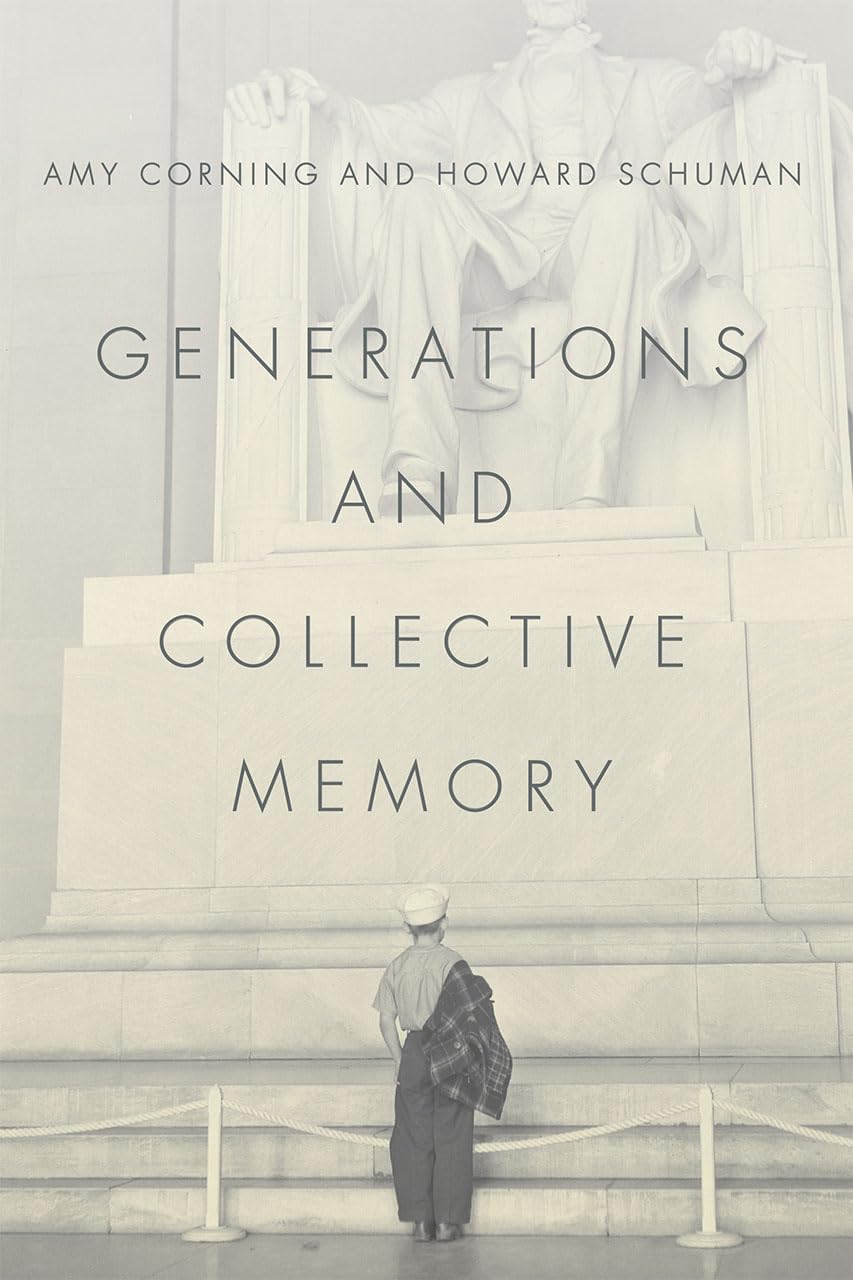
When discussing large social trends or experiences, we tend to group people into generations. But what does it mean to be part of a generation, and what gives that group meaning and coherence? It's collective memory, say Amy Corning and Howard Schuman, and in Generations and Collective Memory, they draw on an impressive range of research to show how generations share memories of formative experiences, and how understanding the way those memories form and change can help us understand society and history.Their key findingbuilt on historical research and interviews in the United States and seven other countries (including China, Japan, Germany, Lithuania, Russia, Israel, and Ukraine)is that our most powerful generational memories are of shared experiences in adolescence and early adulthood, like the 1963 Kennedy assassination for those born in the 1950s or the fall of the Berlin Wall for young people in 1989. But there are exceptions to that rule, and they're significant: Corning and Schuman find that epochal events in a country, like revolutions, override the expected effects of age, affecting citizens of all ages with a similar power and lasting intensity.The picture Corning and Schuman paint of collective memory and its formation is fascinating on its face, but it also offers intriguing new ways to think about the rise and fall of historical reputations and attitudes toward political issues.
⚠️ WARNING (California Proposition 65):
This product may contain chemicals known to the State of California to cause cancer,
birth defects, or other reproductive harm.
For MAP (Minimum Advertised Price) violations and Intellectual Property (IP) or Trademark concerns, please contact:
support@ergodebooks.com
⚠️ California Proposition 65 Warning: Some products sold on this website may expose you to chemicals known to the State of California to cause cancer, birth defects, or other reproductive harm. For more information, visit www.P65Warnings.ca.gov.