
Title
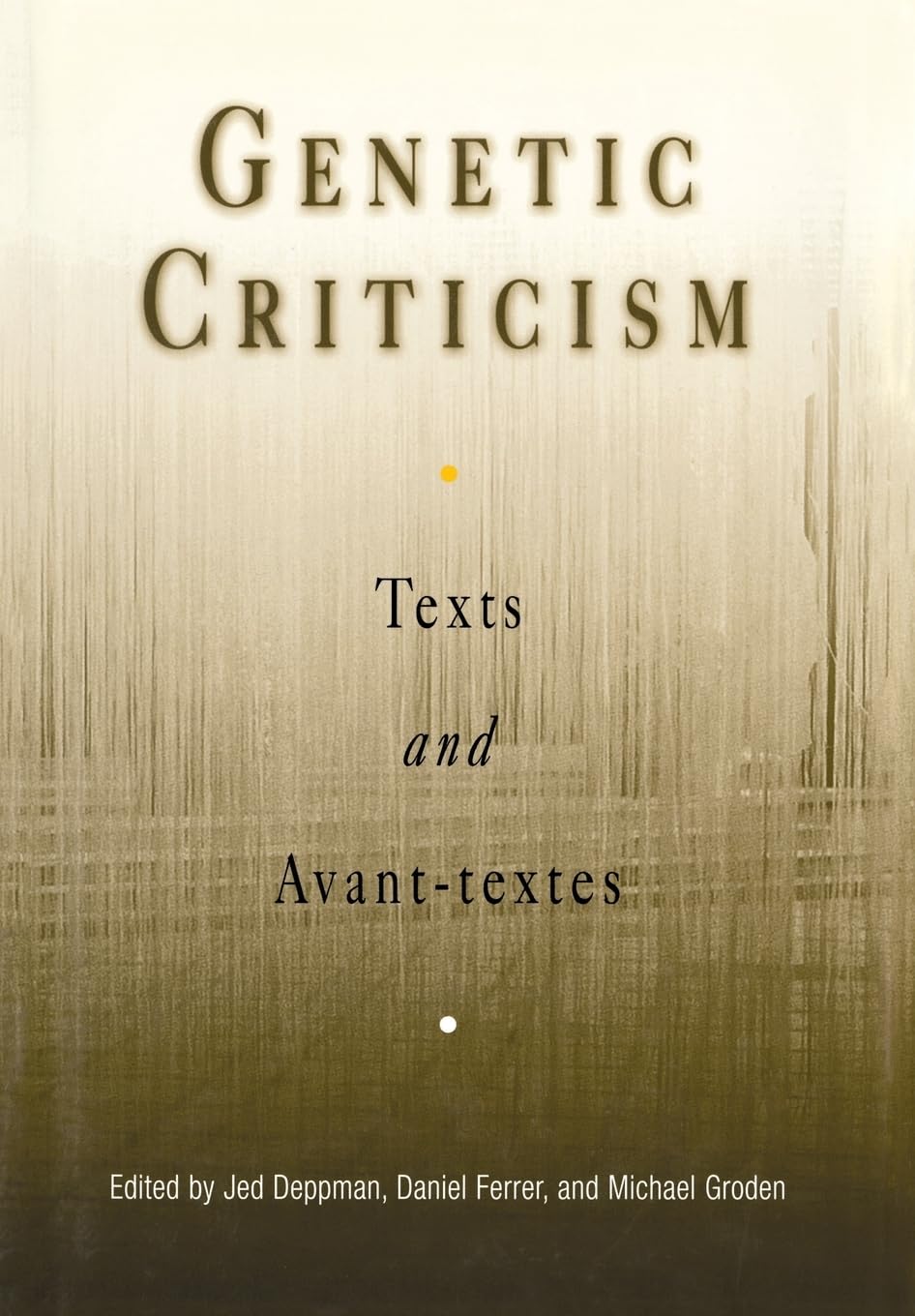
Genetic Criticism: Texts And Avanttextes (Material Texts),Used
Sold by Ergodebooks, an authorized reseller.
Returns accepted within 30 days | support@ergodebooks.com
Shipping Information
- Free Standard Shipping — United States only
- Processing Time: 3–5 business days
- Estimated Delivery: 6–10 business days after dispatch
- Double-boxed, fully insured & discreetly packaged
- Tracking number sent via email once dispatched
Returns & Refund
Returns accepted within 30 days of delivery.
Damaged or Defective Item
Free return shipping + replacement or full refund
Wrong Item Received
Free return shipping + replacement or full refund
Change of Mind
Return shipping at customer's expense · 25% restocking fee applies
Payment Option

This volume introduces English speakers to genetic criticism, arguably the most important critical movement in France today. In recent years, French literary scholars have been exploring the interpretive possibilities of textual history, turning manuscript study into a recognized form of literary criticism. They have clearly demonstrated that manuscripts can be used for purposes other than establishing an accurate text of a work.Although its raw material is a writer's manuscripts, genetic criticism owes more to structuralist and poststructuralist notions of textuality than to philology and textual criticism. As Genetic Criticism demonstrates, the chief concern is not the 'final' text but the reconstruction and analysis of the writing process. Geneticists find endless richness in what they call the 'avanttexte': a critical gathering of a writer's notes, sketches, drafts, manuscripts, typescripts, proofs, and correspondence. Together, the essays in this volume reveal how genetic criticism cooperates with such forms of literary study as narratology, linguistics, psychoanalysis, sociocriticism, deconstruction, and gender theory.Genetic Criticism contains translations of eleven essays, general theoretical analyses as well as studies of individual authors such as Flaubert, Proust, Joyce, Zola, Stendhal, Chateaubriand, and Montaigne. Some of the essays are foundational statements, while others deal with such recent topics as noncanonical texts and the potential impact of hypertext on genetic study. A general introduction to the book traces genetic criticism's intellectual history, and separate introductions give precise contexts for each essay.
⚠️ WARNING (California Proposition 65):
This product may contain chemicals known to the State of California to cause cancer, birth defects, or other reproductive harm.
For more information, please visit www.P65Warnings.ca.gov.