If you have any questions, you are always welcome to contact us. We'll get back to you as soon as possible, withing 24 hours on weekdays.
Customer service
All questions about your order, return and delivery must be sent to our customer service team by e-mail at yourstore@yourdomain.com
Sale & Press
If you are interested in selling our products, need more information about our brand or wish to make a collaboration, please contact us at press@yourdomain.com
Help
If you have any questions, you are always welcome to contact us. We'll get back to you as soon as possible, withing 24 hours on weekdays.
Customer service
All questions about your order, return and delivery must be sent to our customer service team by e-mail at yourstore@yourdomain.com
Sale & Press
If you are interested in selling our products, need more information about our brand or wish to make a collaboration, please contact us at press@yourdomain.com
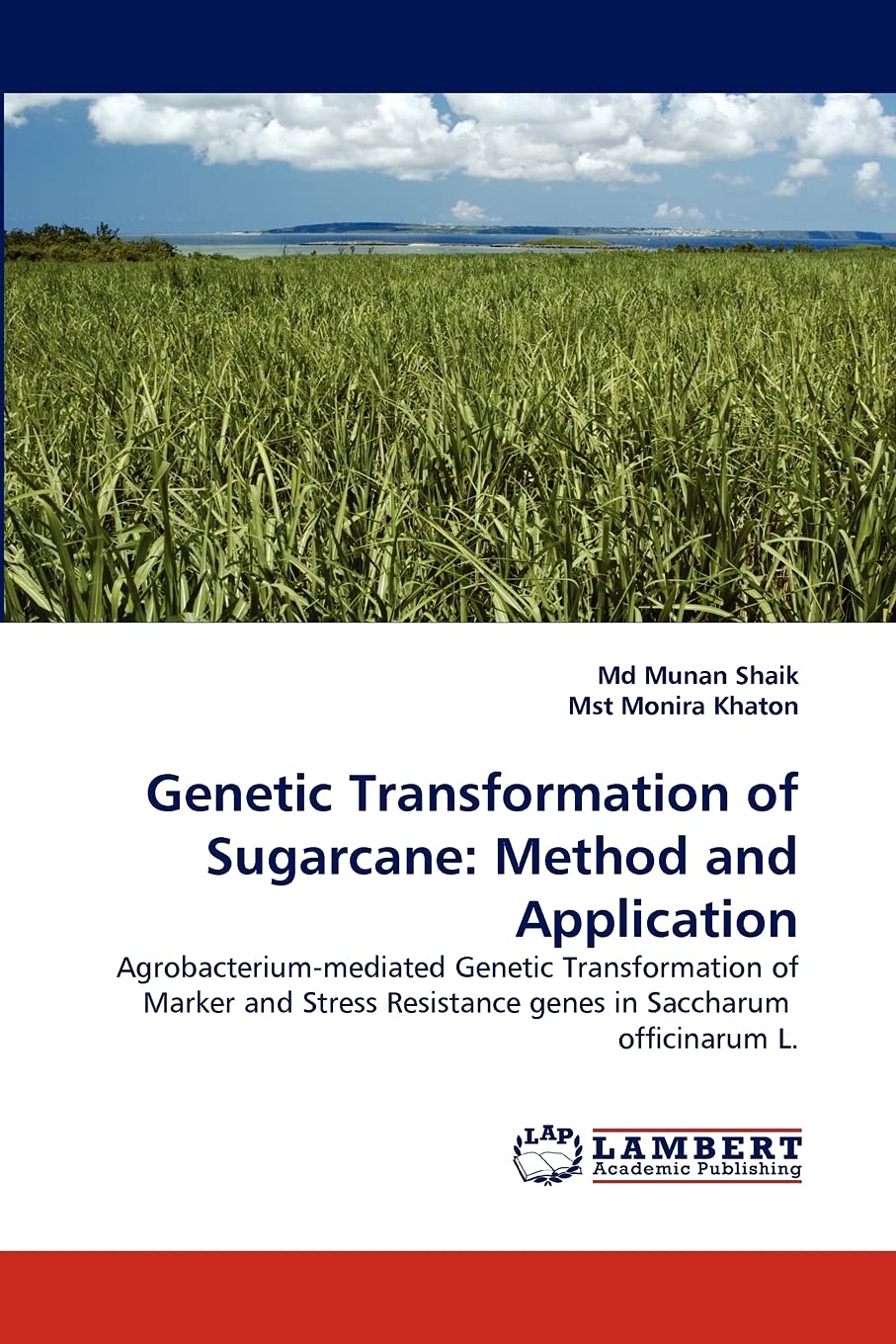
Traditional plant breeding techniques, together with chemical, biotechnological approaches, have been extensively used to increase crop yields which are more productive and resistant to diseases and pathogens. However, conventional breeding is a lengthy process. Incorporation of desired gene(s) from foreign source is the prime needs to overcome the bottleneck. Genetic transformation of sugarcane deserve the due research attention for the purpose. Agrobacterium mediated genetic transformation in differents sugarcane varieties and regeneration of plantlets from transformed explants were discussed. The transformation efficiency in callus, organogenic pretreated callus and meristematic spindle leaf segments at different infection time by five Agrobacterium strains containing GUS marker gene and Stress resistance genes (CIPK, CBL and Gly1) were explained. PCR based confirmation of GUS reporter gene was done using DNA isolated from plantlets regenerated from transformed explants. Phenotypic expression of resistance genes also explained with the different regeneration medium containing selective stresses.
⚠️ WARNING (California Proposition 65):
This product may contain chemicals known to the State of California to cause cancer,
birth defects, or other reproductive harm.
For MAP (Minimum Advertised Price) violations and Intellectual Property (IP) or Trademark concerns, please contact:
support@ergodebooks.com
⚠️ California Proposition 65 Warning: Some products sold on this website may expose you to chemicals known to the State of California to cause cancer, birth defects, or other reproductive harm. For more information, visit www.P65Warnings.ca.gov.