
Title
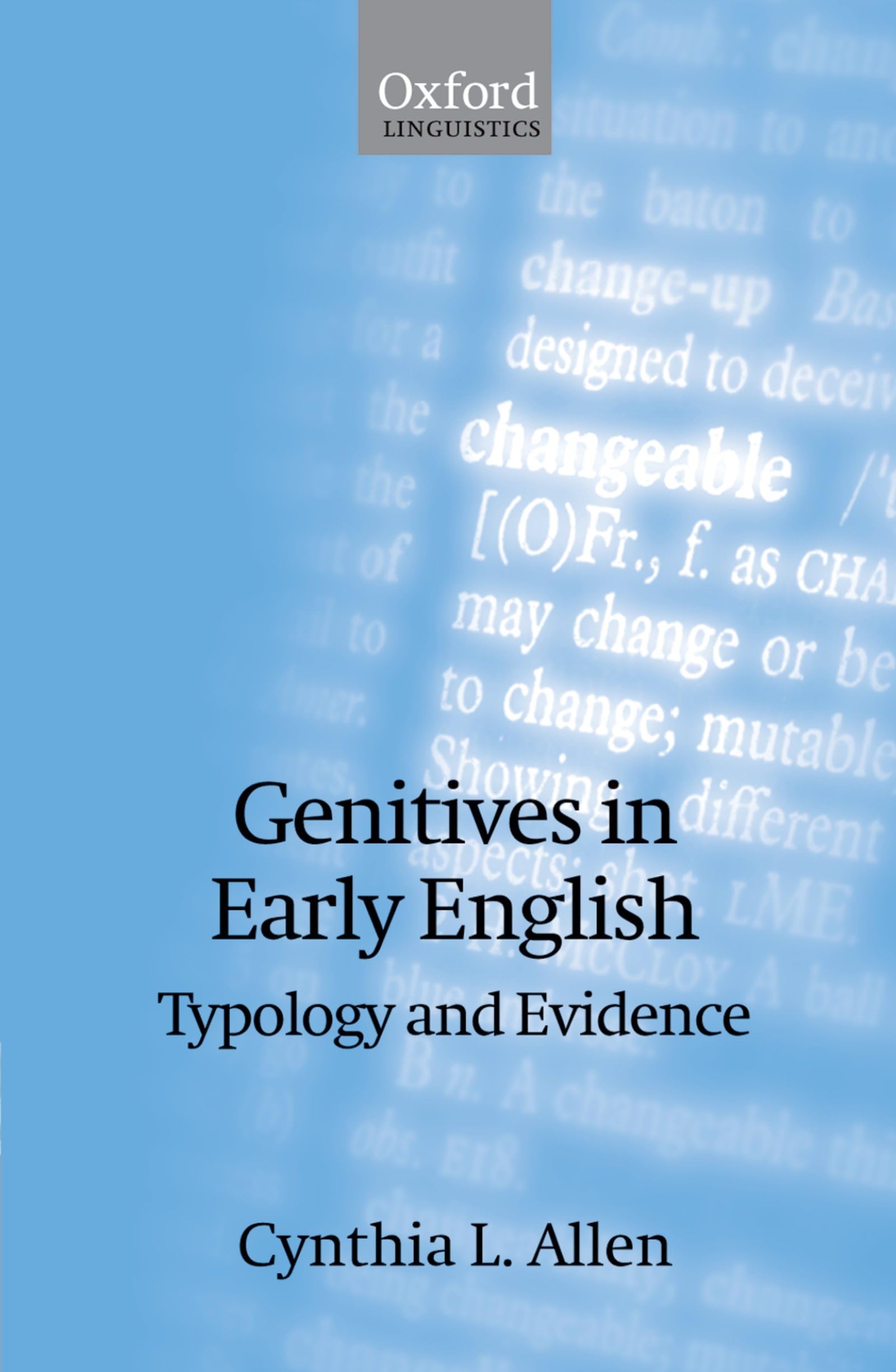
Genitives in Early English: Typology and Evidence (Oxford Linguistics),Used
Sold by Ergodebooks, an authorized reseller.
Returns accepted within 30 days | support@ergodebooks.com
Shipping Information
- Free Standard Shipping — United States only
- Processing Time: 3–5 business days
- Estimated Delivery: 6–10 business days after dispatch
- Double-boxed, fully insured & discreetly packaged
- Tracking number sent via email once dispatched
Returns & Refund
Returns accepted within 30 days of delivery.
Damaged or Defective Item
Free return shipping + replacement or full refund
Wrong Item Received
Free return shipping + replacement or full refund
Change of Mind
Return shipping at customer's expense · 25% restocking fee applies
Payment Option

This book examines the evidence for the development of adnominal genitives (the knight's sword, the nun's priest's tale, etc.) in English. During the Middle English period the genitive inflection es developed into the more cliticlike 's, but how, when, why, and over how long a time are unclear, and have been subject to considerable research and discussion. Cynthia L. Allen draws together her own and others' findings in areas such as case marking, the nature of syntactic and morphological change, and the role of processing and pragmatics in the construction of grammars and grammatical change.Using evidence derived from a systematic examination of a wide range of texts, Dr Allen reviews the evidence for the nature of the possessive inflection in earlier stages of English and the relationship of the es possessive to the 'his genitive. In doing so she shows that Middle English texts are more reliable witnesses to the grammar of Middle English than has sometimes been assumed. The texts may have been conservative, but their language, the author argues, is reasonable reflection of the spoken language, and where the written evidence runs counter to typological generalization about syntactic change it may be the latter, not the former, which is in need of qualification. While the book focuses on Middle English it also contains discussions of linguistic change before and since, and draws on comparative evidence from other languages, particularly Germanic languages such as Swedish and Dutch. This groundbreaking book will be of great interest to scholars and students of Middle English in particular and the history of English in general.
⚠️ WARNING (California Proposition 65):
This product may contain chemicals known to the State of California to cause cancer, birth defects, or other reproductive harm.
For more information, please visit www.P65Warnings.ca.gov.