
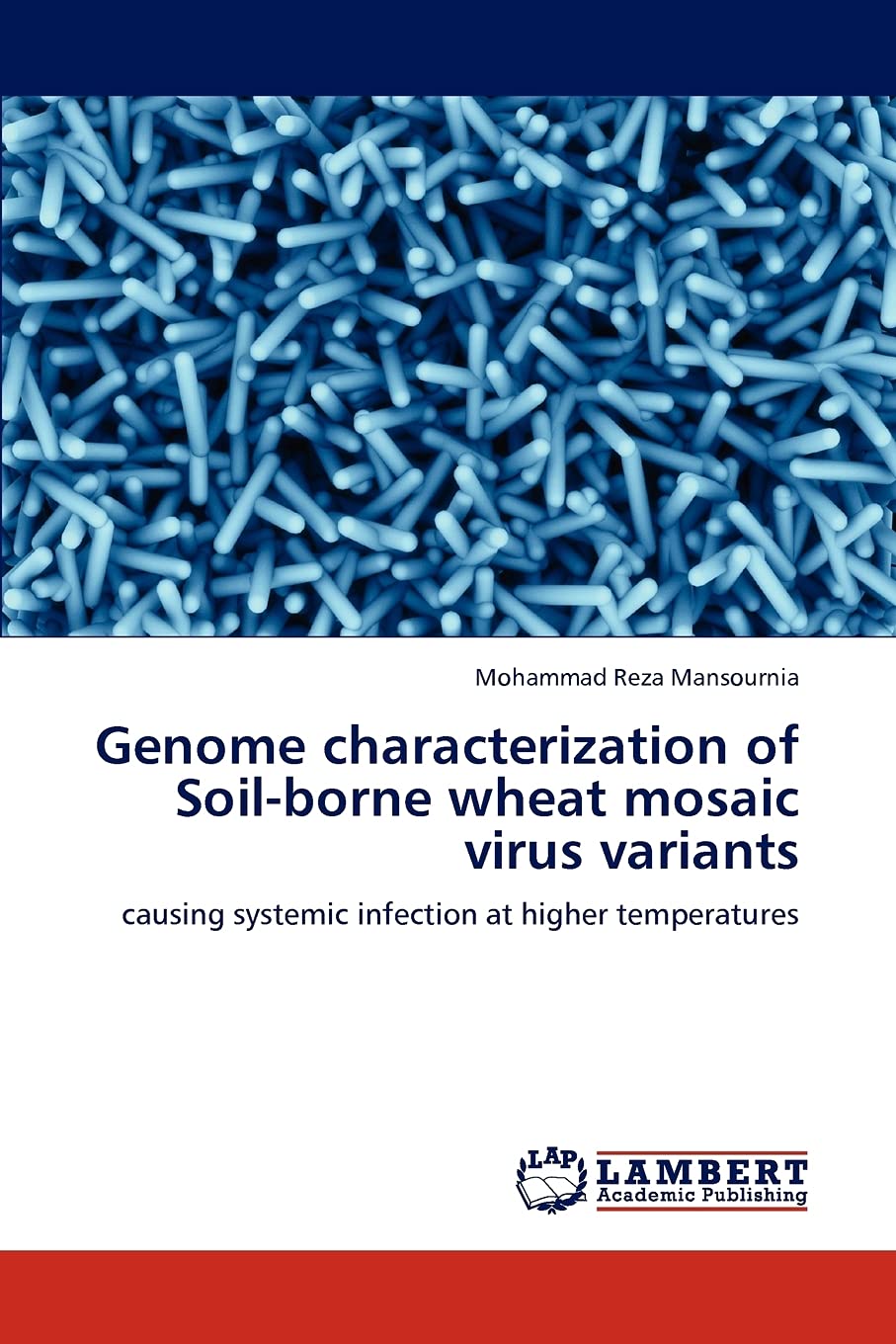
Title
Genome characterization of Soilborne wheat mosaic virus variants: causing systemic infection at higher temperatures,Used
Sold by Ergodebooks, an authorized reseller.
Returns accepted within 30 days | support@ergodebooks.com
Shipping Information
- Free Standard Shipping — United States only
- Processing Time: 3–5 business days
- Estimated Delivery: 6–10 business days after dispatch
- Double-boxed, fully insured & discreetly packaged
- Tracking number sent via email once dispatched
Returns & Refund
Returns accepted within 30 days of delivery.
Damaged or Defective Item
Free return shipping + replacement or full refund
Wrong Item Received
Free return shipping + replacement or full refund
Change of Mind
Return shipping at customer's expense · 25% restocking fee applies
Payment Option

Soilborne wheat mosaic virus (SBWMV), the type species of the genus Furovirus, contains a bipartite positivestranded RNA genome (RNA1 and RNA2) encapsidated in separate rodshaped particles. The vector that transmits this virus in soil is a plasmodiophoraceous protozoan, Polymyxa graminis. The optimum temperature for the propagation of this virus is 17C, and systemically infected plants can recover from the virus if the temperature increases. The inoculation of infectious in vitro transcripts of RNA1 and RNA2 into barley mesophyll protoplasts showed that the CP most abundantly accumulated at 17C, but was undetectable at 25C (Ohsato et al., 2003), suggesting that replication of the virus is temperature sensitive. Here, the mutations occurred in the MP gene of the variants that could propagate under higher temperatures (25C) were examined. It is suggested that these mutations are involved in changing of MP conformation/activity to make virus adapted to the new condition (higher temperature) for celltocell and longdistance movement.
⚠️ WARNING (California Proposition 65):
This product may contain chemicals known to the State of California to cause cancer, birth defects, or other reproductive harm.
For more information, please visit www.P65Warnings.ca.gov.