
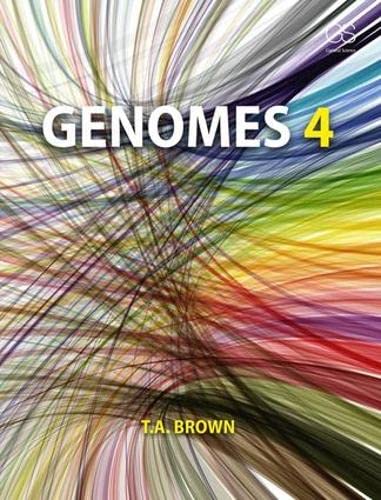
Title
Genomes 4
Sold by Ergodebooks, an authorized reseller.
Returns accepted within 30 days | support@ergodebooks.com
Shipping Information
- Free Standard Shipping — United States only
- Processing Time: 3–5 business days
- Estimated Delivery: 6–10 business days after dispatch
- Double-boxed, fully insured & discreetly packaged
- Tracking number sent via email once dispatched
Returns & Refund
Returns accepted within 30 days of delivery.
Damaged or Defective Item
Free return shipping + replacement or full refund
Wrong Item Received
Free return shipping + replacement or full refund
Change of Mind
Return shipping at customer's expense · 25% restocking fee applies
Payment Option

Genomes 4 Has Been Completely Revised And Updated. It Is A Thoroughly Modern Textbook About Genomes And How They Are Investigated. As With Genomes 3, Techniques Come First, Then Genome Anatomies, Followed By Genome Function, And Finally Genome Evolution. The Genomes Of All Types Of Organism Are Covered: Viruses, Bacteria, Fungi, Plants, And Animals Including Humans And Other Hominids.Genome Sequencing And Assembly Methods Have Been Thoroughly Revised Including A Survey Of Four Genome Projects: Human, Neanderthal, Giant Panda, And Barley. Coverage Of Genome Annotation Emphasizes Genomewide Rna Mapping, With Crisprcas 9 And Gwas Methods Of Determining Gene Function Covered. The Knowledge Gained From These Techniques Forms The Basis Of The Three Chapters That Describe The Three Main Types Of Genomes: Eukaryotic, Prokaryotic (Including Eukaryotic Organelles), And Viral (Including Mobile Genetic Elements). Coverage Of Genome Expression And Replication Is Truly Genomic, Concentrating On The Genomewide Implications Of Dna Packaging, Epigenome Modifications, Dnabinding Proteins, Noncoding Rnas, Regulatory Genome Sequences, And Proteinprotein Interactions. Also Included Are Applications Of Transcriptome Analysis, Metabolomics, And Systems Biology. The Final Chapter Is On Genome Evolution, Focusing On The Evolution Of The Epigenome, Using Genomics To Study Human Evolution, And Using Population Genomics To Advance Plant Breeding. Established Methods Of Molecular Biology Are Included If They Are Still Relevant Today And There Is Always An Explanation As To Why The Method Is Still Important.Each Chapter Has A Set Of Shortanswer Questions, Indepth Problems, And Annotated Further Reading. There Is Also An Extensive Glossary. Genomes 4 Is The Ideal Text For Upper Level Courses Focused On Genomes And Genomics.
⚠️ WARNING (California Proposition 65):
This product may contain chemicals known to the State of California to cause cancer, birth defects, or other reproductive harm.
For more information, please visit www.P65Warnings.ca.gov.
- Q: How many pages does Genomes 4 have? A: Genomes 4 has five hundred twenty-four pages. This extensive length allows for comprehensive coverage of genomic topics.
- Q: What is the binding type of Genomes 4? A: The binding type of Genomes 4 is paperback. This makes it lightweight and suitable for easy handling.
- Q: What are the dimensions of Genomes 4? A: Genomes 4 measures nine point zero two inches in length, zero point five one inches in width, and ten point nine eight inches in height. These dimensions make it a standard-sized textbook.
- Q: Who is the author of Genomes 4? A: The author of Genomes 4 is T. Brown. He is known for his expertise in molecular biology.
- Q: Is Genomes 4 suitable for beginners? A: Genomes 4 is more suitable for upper-level courses. It is designed for students who already have some background in genomics.
- Q: What topics does Genomes 4 cover? A: Genomes 4 covers a range of topics including genome sequencing, assembly methods, and genome evolution. It is a thorough exploration of modern genomic science.
- Q: How should I store Genomes 4? A: Store Genomes 4 in a cool, dry place away from direct sunlight. This helps preserve the quality of the paperback binding.
- Q: Can I use Genomes 4 for self-study? A: Yes, Genomes 4 is suitable for self-study. It includes short-answer questions and further reading to enhance learning.
- Q: Is there a glossary in Genomes 4? A: Yes, Genomes 4 includes an extensive glossary. This feature aids in understanding complex terminology used throughout the text.
- Q: Is there a return policy for Genomes 4? A: Return policies may vary by retailer. Always check the specific return policy where you purchase Genomes 4.
- Q: What kind of problems are included in Genomes 4? A: Genomes 4 includes in-depth problems related to genomic techniques. These problems are designed to deepen understanding of the material.
- Q: Does Genomes 4 discuss CRISPR technology? A: Yes, Genomes 4 covers CRISPR-Cas 9 methods. It explains how these techniques are used to determine gene function.
- Q: Is Genomes 4 appropriate for high school students? A: Genomes 4 is primarily aimed at upper-level college students. High school students may find it advanced.
- Q: What is the main focus of Genomes 4? A: The main focus of Genomes 4 is to explore genomes and their functions across various organisms. It emphasizes modern research techniques.
- Q: Does Genomes 4 include applications of systems biology? A: Yes, Genomes 4 includes applications of systems biology. It discusses how these applications relate to genomic studies.