
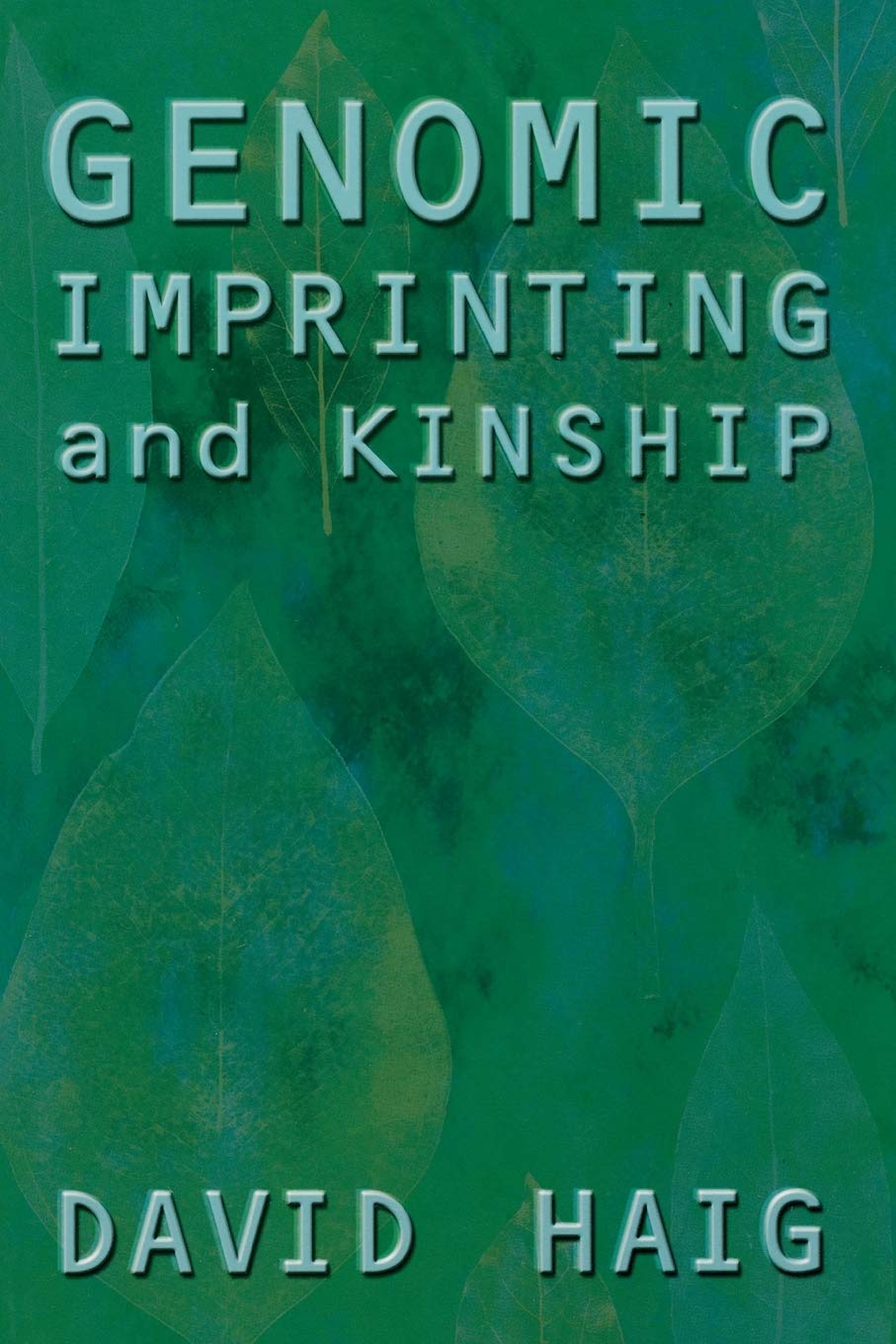
Title
Genomic Imprinting And Kinship (The Rutgers Series In Human Evolution, Edited By Robert Trivers, Lee Cronk, Helen Fisher, And Li,Used
Sold by Ergodebooks, an authorized reseller.
Returns accepted within 30 days | support@ergodebooks.com
Shipping Information
- Free Standard Shipping — United States only
- Processing Time: 3–5 business days
- Estimated Delivery: 6–10 business days after dispatch
- Double-boxed, fully insured & discreetly packaged
- Tracking number sent via email once dispatched
Returns & Refund
Returns accepted within 30 days of delivery.
Damaged or Defective Item
Free return shipping + replacement or full refund
Wrong Item Received
Free return shipping + replacement or full refund
Change of Mind
Return shipping at customer's expense · 25% restocking fee applies
Payment Option

Until twenty years ago we had no idea which of our genes came from our father and which came from our mother. We took it for granted that our genes expressed themselves identically and that there was a 50/50 chance that they came from either parent. We also assumed that they worked in cooperation with each other. The biggest breakthrough in genetics in the past two decades has been the discovery of genomic imprinting, which allows us to trace genes to the parent of origin. David Haig has been at the forefront of theorizing these developments. He argues that these 'paternally and maternally active genes' comprise less than one percent of our total gene count and are far from being cooperative. In fact, they have been shown to be in competition with one another. If Haig's theory holds true, imprinted genes exemplify an extraordinary withinindividual conflict, while shaking up our fundamental ideas of what it means to be an individual. This collection of Haig's papers represents a unique comprehensive overview of the state of evolutionary biology. The pages are linked by a commentary that provides background, and brings readers uptodate on developments that occurred after the paper's original publication. Since genomic imprinting touches on many areas in the life sciences, including evolutionary biology and developmental genetics, Haig's work is scattered through the literature. This volume brings his work together for the first time. A volume in the Rutgers Series in Human Evolution, edited by Robert Trivers. David Haig is an associate professor of organismic and evolutionary biology at Harvard University.
⚠️ WARNING (California Proposition 65):
This product may contain chemicals known to the State of California to cause cancer, birth defects, or other reproductive harm.
For more information, please visit www.P65Warnings.ca.gov.