
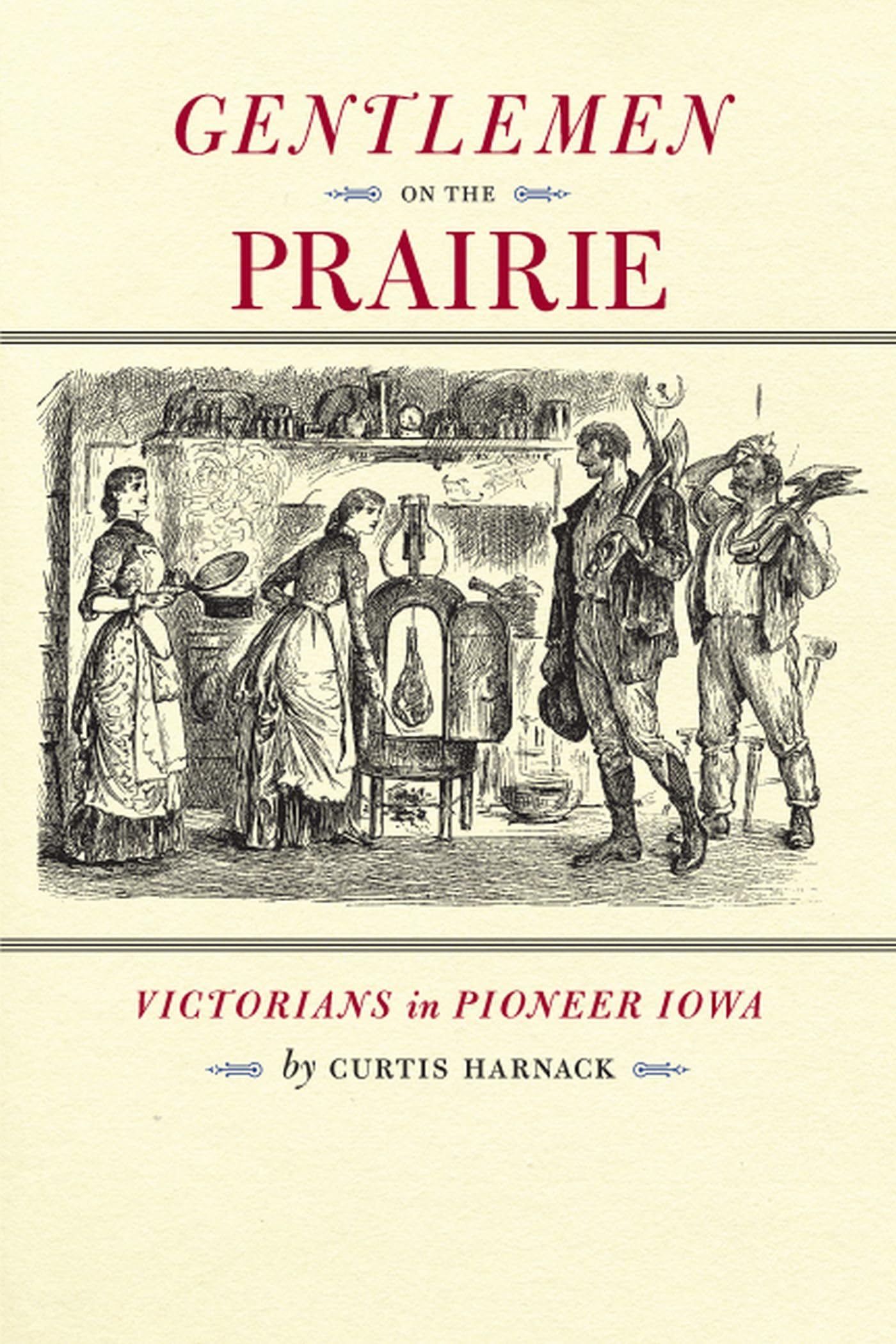
Title


Gentlemen On The Prairie: Victorians In Pioneer Iowa (Bur Oak Book)
Sold by Ergodebooks, an authorized reseller.
Returns accepted within 30 days | support@ergodebooks.com
Shipping Information
- Free Standard Shipping — United States only
- Processing Time: 3–5 business days
- Estimated Delivery: 6–10 business days after dispatch
- Double-boxed, fully insured & discreetly packaged
- Tracking number sent via email once dispatched
Returns & Refund
Returns accepted within 30 days of delivery.
Damaged or Defective Item
Free return shipping + replacement or full refund
Wrong Item Received
Free return shipping + replacement or full refund
Change of Mind
Return shipping at customer's expense · 25% restocking fee applies
Payment Option

In The 1880S, The Wellconnected Young Englishman William B. Close And His Three Brothers, Having Bought Thousands Of Acres Of Northwest Iowa Prairie, Conceived The Idea Of Enticing Sons Of Britains Upper Classes To Pursue The Life Of The Landed Gentry On These Fertile Acres. Yesterday A Wilderness, Today An Empire: Their Bizarre Experiment, Which Created A Colony For People Of The Better Class Who Were Not In Line To Inherit Land But Whose Fathers Would Set Them Up In Farming, Flourished In Le Mars, Iowa (And Later In Pipestone, Minnesota), With Over Five Hundred Youths Having A Go At Farming. In Gentlemen On The Prairie, Curtis Harnack Tells The Remarkable Story Of This Quite Unusual Chapter In The Settling Of The Midwest.Many Of These Immigrants Had No Interest In American Citizenship But Enjoyed Or Endured The Challenging Adventure Of Remaining Part Of The Empire While Stranded On The Plains. They Didnt Mix Socially With Other Le Mars Area Residents But Enjoyed Such Sports As Horse Racing, Fox Hunts, Polo, And An Annual Derby Followed By A Glittering Grand Ball. Their Pubs Were Named The House Of Lords, The House Of Commons, And Windsor Castle; The Prairie Club Was A Replica Of A London Gentlemens Club, An Opera House Attracted Traveling Shows, And Their Principal Hotel Was Albion House. In St. Georges Episcopal Church, Prayers Were Offered For The Wellbeing Of Queen Victoria.Problems Soon Surfaced, However, Even For These Wellheeled Aristocrats. The Chief Problem Was Farm Labor; There Was No Native Population To Exploit, And Immigrant Workers Soon Bought Their Own Land. Although Sisters Might Visit The Colonists And Sometimes Marry One Of Them, Appropriate Female Companionship Was Scarce. The Climate Was Brutal In Its Extremes, And Many Colonists Soon Sold Their Acres At A Profit And Moved To Countries Affiliated With Britain. When The Financial Depression In The Early 1890S Lowered Land Values And Made Agriculture Less Profitable, The Colony Collapsed. Harnack Skillfully Draws Upon The Founders Prairie Journal, Company Ledgers, And Other Records To Create An Engaging, Engrossing Story Of This Quixotic Pioneering Experiment.F
⚠️ WARNING (California Proposition 65):
This product may contain chemicals known to the State of California to cause cancer, birth defects, or other reproductive harm.
For more information, please visit www.P65Warnings.ca.gov.
- Q: How many pages does this book have? A: This book has two hundred sixty-two pages. It provides an in-depth exploration of Victorian settlers in Iowa.
- Q: What is the binding type of this book? A: This book is paperback bound. This makes it lightweight and easy to handle.
- Q: What are the dimensions of this book? A: The dimensions of this book are five point nine eight inches in length, zero point five nine inches in width, and nine point zero two inches in height. These dimensions make it convenient for reading and storage.
- Q: Who is the author of this book? A: The author of this book is Curtis Harnack. He provides a detailed historical narrative about a unique chapter in Iowa's history.
- Q: What genre does this book belong to? A: This book belongs to the history and biography genre. It focuses on the experiences of Victorian settlers in the American Midwest.
- Q: Is this book suitable for children? A: Yes, this book is suitable for older children and teenagers interested in history. It provides educational insights into Iowa's past but may not be engaging for very young readers.
- Q: How do I care for this paperback book? A: To care for this paperback book, store it in a cool, dry place away from direct sunlight. Avoid bending the pages to keep it in good condition.
- Q: Can I read this book outdoors? A: Yes, you can read this book outdoors. Just be cautious of moisture and direct sunlight to avoid damage.
- Q: What if my book arrives damaged? A: If your book arrives damaged, you should contact the seller for a replacement or return. Most sellers have a return policy for damaged items.
- Q: Is this book available in other formats? A: No, this book is only available in paperback format. There are currently no digital or hardcover versions.
- Q: How many authors contributed to this book? A: This book is solely authored by Curtis Harnack. His expertise provides a focused narrative on its themes.
- Q: What themes are explored in this book? A: This book explores themes of immigration, colonialism, and social life in the 1880s Midwest. It presents a unique perspective on Victorian settlers.
- Q: Is this book part of a series? A: No, this book is not part of a series. It stands alone as a detailed historical account.
- Q: What is the publication date of this book? A: The publication date of this book is not specified. However, it is a part of the Bur Oak Book series, which focuses on regional history.
- Q: Where is this book published? A: This book is published by the University Of Iowa Press. They specialize in works related to Iowa and the Midwest.
- Q: Is this book based on true events? A: Yes, this book is based on true events. It details the real-life experiences of Victorian settlers in Iowa.