If you have any questions, you are always welcome to contact us. We'll get back to you as soon as possible, withing 24 hours on weekdays.
Customer service
All questions about your order, return and delivery must be sent to our customer service team by e-mail at yourstore@yourdomain.com
Sale & Press
If you are interested in selling our products, need more information about our brand or wish to make a collaboration, please contact us at press@yourdomain.com
Help
If you have any questions, you are always welcome to contact us. We'll get back to you as soon as possible, withing 24 hours on weekdays.
Customer service
All questions about your order, return and delivery must be sent to our customer service team by e-mail at yourstore@yourdomain.com
Sale & Press
If you are interested in selling our products, need more information about our brand or wish to make a collaboration, please contact us at press@yourdomain.com
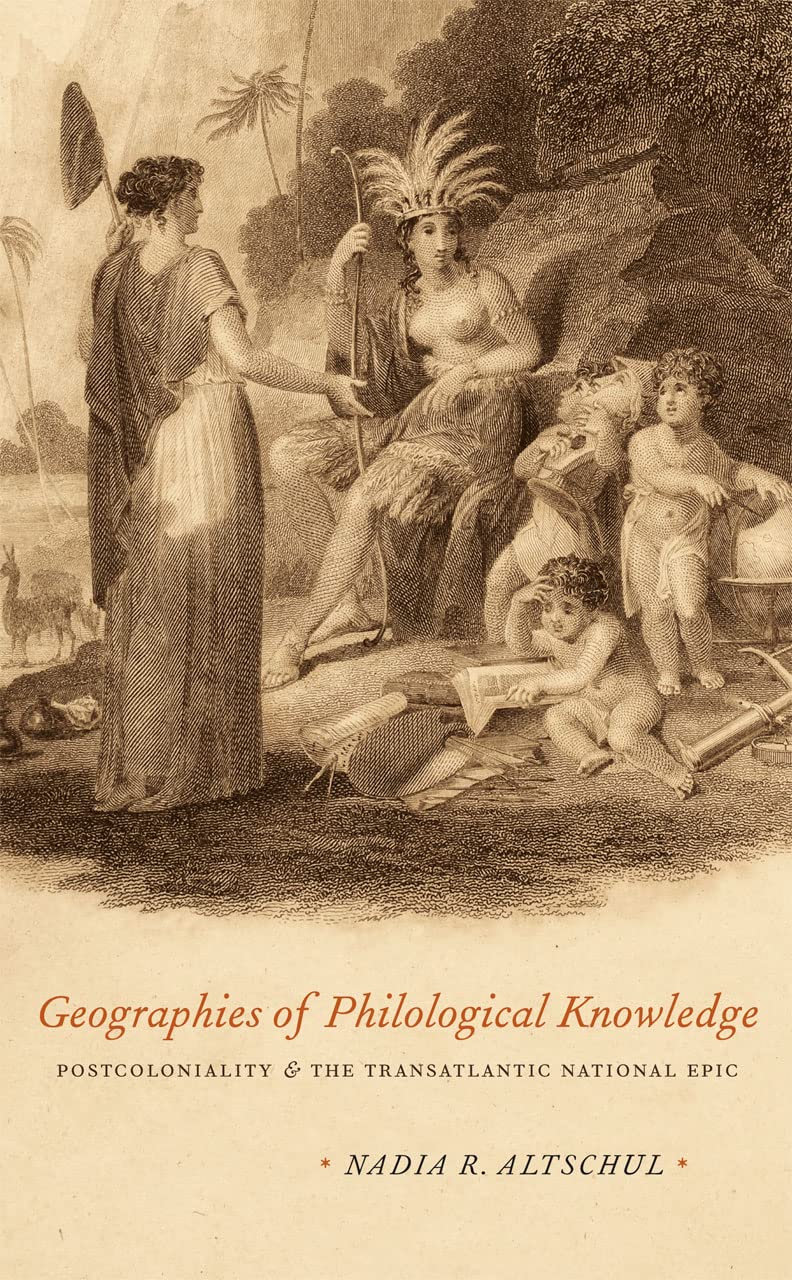
Geographies of Philological Knowledge examines the relationship between medievalism and colonialism in the nineteenthcentury Hispanic American context through the striking case of the Creole Andrs Bello (17811865), a Venezuelan grammarian, editor, legal scholar, and politician, and his lifelong philological work on the medieval heroic narrative that would later become Spains national epic, the Poem of the Cid. Nadia R. Altschul combs Bellos study of the poem and finds throughout it evidence of a coloniality of knowledge.Altschul reveals how, during the nineteenth century, the framework for philological scholarship established in and for core European nationsFrance, England, and especially Germanywas exported to Spain and Hispanic America as the proper way of doing medieval studies. She argues that the global designs of European philological scholarship are conspicuous in the domain of disciplinary historiography, especially when examining the local history of a Creole Hispanic American like Bello, who is neither fully European nor fully alien to European culture. Altschul likewise highlights Hispanic Americas intellectual internalization of coloniality and its understanding of itself as an extension of Europe.A timely example of interdisciplinary history, interconnected history, and transnational study, Geographies of Philological Knowledge breaks with previous nationalist and colonialist histories and thus forges a new path for the future of medieval studies.
⚠️ WARNING (California Proposition 65):
This product may contain chemicals known to the State of California to cause cancer,
birth defects, or other reproductive harm.
For MAP (Minimum Advertised Price) violations and Intellectual Property (IP) or Trademark concerns, please contact:
support@ergodebooks.com
⚠️ California Proposition 65 Warning: Some products sold on this website may expose you to chemicals known to the State of California to cause cancer, birth defects, or other reproductive harm. For more information, visit www.P65Warnings.ca.gov.