
Title
Geography Of The Gaze: Urban And Rural Vision In Early Modern Europe,Used
Sold by Ergodebooks, an authorized reseller.
Returns accepted within 30 days | support@ergodebooks.com
Shipping Information
- Free Standard Shipping — United States only
- Processing Time: 3–5 business days
- Estimated Delivery: 6–10 business days after dispatch
- Double-boxed, fully insured & discreetly packaged
- Tracking number sent via email once dispatched
Returns & Refund
Returns accepted within 30 days of delivery.
Damaged or Defective Item
Free return shipping + replacement or full refund
Wrong Item Received
Free return shipping + replacement or full refund
Change of Mind
Return shipping at customer's expense · 25% restocking fee applies
Payment Option

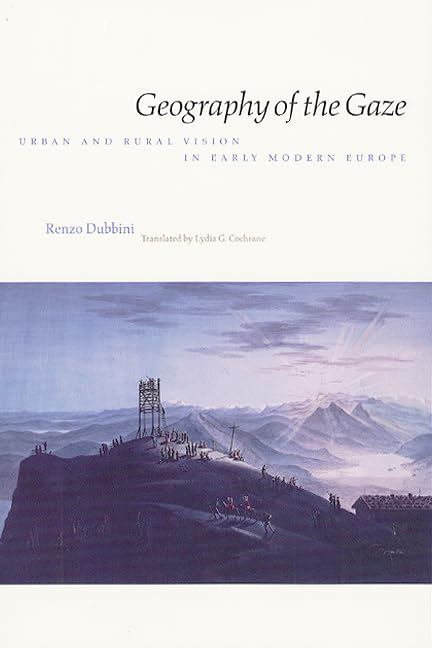
Product Description Geography of the Gaze offers a new history and theory of how the way we look at things influences what we see. Focusing on Western Europe from the seventeenth to nineteenth centuries, Renzo Dubbini shows how developments in science, art, mapping, and visual epistemology affected the ways natural and artificial landscapes were perceived and portrayed.He begins with the idea of the 'view,' explaining its role in the invention of landscape painting and in the definition of landscape as a cultural space. Among other topics, Dubbini explores how the descriptive and pictorial techniques used in mariners' charts, vieworiented atlases, military cartography, and garden design were linked to the proliferation of highly realistic paintings of landscapes and city scenes; how the 'picturesque' system for defining and composing landscapes affected not just art but also archaeology and engineering; and how the everchanging modern cityscapes inspired new ways of seeing and representing the urban scene in Impressionist painting, photography, and stereoscopy. A marvelous history of viewing, Geography of the Gaze will interest everyone from scientists to artists. Review [Dubbini aims] to explore how technological advances in science, art, mapping and visual epistemology from the 17th to the 19th centuries affects the way the landscape was perceived and what it might be expected to tell us through mariners charts, atlases, military cartography and views from garden design.Art Newspaper Art NewspaperPraise for the Italian edition: 'Brilliant and inspiring. . . . We go from the natural to the artificial scene, from mapmaking to landscape painting, from travelers' tales to geological exploration, from the discovery of the Alps to the discoveries of ancient Egypt, from the microcosm of the garden to the metropolis, from journeys by carriage to those by rail or even in balloons.' Enrico Castelnuovo Il Sole'A valuable study of the connection existing between vision and the history of landscape at the outset of the modern age via those unique kinds of spatial documents, such as landscape paintings, photographs of places, city maps and plans.' Marco Belpoliti Il Manifesto From the Inside Flap Geography of the Gaze offers a new history and theory of how the way we look at things influences what we see. Focusing on Western Europe from the seventeenth to the nineteenth century, Renzo Dubbini shows how developments in science, art, mapping, and visual epistemology affected the ways natural and artificial landscapes were perceived and portrayed.He begins with the idea of the 'view,' explaining its role in the invention of landscape painting and in the definition of landscape as a cultural space. Among other topics, Dubbini explores how the descriptive and pictorial techniques used in mariners' charts, vieworiented atlases, military cartography, and garden design were linked to the proliferation of highly realistic paintings of landscapes and city scenes; how the 'picturesque' system for defining and composing landscapes affected not just art but also archaeology and engineering; and how the everchanging modern cityscapes inspired new ways of seeing and representing the urban scene in Impressionist painting, photography, and stereoscopy. A marvelous history of viewing,Geography of the Gaze will interest everyone from scientists to artists. From the Back Cover Geography of the Gaze offers a new history and theory of how the way we look at things influences what we see. Focusing on Western Europe from the seventeenth to the nineteenth century, Renzo Dubbini shows how developments in science, art, mapping, and visual epistemology affected the ways natural and artificial landscapes were perceived and portrayed.He begins with the idea of the 'view,' explaining its role in the invention of landscape painting and in the definition of landscape as a cultural space. Among other t
⚠️ WARNING (California Proposition 65):
This product may contain chemicals known to the State of California to cause cancer, birth defects, or other reproductive harm.
For more information, please visit www.P65Warnings.ca.gov.